


Page 144 - AIH-1-2
P. 144
Artificial Intelligence in Health                                    Movement detection with sensors and AI


            Table 2. Comparisons of accuracy, AUC, recall, precision, F1 score, Kappa, and MCC for different machine learning classifier
            models
            Model                              Accuracy  AUC    Recall  Precision  F1    Kappa  MCC     TT (s)
            LIGHTLGBM - Light Gradient Boosting Machine  0.8937*  0.9830  0.8937*  0.9017*  0.8926*  0.8723*  0.8744*  3.0400
            ET - Extra Trees Classifier        0.8912    0.9856*  0.8912  0.8976  0.8899  0.8693  0.8710  0.2650
            XGBOOST - Extreme Gradient Boosting  0.8765  0.9821  0.8765  0.8859  0.8742  0.8517  0.8544  2.0500
            RF - Random Forest Classifier      0.8763    0.9853  0.8763  0.8875  0.8737  0.8514  0.8545  0.7430
            GBC - Gradient Boosting Classifier  0.8738   0.9799  0.8738  0.8882  0.8717  0.8485  0.8522  13.181
            DT - Decision Tree Classifier      0.8273    0.8969  0.8273  0.8493  0.8271  0.7927  0.7974  0.0750
            KNN - K Neighbors Classifier       0.7946    0.9456  0.7946  0.8236  0.7943  0.7534  0.7602  0.0570
            NB - Naive Bayes                   0.7773    0.9589  0.7773  0.7919  0.7739  0.7331  0.7373  0.0480
            LDA - Linear Discriminant Analysis  0.7701   0.9248  0.7701  0.7890  0.7690  0.7239  0.7282  0.1420
            LR - Logistic Regression           0.7182    0.8895  0.7182  0.7932  0.7175  0.6613  0.6735  1.4500
            SVM - SVM – Linear Kernel          0.6270    0.0000  0.6270  0.6821  0.5873  0.5511  0.5844  0.1190
            RIDGE - Ridge Classifier           0.5676    0.0000  0.5676  0.6386  0.5372  0.4803  0.5079  0.0910
            ADA - Ada Boost Classifier         0.5136    0.7910  0.5136  0.4010  0.4147  0.4120  0.5165  0.5200
            QDA - Quadratic Discriminant Analysis  0.3955  0.6350  0.3955  0.5045  0.3514  0.2706  0.3064  0.1170
            DUMMY - Dummy Classifier           0.1729    0.5000  0.1729  0.0299  0.0510  0.0000  0.0000  0.0420
            Note: *Highest value.
            Abbreviations: AUC: Area under the curve; MCC: Matthews correlation coefficient; TT: Training time.


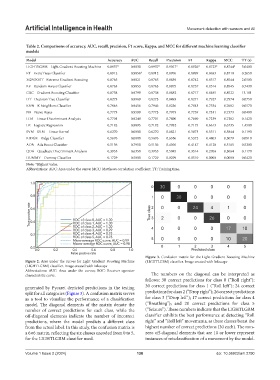
                                                               Figure  3. Confusion matrix for the Light Gradient Boosting Machine
            Figure 2. Area under the curves for Light Gradient Boosting Machine   (LIGHTLGBM) classifier. Image created with Inkscape
            (LIGHTLGBM) classifier. Image created with Inkscape
            Abbreviations: AUC:  Area under the  curves;  ROC:  Receiver  operator
            characteristic curve.                                The numbers on the diagonal can be interpreted as
                                                               follows: 30 correct predictions for class  0 (“Roll right”);
            generated by Pycaret depicted predictions in the testing   30 correct predictions for class 1 (“Roll left”); 24 correct
            split for all categories (Figure 3). A confusion matrix serves   predictions for class 2 (“Drop right”); 26 correct predictions
            as  a  tool  to  visualize  the  performance  of  a  classification   for class 3 (“Drop left”); 17 correct predictions for class 4
            model. The diagonal elements of the matrix denote the   (“Breathing”); and 20 correct predictions for class  5
            number of correct predictions for each class, while the   (“Seizure”). These numbers indicate that the LIGHTLGBM
            off-diagonal elements indicate the number of incorrect   classifier exhibits the best performance at detecting “Roll
            predictions, where the model predicts a different class   right” and “Roll left” movements, as these classes boast the
            from the actual label. In this study, the confusion matrix is   highest number of correct predictions (30 each). The non-
            a 6×6 matrix, reflecting the six classes encoded from 0 to 5,   zero off-diagonal elements that are 10 or lower represent
            for the LIGHTLGBM classifier used.                 instances of misclassification of a movement by the model.


            Volume 1 Issue 2 (2024)                        138                               doi: 10.36922/aih.2790

