


Page 52 - AN-2-2
P. 52
Advanced Neurology                                                                  Seizures and CKD


                                  Furthering research
                                 initiatives to determine                           Increasing
                                  current uncertainties                         multi-disciplinary education
                                   surrounding the                               for better awareness of
                                  pathophysiology of                             elevated seizure risks in
                                 CKD-associated seizures                              CKD


                                                    Future Research Considerations
                                                    in the topic of seizures and CKD


                            Establishing a greater                         Consideration of practical
                           international consensus on                      toolkits and algorithmic
                             indication, dosing,                          guidelines to assist clinical
                            supplementation and                           management of seizures for
                            monitoring of AEDs for                           patients with renal
                              CKD patients                                 impairment in the acute
                                                                                setting
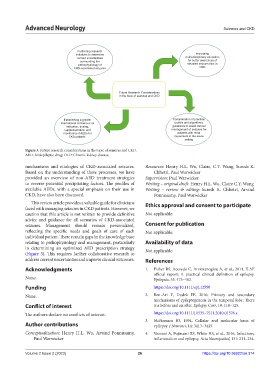
            Figure 3. Future research considerations in the topic of seizures and CKD.
            AED: Antiepileptic drug; CKD: Chronic kidney disease.

            mechanisms and etiologies of CKD-associated seizures.   Resources: Henry H.L. Wu, Claire, C.Y. Wang, Suresh K.
            Based on the understanding of these processes, we have   Chhetri, Paul Warwicker
            provided  an overview of  non-AED  treatment strategies   Supervision: Paul Warwicker
            to  reverse  potential  precipitating  factors.  The  profiles  of   Writing – original draft: Henry H.L. Wu, Claire C.Y. Wang
            available AEDs, with a special emphasis on their use in   Writing – review & editing: Suresh K. Chhetri, Arvind
            CKD, have also been discussed.                        Ponnusamy, Paul Warwicker
              This review article provides a valuable guide for clinicians   Ethics approval and consent to participate
            faced with managing seizures in CKD patients. However, we
            caution that this article is not written to provide definitive   Not applicable.
            advice and guidance for all scenarios of CKD-associated
            seizures. Management should remain personalized,   Consent for publication
            reflecting the specific needs and goals of care of each   Not applicable.
            individual patient. There remain gaps in the knowledge base
            relating to pathophysiology and management, particularly   Availability of data
            in determining an optimized AED prescription strategy   Not applicable.
            (Figure  3).  This  requires  further  collaborative  research  to
            address current uncertainties and improve clinical outcomes.  References

            Acknowledgments                                    1.   Fisher RS, Acevedo C, Arzimanoglou A, et al., 2014, ILAE
                                                                  official report: A  practical clinical definition of epilepsy.
            None.                                                 Epilepsia, 55: 475–482.

            Funding                                               https://doi.org/10.1111/epi.12550
            None.                                              2.   Ben-Ari Y, Dudek FE, 2010, Primary and secondary
                                                                  mechanisms of epileptogenesis in the temporal lobe: There
            Conflict of interest                                  is a before and an after. Epilepsy Curr, 10: 118–125.

            The authors declare no conflicts of interest.         https://doi.org/10.1111/j.1535–7511.2010.01376.x
                                                               3.   McNamara JO, 1994, Cellular and molecular basis of
            Author contributions                                  epilepsy. J Neurosci, 14: 3413–3425.

            Conceptualization: Henry H.L. Wu, Arvind Ponnusamy,   4.   Vezzani A, Fujinami RS, White HS, et al., 2016, Infections,
               Paul Warwicker                                     inflammation and epilepsy. Acta Neuropathol, 131: 211–234.


                                                                                       https://doi.org/10.36922/an.314
                                                            26
            V
            Volume 2 Issue 2 (2023) olume 2 Issue 2 (2023)   26                        https://doi.org/10.36922/an.314

