


Page 13 - EJMO-9-2
P. 13
Eurasian Journal of
            Medicine and Oncology                                                 Single-cell sequencing for lung cancer


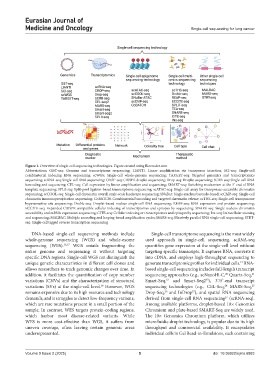
            Figure 1. Overview of single-cell sequencing technologies. Figure created using Biorender.com
            Abbreviations: G&T-seq: Genome and transcriptome sequencing; LIANTI: Linear amplification via transposon insertion; SCI-seq: Single-cell
            combinatorial indexing RNA sequencing; scWGS: Single-cell whole-genome sequencing; TARGET-seq: Targeted genomics and transcriptomics
            sequencing; scRNA-seq: Single-cell RNA sequencing; CROP-seq: CRISPR droplet sequencing; Drop-seq: Droplet sequencing; SCRB-seq: Single-cell RNA
            barcoding and sequencing; CEL-seq: Cell expression by linear amplification and sequencing; SMART-seq: Switching mechanism at the 5’ end of RNA
            template sequencing; SPLit-seq: Split-pool ligation-based transcriptome sequencing; scATAC-seq: Single-cell assay for transposase-accessible chromatin
            sequencing; scCOOL-seq: Single-cell chromatin overall omic-scale landscape sequencing; SNuBar: Single-nucleus barcode-based; scChIP-seq: Single-cell
            chromatin immunoprecipitation sequencing; CoBATCH: Combinatorial barcoding and targeted chromatin release; scTHS-seq: Single-cell transposome
            hypersensitive  site  sequencing;  DroNc-seq:  Droplet-based  nuclear  single-cell  RNA  sequencing;  REAP-seq:  RNA  expression  and  protein  sequencing;
            ECCITE-seq: Expanded CRISPR-compatible cellular indexing of transcriptomes and epitopes by sequencing; SNARE-seq: Single-nucleus chromatin
            accessibility and mRNA expression sequencing; CITE-seq: Cellular indexing or transcriptomes and epitopes by sequencing; Ins-seq: Intracellular staining
            and sequencing; MALBAC: Multiple annealing and looping-based amplification cycles; MARS-seq: Massively parallel RNA single-cell sequencing; STRT-
            seq: Single-cell tagged reverse transcription sequencing

              DNA-based single-cell sequencing methods include   Single-cell transcriptome sequencing is the most widely
            whole-genome sequencing  (WGS) and whole-exome     used approach in single-cell sequencing. scRNA-seq
            sequencing (WES). 16,17  WGS entails fragmenting the   quantifies gene expression at the single-cell level without
            entire genome and sequencing it without targeting   targeting specific transcripts. It captures RNA, converts it
            specific DNA regions. Single-cell WGS can distinguish the   into cDNA, and employs high-throughput sequencing to
                                                                                                       19
            unique genetic characteristics in different cell clones and   generate transcriptomic profiles for individual cells.  RNA-
            allows researchers to track genomic changes over time. In   based single-cell sequencing includes full-length transcript
            addition, it facilitates the quantification of copy number   sequencing approaches (e.g., scNanoHi-C,  Quartz-Seq,
                                                                                                 20
                                                                                                            21
            variations (CNVs) and the characterization of structural   Smart-Seq,  and Smart-Seq2 ), 3’/5’-end transcript
                                                                        22
                                                                                         23
            variations (SVs) at the single-cell level.  However, WGS   sequencing technologies (e.g., CEL-Seq,  MARS-Seq,
                                            18
                                                                                                            25
                                                                                                 24
            remains expensive due to its high resource and technology   Drop-Seq,   and  InDrop ),  and  spatial  RNA  sequencing
                                                                                   27
                                                                       26
            demands, and it struggles to detect low-frequency variants,   derived from single-cell RNA sequencing  (scRNA-seq).
                                                                                                 27
            which are rare mutations present in a small portion of the   Among available platforms, droplet-based 10× Genomics
            sample. In contrast, WES targets protein-coding regions,   Chromium and plate-based SMART-Seq are widely used.
            which harbor most disease-related variants. While   The 10× Genomics Chromium platform, which utilizes
            WES is more cost-effective than WGS, it suffers from   microfluidic droplet technology, is popular due to its high
            uneven coverage, often leaving certain genomic areas   throughput and commercial availability. It encapsulates
            underrepresented.                                  individual cells in Gel Bead-in-Emulsions, each containing
            Volume 9 Issue 2 (2025)                         5                               doi: 10.36922/ejmo.6883

