


Page 153 - EJMO-9-2
P. 153
Eurasian Journal of
            Medicine and Oncology                                                 Subdural catheter guidance for CSDH


                         A                B                                 C


                         D                   E                          F


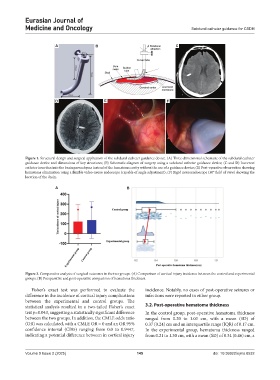
            Figure 1. Structural design and surgical application of the subdural catheter guidance device. (A) Three-dimensional schematic of the subdural catheter
            guidance device and dimensions of key structures; (B) Schematic diagram of surgery using a subdural catheter guidance device; (C and D) Incorrect
            catheter insertion into the brain parenchyma instead of the hematoma cavity without the use of a guidance device; (E) Post-operative observation showing
            hematoma elimination using a flexible video-neuro endoscope (capable of angle adjustment); (F) Rigid neuroendoscope (30° field of view) showing the
            location of the drain.

                         A                             B


            Figure 2. Comparative analysis of surgical outcomes in the two groups. (A) Comparison of cortical injury incidence between the control and experimental
            groups. (B) Preoperative and post-operative comparison of hematoma thickness.

              Fisher’s exact test was performed to evaluate the   incidence. Notably, no cases of post-operative seizures or
            difference in the incidence of cortical injury complications   infections were reported in either group.
            between the  experimental  and control  groups.  The
            statistical analysis resulted in a two-tailed Fisher’s exact   3.2. Post-operative hematoma thickness
            test p=0.043, suggesting a statistically significant difference   In the control group, post-operative hematoma thickness
            between the two groups. In addition, the CMLE odds ratio   ranged from 0.20 to 1.03  cm, with a mean (SD) of
            (OR) was calculated, with a CMLE OR = 0 and an OR 95%   0.37 (0.24) cm and an interquartile range (IQR) of 0.17 cm.
            confidence interval (CI95) ranging from 0.0 to 0.9447,   In the experimental group, hematoma thickness ranged
            indicating a potential difference between in cortical injury   from 0.21 to 1.30 cm, with a mean (SD) of 0.34 (0.46) cm, a


            Volume 9 Issue 2 (2025)                        145                              doi: 10.36922/ejmo.8532

