


Page 298 - EJMO-9-3
P. 298
Eurasian Journal of
            Medicine and Oncology                                       Helicobacter pylori infection and Alzheimer’s disease


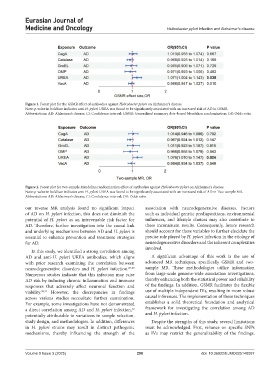
            Figure 1. Forest plot for the GSMR effect of antibodies against Helicobacter pylori on Alzheimer’s disease
            Note: p-value in boldface indicates anti-H. pylori UREA was found to be significantly associated with an increased risk of AD in GSMR.
            Abbreviations: AD: Alzheimer’s disease; CI: Confidence interval; GSMR: Generalized summary data–based Mendelian randomization; OR: Odds ratio.


            Figure 2. Forest plot for two-sample Mendelian randomization effect of antibodies against Helicobacter pylori on Alzheimer’s disease
            Note: p-value in boldface indicates anti-H. pylori UREA was found to be significantly associated with an increased risk of AD in Two-sample MR.
            Abbreviations: AD: Alzheimer’s disease; CI: Confidence interval; OR: Odds ratio.
            our reverse MR analysis found no significant impact   association with neurodegenerative diseases. Factors
            of AD on H. pylori infection, this does not diminish the   such as individual genetic predispositions, environmental
            potential of  H.  pylori as an intervenable risk factor for   influences, and lifestyle choices may also contribute to
            AD. Therefore, further investigation into the causal link   these inconsistent results. Consequently, future research
            and underlying mechanisms between AD and H. pylori is   should account for these variables to further elucidate the
            essential to enhance prevention and treatment strategies   precise role played by H. pylori infection in the etiology of
            for AD.                                            neurodegenerative disorders and the inherent complexities
                                                               involved.
              In this study, we identified a strong correlation among
            AD and anti-H. pylori UREA antibodies, which aligns   A significant advantage of this work is the use of
            with prior research examining the correlation between   advanced MR techniques, specifically GSMR and two-
            neurodegenerative disorders and  H. pylori infection. 27-29    sample MR. These methodologies utilize information
            Numerous  studies  indicate  that  this  infection  may  raise   from large-scale genome-wide association investigations,
            AD risk by inducing chronic inflammation and immune   thereby enhancing both the statistical power and reliability
            responses that adversely affect neuronal function and   of the findings. In addition, GSMR facilitates the flexible
            viability. 30,31  However, the discrepancies in findings   use of multiple independent IVs, resulting in more robust
            across  various  studies  necessitate  further  examination.   causal inferences. The implementation of these techniques
            For example, some investigations have not demonstrated   establishes a solid theoretical foundation and analytical
            a direct correlation among AD and H. pylori infection,    framework for investigating the correlation among AD
                                                         32
            potentially attributable to variations in sample selection,   and H. pylori infection.
            study design, and methodologies. In addition, differences   Despite the strengths of this study, several limitations
            in  H. pylori  strains  may  result  in  distinct  pathogenic   must be acknowledged. First, reliance on specific SNPs
            mechanisms, thereby  influencing the  strength  of the   as  IVs may  restrict  the generalizability of  the findings.


            Volume 9 Issue 3 (2025)                        290                         doi: 10.36922/EJMO025140087

