


Page 37 - GHES-2-4
P. 37
Global Health Economics and
            Sustainability
                                                                                  Think of a similar situation in the future


                                                               measurement, blood glucose, and vaccinations, which
                                                               could be especially relevant during a pandemic (Kirkwood
                                                               & Riegelman, 2011; Laanan, 2003).

                                                                 Continuing education for health professionals: Senior
                                                               universities can offer continuing education courses for
                                                               health professionals working with older adults. These
                                                               courses can include updates on best practices in caring
                                                               for older adults and discoveries in the field of gerontology,
                                                               which could be important during a pandemic (Bolante &
                                                               Dykeman, 2015; Kirkwood & Riegelman, 2011).
                                                               4. Strengths and limitations

                                                               During the pandemic, older adults were found to be
                                                               particularly vulnerable to depression. This paper reflects
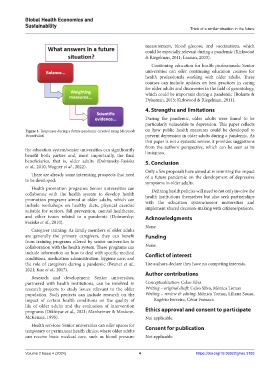
            Figure 1. Responses during a future pandemic (created using Microsoft   on how public health measures could be developed to
            PowerPoint)                                        prevent depression in older adults during a pandemic. As
                                                               this paper is not a systeatic review, it provides suggestions
                                                               from the authors’ perspective, which can be seen as its
            the education system/senior universities can significantly   limitation.
            benefit both parties and, most importantly, the final
            beneficiaries, that is, older adults (Dobransky-Fasiska   5. Conclusion
            et al., 2010; Wagner et al., 2022).
                                                               Only a few proposals have aimed at minimizing the impact
              There are already some interesting prospects that need   of a future pandemic on the development of depressive
            to be developed:                                   symptoms in older adults.
              Health promotion programs: Senior universities can   Defining health policies will need to not only involve the
            collaborate with the health system to develop health   health institutions themselves but also seek partnerships
            promotion programs aimed at older adults, which can   with the education system/senior universities and
            include workshops on healthy diets, physical exercise   implement shared decision-making with citizens/patients.
            suitable for seniors, fall prevention, mental healthcare,
            and other issues related to a pandemic (Dobransky-  Acknowledgments
            Fasiska et al., 2010).
                                                               None.
              Caregiver training: As family members of older adults
            are generally the primary caregivers, they can benefit   Funding
            from training programs offered by senior universities in
            collaboration with the health system. These programs can   None.
            include information on how to deal with specific medical   Conflict of interest
            conditions, medication administration, hygiene care, and
            the role of caregivers during a pandemic (Brunet  et al.,   The authors declare they have no competing interests.
            2021; Kuo et al., 2017).                           Author contributions
              Research and development: Senior universities,
            partnered with health institutions, can be involved in   Conceptualization: Celso Silva
            research projects to study issues relevant to the older   Writing – original draft: Celso Silva, Mónica Tomaz
            population. Such projects can include research on the   Writing – review & editing: Mónica Tomaz, Liliana Sousa,
            impact of certain health conditions on the quality of   Rogério Ferreira, César Fonseca
            life of older adults and the evaluation of intervention
            programs (Dikhtyar et al., 2021; Manheimer & Moskow‐  Ethics approval and consent to participate
            McKenzie, 1995).                                   Not applicable.
              Health services: Senior universities can offer spaces for   Consent for publication
            temporary or permanent health clinics, where older adults
            can  receive  basic  medical care, such  as  blood  pressure   Not applicable.


            Volume 2 Issue 4 (2024)                         4                        https://doi.org/10.36922/ghes.3193

