


Page 11 - GHES-3-2
P. 11
Global Health Economics and
            Sustainability
                                                                        Flow states in neurodivergence: Cognitive integration


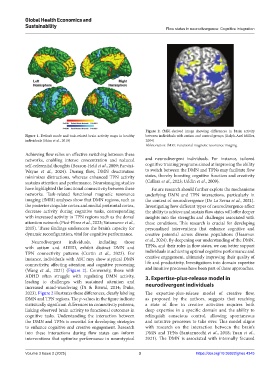
                                                               Figure  2. fMRI-derived image showing differences in brain activity
            Figure 1. Default mode and task-related brain activity maps in healthy   between individuals with autism and control groups (Ralph-Axel Müller,
            individuals (Shim et al., 2010)                    2004)
                                                               Abbreviation: fMRI: Functional magnetic resonance imaging.
            Achieving flow relies on effective switching between these
            networks,  enabling  intense  concentration  and  reduced   and  neurodivergent  individuals.  For  instance,  tailored
            self-referential thoughts (Beason-Held et al., 2009; Parvizi-  cognitive training programs aimed at improving the ability
            Wayne  et al., 2024). During flow, DMN deactivation   to switch between the DMN and TPNs may facilitate flow
            minimizes distractions, whereas enhanced TPN activity   states, thereby boosting cognitive function and creativity
            sustains attention and performance. Neuroimaging studies   (Callara et al., 2023; Uddin et al., 2009).
            have highlighted the functional connectivity between these   Future research should further explore the mechanisms
            networks. Task-related functional magnetic resonance   underlying DMN and TPN interactions, particularly in
            imaging (fMRI) analyses show that DMN regions, such as   the context of neurodivergence (De La Serna et al., 2021).
            the posterior cingulate cortex and medial prefrontal cortex,   Investigating how different types of neurodivergence affect
            decrease activity during cognitive tasks, corresponding   the ability to achieve and sustain flow states will offer deeper
            with increased activity in TPN regions such as the dorsal   insights into the strengths and challenges associated with
            attention network (Picó-Pérez et al., 2023; Vatansever et al.,   these conditions. This research is crucial for developing
            2015). These findings underscore the brain’s capacity for   personalized interventions that enhance cognitive and
            dynamic reconfiguration, vital for cognitive performance.  creative potential across diverse populations (Heasman

              Neurodivergent  individuals,  including  those   et al., 2024). By deepening our understanding of the DMN,
            with autism and ADHD, exhibit distinct DMN and     TPNs, and their roles in flow states, we can better support
            TPN connectivity patterns (Curtin  et al., 2023). For   individuals in achieving optimal cognitive performance and
            instance, individuals with ASC may show atypical DMN   creative engagement, ultimately improving their quality of
            connectivity, affecting attention and cognitive processing   life and productivity. Investigations into domain expertise
            (Wang  et al., 2021) (Figure  2). Conversely, those with   and intuitive processes have been part of these approaches.
            ADHD often struggle with regulating DMN activity,   3. Expertise-plus-release model in
            leading to challenges with sustained attention and   neurodivergent individuals
            increased mind-wandering (Di & Biswal, 2014; Duke,
            2023). Figure 2 illustrates these differences, clearly labeling   The expertise-plus-release model of creative flow,
            DMN and TPN regions. The p-values in the figure indicate   as  proposed  by  the  authors,  suggests  that  reaching
            statistically significant differences in connectivity patterns,   a state of flow in creative activities requires both
            linking observed brain activity to functional outcomes in   deep expertise in a specific domain and the ability to
            cognitive tasks. Understanding the interaction between   relinquish conscious control, allowing spontaneous
            the DMN and TPNs is essential for developing strategies   and intuitive processes to take over. This model aligns
            to enhance cognitive and creative engagement. Research   with  research  on  the  interaction  between  the  brain’s
            into these interactions during flow states can inform   DMN and TPNs (Santarnecchi et al., 2018; Yuan et al.,
            interventions that optimize performance in neurotypical   2021). The DMN is associated with internally focused


            Volume 3 Issue 2 (2025)                         3                        https://doi.org/10.36922/ghes.4345

