


Page 26 - GHES-3-2
P. 26
Global Health Economics and
            Sustainability
                                                                      Retrospective analysis of dialysis and kidney transplant


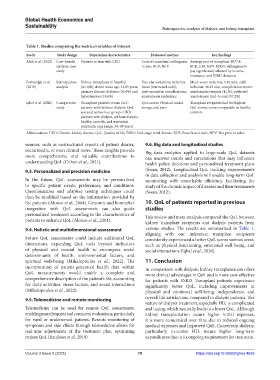
            Table 1. Studies comparing the metrics/variables of interest
            Study        Study design  Population characteristics  Evaluated metrics       Key findings
            Abdi et al. (2022)  Cost-benefit   Patients in Iran with CKD  Cost of transplant; willingness  Average cost of transplant: $877.4;
                         analysis; case                      to pay; BCR; NPV     BCR: 5.39; NPV: $3855; willingness to
                         study                                                    pay significantly affected by income,
                                                                                  insurance, and ESRD duration
            Ferhatoğlu et al.   Retrospective  Kidney transplants in Istanbul   Vascular variations; ischemia   Mean warm ischemia: 1.82 min; cold
            (2019)       analysis  (n=100); donor mean age: 44.05 years;  times (warm and cold);   ischemia: 40.25 min; complication: ureter
                                   primary disease: diabetes (36.4%) and  post-operation complications;  anastomosis stenosis (4.1%); preferred
                                   hypertension (15.6%)      anastomosis preference  anastomosis: End-to-end (57.2%)
            Iqbal et al. (2020)  Comparative   Transplant patients versus CKD   QoL scores: Physical, social,   Transplant recipients had the highest
                         study     patients with/without dialysis; QoL   energy, and pain  QoL scores, some comparable to healthy
                                   assessed across four groups: CKD               controls
                                   patients with dialysis, without dialysis,
                                   healthy controls, and transplant
                                   recipients; (age range: 34–49 years)
            Abbreviations: CKD: Chronic kidney disease; QoL: Quality of life; ESRD: End-stage renal disease; BCR: Benefit cost ratio; NPV: Net present value.

            sources, such as unstructured reports of patient diaries,   9.6. Big data and longitudinal studies
            social media, or even clinical notes. These insights provide   Big data analytics applied to large-scale QoL datasets
            more comprehensive and valuable contributions to   can uncover trends and correlations that may influence
            understanding QoL (Cohen et al., 2021).            health policy decisions and personalized treatment plans

            9.3. Personalized and precision medicine           (Swan, 2012). Longitudinal QoL tracking improvements
                                                               in data collection and analysis will enable long-term QoL
            In the future, QoL assessments may be personalized   monitoring  with  remarkable  efficiency,  facilitating  the
            to specific patient needs, preferences, and conditions.   study of the chronic impact of diseases and their treatments
            Questionnaires and adaptive testing techniques could   (Swan, 2012).
            then be modified based on the information provided by
            the patients (Alonso et al., 2004). Genomic and biomarker   10. QoL of patients reported in previous
            integration with QoL assessments can also guide    studies
            personalized treatment according to the characteristics of   This review and meta-analysis compared the QoL between
            patients to enhance QoL (Alonso et al., 2004).
                                                               kidney transplant recipients and dialysis patients from
            9.4. Holistic and multidimensional assessment      various studies. The results are summarized in  Table 1,
                                                               aligning with our inference; transplant recipients
            Future QoL assessments could include additional QoL   consistently experienced a better QoL across various areas,
            dimensions,  expanding  QoL  tools  beyond  indicators   such as physical functioning, emotional well-being, and
            of physical and mental health to encompass social   social interactions (Iqbal et al., 2020).
            determinants  of  health,  environmental  factors,  and
            spiritual well-being (Mihalopoulos  et al., 2022). The   11. Conclusion
            incorporation of patient-generated health data within   In comparison with dialysis, kidney transplantation offers
            QoL measurements would enable a complete and       more clinical advantages in QoL and is more cost-effective
            comprehensive description of the patient’s life, accounting   for patients with ESRD. Transplant patients experience
            for daily activities, stress factors, and social interactions   significantly better QoL, including improvements in
            (Mihalopoulos et al., 2022).                       physical and emotional well-being, independence, and

            9.5. Telemedicine and remote monitoring            overall life satisfaction, compared to dialysis patients. The
                                                               nature of dialysis treatment, especially HD, is complicated
            Telemedicine can be used for remote QoL assessments,   and taxing, which naturally leads to a lower QoL. Although
            enabling more frequent and consistent evaluations, particularly   kidney  transplantation  incurs  higher  initial  expenses,
            for rural or underserved patients. Remote monitoring of   it is more economical over time due to reduced ongoing
            symptoms and side effects through telemedicine allows for   medical expenses and improved QoL. Conversely, dialysis,
            real-time adjustments of the treatment plan, optimizing   particularly in-center HD, incurs higher long-term
            patient QoL (Kaufman et al., 2019).                expenditures due to its ongoing requirement for treatment.


            Volume 3 Issue 2 (2025)                         18                       https://doi.org/10.36922/ghes.4639

