


Page 75 - IMO-2-2
P. 75
Innovative Medicines & Omics                                      Herbal drug among non-health professionals


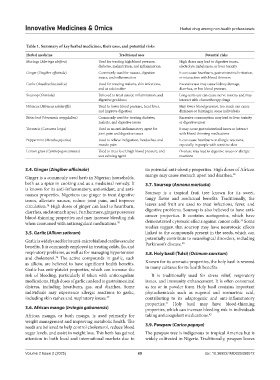
            Table 1. Summary of key herbal medicines, their uses, and potential risks
            Herbal medicine                         Traditional uses                    Potential risks
            Moringa (Moringa oleifera)     Used for treating high blood pressure,   High doses may lead to digestive issues,
                                           diabetes, malnutrition, and inflammation  electrolyte imbalances, or liver toxicity
            Ginger (Zingiber officinale)   Commonly used for nausea, digestion   It can cause heartburn, gastrointestinal irritation,
                                           issues, and inflammation          or interaction with blood thinners
            Garlic (Azadirachta indica)    Used for treating malaria, skin infections,   Excessive use may cause kidney damage,
                                           and as a detoxifier               diarrhea, or low blood pressure.
            Soursop (Graviola)             Believed to treat cancer, inflammation, and   Long-term use can cause nerve toxicity and may
                                           digestive problems                interact with chemotherapy drugs
            Hibiscus (Hibiscus sabdariffa)  Used to lower blood pressure, treat fever,   May lower blood pressure, too much can cause
                                           and improve digestion             dizziness or fainting in some individuals
            Bitter leaf (Verononia amygdalina)  Commonly used for treating diabetes,   Excessive consumption may lead to liver toxicity
                                           malaria, and digestive issues     or digestive upset
            Turmeric (Curcuma longa)       Used as an anti-inflammatory agent for   It may cause gastrointestinal issues or interact
                                           joint pain and digestive issues   with blood-thinning medications
            Peppermint (Mentha piperita)   Used to relieve indigestion, headaches, and   It can cause heartburn or allergic reactions,
                                           muscle pain                       especially in people with sensitive skin
            Lemon grass (Cymbopogon citratus)  Used to treat fever, high blood pressure, and   Overuse may lead to digestive issues or allergic
                                           as a calming agent                reactions

            3.4. Ginger (Zingiber officinale)                  its potential anti-obesity properties. High doses of African
            Ginger is a commonly used herb in Nigerian households,   mango may cause stomach upset and diarrhea. 38
            both as a spice in cooking and as a medicinal remedy. It   3.7. Soursop (Annona muricata)
            is known for its anti-inflammatory, antioxidant, and anti-
            nausea properties. Nigerians use ginger to treat digestive   Soursop is a tropical fruit tree known for its sweet,
            issues, alleviate nausea, reduce joint pain, and improve   tangy flavor and medicinal benefits. Traditionally, the
            circulation.  High doses of ginger can lead to heartburn,   leaves  and  fruit  are  used  to  treat  infections,  fever,  and
                     34
            diarrhea, and stomach upset. Furthermore, ginger possesses   digestive problems. Soursop is also believed to have anti-
            blood-thinning properties and may increase bleeding risk   cancer properties. It contains acetogenins, which have
                                                                                                       39
            when consumed with anticoagulant medications. 35   demonstrated cytotoxic effects against cancer cells.  Some
                                                               studies suggest that soursop may have neurotoxic effects
            3.5. Garlic (Allium sativum)                       linked to the compounds present in the seeds, which can
            Garlic is widely used for its anti-microbial and cardiovascular   potentially contribute to neurological disorders, including
                                                                              40
            benefits. It is commonly employed in treating colds, flu, and   Parkinson’s disease.
            respiratory problems, as well as for managing hypertension   3.8. Holy basil (Tulsi) (Ocimum sanctum)
            and cholesterol.  The active compounds in garlic, such
                         36
            as allicin, are believed to have significant health benefits.   Known for its aromatic properties, the holy basil is revered
            Garlic has anti-platelet properties, which can increase the   in many cultures for its health benefits.
            risk of bleeding,  particularly if taken with anticoagulant   It is traditionally used for stress relief, respiratory
            medications. High doses of garlic can lead to gastrointestinal   issues, and immunity enhancement. It is often consumed
            distress,  including heartburn,  gas, and  diarrhea.  Some   as tea or in powder form. Holy basil contains important
            individuals may experience allergic reactions to garlic,   phytochemicals such as eugenol and rosmarinic acid,
            including skin rashes and respiratory issues. 37   contributing  to  its  adaptogenic  and  anti-inflammatory
                                                               properties.   Holy basil  may have  blood-thinning
                                                                       41
            3.6. African mango (Irvingia gabonensis)           properties, which can increase bleeding risk in individuals
            African mango, or bush mango, is used primarily for   taking anticoagulant medications. 42
            weight management and improving metabolic health. The
            seeds are believed to help control cholesterol, reduce blood   3.9. Pawpaw (Carica papaya)
            sugar levels, and assist in weight loss. This herb has gained   The pawpaw tree is indigenous to tropical America but is
            attention in both local and international markets due to   widely cultivated in Nigeria. Traditionally, pawpaw leaves


            Volume 2 Issue 2 (2025)                         69                          doi: 10.36922/IMO025080012

