


Page 54 - JCAU-7-2
P. 54
Journal of Chinese
            Architecture and Urbanism                                          Shan-Shaan Guild Hall on Great Tea Route


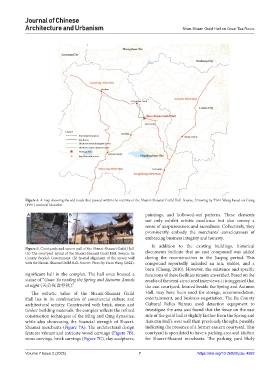
            Figure 4. A map showing the old roads that passed within the vicinity of the Shanxi-Shaanxi Guild Hall. Source: Drawing by Yixin Wang based on Gong
            (1991) and oral histories.
             A                B                                paintings,  and  hollowed-out  patterns.  These  elements
                                                               not only exhibit artistic excellence but also convey a
                                                               sense of auspiciousness and sacredness. Collectively, they
                                                               prominently embody the merchants’ consciousness of
                                                               embracing business integrity and honesty.
                                                                 In addition to the existing buildings, historical
            Figure 5. Courtyards and screen wall of the Shanxi-Shaanxi Guild Hall.
            (A) The courtyard layout of the Shanxi-Shaanxi Guild Hall. Source: Jia   documents indicate that an east compound was added
            County People’s Government. (B) Spatial alignment of the screen wall   during the reconstruction in the Jiaqing period. This
            with the Shanxi-Shaanxi Guild Hall. Source: Photo by Yixin Wang (2022).  compound  reportedly  included  an  inn,  stables,  and  a
                                                               barn (Cheng, 2010). However, the existence and specific
            significant  hall  in  the  complex.  The  hall  once  housed  a   functions of these facilities remain unverified. Based on the
            statue of “Guan Yu reading the Spring and Autumn Annals   results of the semi-structured interviews, it is suggested that
            at night (关公夜读春秋).”                                the east courtyard, located beside the Spring and Autumn
              The esthetic value of the Shanxi-Shaanxi Guild   Hall, may have been used for storage, accommodation,
            Hall lies in its combination of commercial culture and   entertainment, and business negotiation. The Jia County
            architectural artistry. Constructed with brick, stone, and   Cultural Relics Bureau used detection equipment to
            timber building materials, the complex reflects the refined   investigate the area and found that the fence on the east
            construction techniques of the Ming and Qing dynasties,   side of the guild hall is slightly farther from the Spring and
            while also showcasing the financial strength of Shanxi-  Autumn Hall’s west wall than previously thought, possibly
            Shaanxi merchants (Figure 7A). The architectural design   indicating the presence of a former eastern courtyard. This
            features vibrant and intricate wood carvings (Figure 7B),   courtyard is speculated to have a parking area and kitchen
            stone carvings, brick carvings (Figure 7C), clay sculptures,   for Shanxi-Shaanxi merchants. The parking yard likely


            Volume 7 Issue 2 (2025)                         7                        https://doi.org/10.36922/jcau.4582

