


Page 10 - JCBP-2-4
P. 10
Journal of Clinical and
            Basic Psychosomatics                                                            FND and gut microbiome


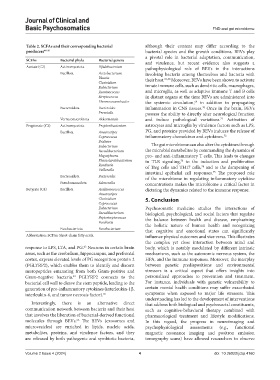
            Table 2. SCFAs and their corresponding bacterial   although their content may differ according to the
            producers 48‑50                                    bacterial species and the growth conditions. BEVs play
                                                               a pivotal role in bacterial adaptation, communication,
            SCFAs          Bacterial phyla  Bacterial genera   and virulence, but recent evidence also suggests a
            Acetate (C2)   Actinomycetota  Bifidobacterium     pathophysiological role of BEVs in the interactions
                           Bacillota       Acetobacterium      involving bacteria among themselves and bacteria with
                                           Blautia             their host. 67,68  Moreover, BEVs have been shown to activate
                                           Clostridium
                                           Eubacterium         innate immune cells, such as dendritic cells, macrophages,
                                           Ruminococcus        and microglia, as well as adaptive immune T and B cells
                                           Streptococcus       in distant organs at the time BEVs are administered into
                                           Thermoanaerobacter  the systemic circulation,  in addition to propagating
                                                                                    69
                           Bacteroidota    Bacteroides         inflammation in CNS tissues.  Once in the brain, BEVs
                                                                                       70
                                           Prevotella          possess the ability to directly alter neurological function
                                                                                               71
                           Verrucomicrobiota  Akkermansia      and induce pathological variations.  Activation of
            Propionate (C3)  Actinomycetota  Propionibacterium  astrocytes and microglia by virulence factors such as LPS,
                           Bacillota       Anaerostipes        PG, and proteins provided by BEVs induces the release of
                                           Coprococcus         inflammatory chemokines and cytokines. 72
                                           Dialister
                                           Eubacterium           The gut microbiome can also alter the cytokines through
                                           Faecalibacterium    the microbial metabolites by commanding the dynamics of
                                           Megasphaera         pro- and anti-inflammatory T cells. This leads to changes
                                           Phascolarctobacterium  in TLR signaling,  to the induction and proliferation
                                                                              73
                                           Roseburia           of Treg cells and TH17 cells,  and to the dampening of
                                                                                       74
                                           Veillonella                                      75
                           Bacteroidota    Bacteroides         intestinal epithelial cell responses.  The proposed role
                                                               of the microbiome in regulating inflammatory cytokine
                           Pseudomonadota  Salmonella          concentrations makes the microbiome a critical factor in
            Butyrate (C4)  Bacillota       Acidaminococcus     dictating the dynamics related to the immune response.
                                           Anaerostipes
                                           Clostridium         5. Conclusion
                                           Coprococcus
                                           Eubacterium         Psychosomatic  medicine  studies  the  interactions  of
                                           Faecalibacterium    biological, psychological, and social factors that regulate
                                           Peptostreptococcus  the balance between health and disease, emphasizing
                                           Roseburia           the holistic nature of human health and recognizing
                           Fusobacteriota  Fusobacterium       that cognitive and emotional states can significantly
            Abbreviation: SCFAs: Short-chain fatty acids.      influence physical outcomes and vice versa. This illustrates
                                                               the complex yet close interaction between mind and
            response to LPS, LTA, and PG.  Neurons in certain brain   body, which is notably modulated by different intrinsic
                                     63
            areas, such as the cerebellum, hippocampus, and prefrontal   mechanisms, such as the autonomic nervous system, the
            cortex, express elevated levels of PG recognition protein 2   HPA, and the immune responses. Moreover, the interplay
            (PGLYRP2), which enables them to identify and discern   between genetic predispositions and environmental
            muropeptides emanating from both Gram-positive and   stressors is a critical aspect that offers insights into
            Gram-negative bacteria.  PGLYRP2 connects to the   personalized  approaches  to  prevention  and  treatment.
                                64
            bacterial cell wall to cleave the stem peptide, leading to the   For instance, individuals with genetic vulnerability to
            generation of pro-inflammatory cytokines (interleukin-1β,   certain mental health conditions may suffer exacerbated
            interleukin-6, and tumor necrosis factor). 65      symptoms when exposed to major life stressors. This
                                                               understanding has led to the development of interventions
              Interestingly,  there  is  an  alternative  direct  that address both biological and psychosocial constituents,
            communication network between bacteria and their host   such as cognitive-behavioral therapy combined with
            that involves the liberation of bacterial-derived functional   pharmacological treatment and lifestyle modifications.
            molecules  through  BEVs.   The  BEVs  (exosomes  and   In this regard, the progress in neuroimaging and
                                  66
            microvesicles) are  enriched  in  lipids,  nucleic acids,   psychophysiological  assessments  (e.g.,  functional
            metabolites, proteins, and virulence factors, and they   magnetic resonance imaging and positron emission
            are released by both pathogenic and symbiotic bacteria,   tomography scans)  have  allowed  researchers  to  observe


            Volume 2 Issue 4 (2024)                         4                               doi: 10.36922/jcbp.4160

