


Page 31 - JCBP-3-2
P. 31
Journal of Clinical and
            Basic Psychosomatics                                                       Morgellons: Delusion or disease


            including pathological painful ulcerations, prurigo   associated with schizophrenia, bipolar affective disorder,
            nodularis, and secondary infections, may be observed   and obsessive-compulsive disorder. 17,22  These psychological
            (Figure 2). 15,18                                  disturbances can arise anytime during the course of the
              Patients with Morgellons may exhibit associated systemic   disease, particularly in the later periods.
            symptoms, including neurological (e.g., headaches, fatigue,   4.2. Objective findings in clinical studies
            short-term memory deficits, and emotional lability),
            cardiovascular (e.g., irregular heart rates, tachycardia, and   Several studies have aimed to clarify the objective
            intolerance to changes in blood pressure), respiratory (e.g.,   symptoms of Morgellons. Recently, most authors have
            coughing and shortness of breath), and musculoskeletal   realized that the disease is debilitating and centered around
            (e.g., diffuse musculoskeletal pain, fibromyalgia, and   the symptom of finding fibers in the skin, which can
            chronic fatigue syndrome) symptoms. 20             cause secondary symptoms such as itching and picking.
                                                               Reportedly, the histological analysis of filaments presented
              In addition, patients with Morgellons may present   by the patients is not textile fibers but biofilaments of
            with  several  psychological  symptoms,  including  mood   human cellular origin; 20,23,24  the filaments comprise
            disturbances, delusions, paranoia, cognitive impairments,   collagen and keratin, hypothesizing that they may be the
            and suicide attempts.  In addition, Morgellons is   product of cutaneous filament overproduction in response
                               21
                                                               to a spirochetal infection, 25,26  namely Borrelia burgdorferi
                                                               (causative organism of Lyme disease). 20,24

                                                                 However, recent studies investigating the association
                                                               between B. burgdorferi and Morgellons through laboratory
                                                               assessments have yielded conflicting results. Four
                                                               studies have yielded no evidence linking Morgellons
                                                               to  B. burgdorferi or any other infectious agents. 27-30
                                                               However, some authors believe that Morgellons is caused
                                                               by  B. burgdorferi. 31,32  Internal and external validation
                                                               of such findings cannot be generalized and may not be
                                                               reproducible. Moreover, CDC studies have reported that
                                                               there is no common underlying medical condition or
                                                               infectious organism in patients with Morgellons. 1
                                                                 Recognizing the interplay between Morgellons disease
                                                               and the associated clinical outcomes is crucial. The severity
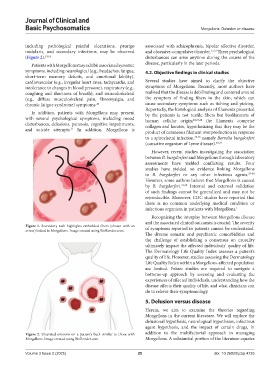
            Figure  1. Secondary rash highlights embedded fibers (shown with an   of symptoms reported in patients cannot be understated.
            arrow) linked to Morgellons. Image created using BioRender.com.
                                                               The diverse somatic and psychiatric comorbidities and
                                                               the challenge of establishing a consensus on causality
                                                               ultimately impact the affected individuals’ quality of life.
                                                               The Dermatology Life Quality Index assesses a patient’s
                                                               quality of life. However, studies assessing the Dermatology
                                                               Life Quality Index within a Morgellons-affected population
                                                               are limited. Future studies are required to navigate a
                                                               bottoms-up approach by  assessing  and evaluating  the
                                                               experiences of affected individuals, understanding how the
                                                               disease affects their quality of life, and what clinicians can
                                                               do to relieve their symptomology.
                                                               5. Delusion versus disease

                                                               Herein, we aim to examine the theories regarding
                                                               Morgellons in the current literature. We will explore the
                                                               delusional hypothesis, neurological hypotheses, infectious
                                                               agent hypothesis, and the impact of certain drugs, in
            Figure 2.  Ulcerated  erosions  on  a  patient’s  back  similar  to  those  with   addition to the multifactorial approach in managing
            Morgellons. Image created using BioRender.com.     Morgellons. A substantial portion of the literature equates


            Volume 3 Issue 2 (2025)                         25                              doi: 10.36922/jcbp.4735

