


Page 12 - OR-1-2
P. 12
Parkinson’s research, focusing on their role in elucidating   by DA neuron loss and increased apoptosis, mirroring
            disease pathomechanisms (Table 1). We then explore   neurodegenerative  processes  observed  in  PD  brains. 20-22
            their applications in drug discovery and high-throughput   Single-cell RNA sequencing of SNCA triplication hMOs has
            screening. Finally, we discuss the potential of organoid   provided insights into molecular dysfunctions affecting DA
            transplantation as a therapeutic strategy for PD.  neurons,  including impaired oxidative phosphorylation,
                                                              dysregulated protein translation, and endoplasmic
            2. Organoid models for PD                         reticulum stress.  Furthermore, recent studies suggest that
                                                                           23
            2.1. SNCA                                         α-synuclein pathology is linked to cellular senescence,
                                                              particularly in astrocytes, leading to a phenomenon termed
            α-Synuclein, a 140-amino-acid presynaptic neuronal   astrosenescence, supporting that pathological α-synuclein
            protein encoded by the  SNCA gene, plays a critical role   may contribute to the induction of neuroinflammation,
            in synaptic function, but its pathological aggregation   which ultimately increases the susceptibility of DA neurons
            into Lewy bodies is a hallmark of PD.  SNCA mutations,   to degeneration. 22
                                           18
            particularly missense mutations and gene amplifications,
            are associated with autosomal dominant PD. Among    In addition to using hMOs to investigate the potential
            these, SNCA triplications lead to a substantial increase in   cellular  mechanisms  of  SNCA-induced  neuronal  toxicity,
            α-synuclein expression, accelerating pathological processes   organoid models have also been employed to study the
            and neurodegeneration.  Studies using hMOs derived   propagation of  α-synuclein pathology. In a recent study,
                                19
            from iPSCs carrying  SNCA triplication mutations have   researchers used mouse intestinal organoids expressing
            successfully replicated key features of α-synuclein pathology   human α-synuclein to examine the transfer of α-synuclein
            seen in patients with synucleinopathies. hMOs with SNCA   from epithelial cells within the organoids  to co-cultured
            triplications exhibit elevated α-synuclein levels and a time-  nodose neurons lacking  α-synuclein expression. This
            dependent increase in  α-synuclein aggregation. 20-22  This   study highlights a potential non-neuronal source of
            aggregation includes both oligomeric and phosphorylated   fibrillar  α-synuclein, suggesting that gut mucosal cells
            forms of  α-synuclein, which are detected in both   may contribute to the initiation or spread of α-synuclein
            neurons and glial cells.  The progressive accumulation of   pathology.  In addition to the genetic manipulation of
                                                                      24
                               20
            pathological α-synuclein in these organoids is accompanied   SNCA, hMOs are also utilized to study the propagation of
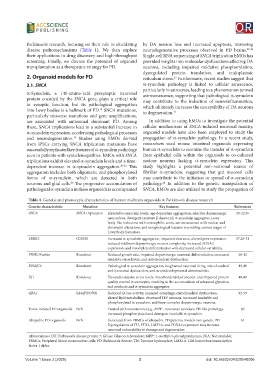
             Table 1. Genetic and phenotypic characteristics of human midbrain organoids in Parkinson’s disease research
             Genetic characteristic  Mutation                        Key features                    References
             SNCA                 SNCA triplication  Elevated α-synuclein levels, age-dependent aggregation, selective dopaminergic   20-22,56
                                               neuron loss, detergent-resistant β-sheet-rich α-synuclein aggregates, Lewy
                                               body-like inclusions with eosinophilic cores, astrosenescence with nuclear and
                                               chromatin alterations, and morphological features resembling various stages of
                                               Lewy body formation.
             LRRK2                G2019S       Increased α-synuclein aggregation, impaired clearance, altered gene expression,   17,28-31
                                               reduced midbrain dopaminergic neuron complexity, increased FOXA2
                                               expression, and incomplete differentiation with decreased cellular variability.
             PINK1/Parkin         Knockout     Reduced growth rate, impaired dopaminergic neuronal differentiation, increased   38-42
                                               oxidative stress levels, and mitochondrial dysfunction.
             DNAJC6               Knockout     Pathological α-synuclein aggregation, heightened neuronal firing, mitochondrial   45,46
                                               and lysosomal dysfunction, and neurodevelopmental abnormalities.
             DJ1                  Knockout     Elevated oxidative stress levels, mitochondrial dysfunction, and impaired protein   48,49
                                               quality control in astrocytes, resulting in the accumulation of advanced glycation
                                               end products and α-synuclein aggregates
             GBA1                 L444P/N370S  Reduced GCase activity, impaired autophagy, mitochondrial dysfunction,   52-59
                                               altered lipid metabolism, decreased TH  neurons, increased insoluble and
                                                                        +
                                               phosphorylated α-synuclein, and fewer complex dopaminergic neurons.
             Toxin-induced PD organoids  N/A   Treated with neurotoxins (e.g., MPP , rotenone) to induce PD-like pathology.  60
                                                                      +
                                               Increased phosphorylated and detergent-insoluble α-synuclein.
             Idiopathic PD organoids  N/A      Generated from PBMCs of idiopathic PD patients, models non-genetic PD.   61
                                               Dysregulation of TH, PTX3, LMX1A, and FOXA2 expression may increase
                                               neuronal vulnerability to damage and degeneration
             Abbreviations: DJI: Parkinson’s disease protein 7; GCase: Glucocerebrosidase; MPP : 1-methyl-4-phenylpyridinium; N/A: Not available;
                                                                  +
             PBMCs: Peripheral blood mononuclear cells; PD: Parkinson’s disease; TH: Tyrosine hydroxylase; LMX1A: LIM homeobox transcription
             factor 1 alpha.

            Volume 1 Issue 2 (2025)                         3                            doi: 10.36922/OR025040006

