


Page 37 - TD-2-2
P. 37
Tumor Discovery                                                       A comprehensive review of bexarotene


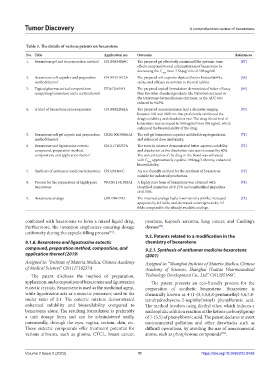
            Table 3. The details of various patents on bexarotene
            No. Title                        Application no.  Outcome                                References
            1.  Bexarotene gel and its preparation method  CN100434068C  The prepared gel effectively minimized the systemic toxic   [67]
                                                           effects compared to oral administration of bexarotene by
                                                           decreasing the C   from 7.56 μg/ml to 0.598 μg/ml.
                                                                      max
            2.  Bexarotene soft capsules and preparation   CN103181912A  The prepared soft capsules depicted better bioavailability,   [68]
                method thereof                             safety, and efficacy in contrast to the oral tablets.
            3.  Topical pharmaceutical compositions   EP2612665A1  The prepared topical formulation demonstrated better efficacy   [69]
                comprising bexarotene and a corticosteroid  than the other standard products like Daivobet ointment or
                                                           the tazarotene-betamethasone ointment, as the AUC was
                                                           reduced to 94.9%.
            4.  A kind of bexarotene nanosuspension  CN104922062A  The prepared nanosuspension had a diameter ranging   [70]
                                                           between 100 and 1000 nm that proficiently reinforced the
                                                           drug's solubility and dissolution rate. The drug blood level of
                                                           bexarotene was increased to 500 ng/ml from 300 ng/ml, which
                                                           enhanced the bioavailability of the drug.
            5.  Bexarotene soft gel capsule and preparation  US20190038566A1  The soft gel bexarotene capsules nullified drug degradation   [71]
                method thereof                             and enhanced dose uniformity.
            6.  Bexarotene and ligustrazine eutectic   CN111718257A  The eutectic mixture demonstrated better aqueous solubility   [72]
                compound, preparation method,              and dissolution as the dissolution rate was increased by 40%.
                composition, and application thereof       The concentration of the drug in the blood was enhanced
                                                           with C max  approximately equal to 1900 μg/L thereby, enhanced
                                                           bioavailability.
            7.  Synthesis of antitumor medicine bexarotene CN1205166C  An eco-friendly method for the synthesis of bexarotene   [73]
                                                           suitable for industrial production.
            8.  Process for the preparation of highly pure   WO2011141928A1  A highly pure form of bexarotene was obtained with   [74]
                bexarotene                                 identified impurities of<0.15% and unidentified impurities
                                                           of<0.10%.
            9.  Bexarotene analogs           US9174917B2   The invented analogs had a lower toxicity profile, increased   [75]
                                                           apoptosis by 4.3 folds, and decreased tumorigenesis by 3.5
                                                           folds compared to the already available analogs.


            combined with bexarotene to form a mixed liquid drug.   psoriasis, Kaposi’s sarcoma, lung cancer, and Cushing’s
            Furthermore, the invention emphasizes ensuring dosage   disease .
                                                                     [72]
            uniformity during the capsule-filling process .
                                               [71]
                                                               9.2. Patents related to a modification in the
            9.1.6. Bexarotene and ligustrazine eutectic        chemistry of bexarotene
            compound, preparation method, composition, and     9.2.1. Synthesis of antitumor medicine bexarotene
            application thereof (2019)                         (2001)
            Assigned to: “Institute of Materia Medica, Chinese Academy   Assigned to: “Shanghai Institute of Materia Medica, Chinese
            of Medical Sciences” CN111718257A                  Academy of Sciences, Shanghai Huatuo Pharmaceutical
              The  patent  discloses  the  method  of preparation,   Technology Development Co., Ltd.” CN1205166C
            application, and composition of bexarotene and ligustrazine   The patent presents an eco-friendly process for the
            eutectic crystals. Bexarotene is used as the medicinal agent,   preparation of synthetic bexarotene. Bexarotene is
            while ligustrazine acts as a eutectic precursor, used in the   chemically known as 4-(1-(3,5,5,8,8-pentamethyl-5,6,7,8-
            molar ratio of 2:1. The eutectic mixture demonstrated   tetrahydrochysene-2-naphthyl)vinyl) phenylformic acid.
            enhanced solubility and bioavailability compared to   The method involves using diethyl ether, which induces a
            bexarotene alone. The resulting formulation is preferably   nucleophilic addition reaction at the ketone carbonyl group
            a unit dosage form and can be administered orally,   of 1-(3,5) of phenylformic acid. The patent declares to avert
            parenterally, through the eyes, vagina, rectum, skin, etc.   environmental pollution and other drawbacks such as
            These eutectic compounds offer treatment potential for   difficult operations, by avoiding the use of uneconomical
            various ailments, such as glioma, CTCL, breast cancer,   atoms, such as phosphorous compounds .
                                                                                               [73]


            Volume 2 Issue 2 (2023)                         11                         https://doi.org/10.36922/td.0436

