


Page 79 - AC-1-2
P. 79
Arts & Communication                                        Creativity and cyanotype: Camera-less photography


                                                                  by  a  community.  In  my area of  expertise,  literature,
                                                                  cyanotype exercises could be included in bookbinding
                                                                  and even illustrations.”

                                                                 An analysis of these responses shows that the students
                                                               found several qualities and possibilities in the cyanotype
                                                               process, both technical and conceptual. The students’
                                                               overwhelming feedback relates to the enjoyable aspect
                                                               of creating pieces using this technique. This is important
                                                               because it is connected to the exploration of the cyanotype
                                                               process and the use of printing materials. Furthermore,
                                                               it indicates a long-term interest in utilizing cyanotype
                                                               as a recurring activity in their artwork. This quality of
                                                               cyanotype can potentially assist these students in creating
                                                               artwork using cyanotype on its own or in combination
                                                               with other disciplines, as embodied by the chair, as shown
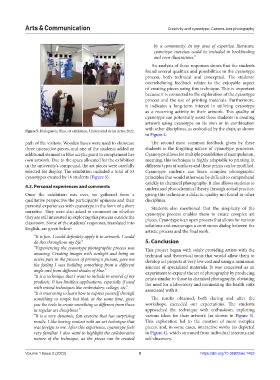
            Figure 5. Dialogues in Blue, art exhibition, Universidad de las Artes, 2022.
                                                               in Figure 4.
            path of the visitors. Wooden bases were used to showcase   The second most common feedback given by these
            three interactive pieces, and one of the students added an   students is the forgiving nature of cyanotype processes.
            additional element in blue acrylic paint to complement her   Cyanotype allows for multiple possibilities of manipulation,
            own artwork. Due to the space allocated for the exhibition   meaning, this technique is highly adaptable to printing in
            in the university’s compound, the art pieces were carefully   different types of surfaces and these prints can be modified.
            selected for display. The exhibition included a total of 53   Cyanotype students can learn complex photographic
            cyanotypes created by 16 students (Figure 5).      principles that would otherwise be difficult to comprehend
                                                               quickly in chemical photography. It also allows students to
            4.2. Personal experiences and comments             understand photochemical theory through actual practice,
            Once  the  exhibition was  over,  we gathered from a   giving this technique a didactic quality not found in other
            qualitative perspective the participants’ opinions and their   disciplines.
            personal experiences with cyanotype in the form of a short   Students also mentioned that the simplicity of the
            narrative. They were also asked to comment on whether   cyanotype process enables them to create complex art
            they are still interested in exploring this process outside the   pieces. Cyanotype is an open process that allows for various
            classroom. Some of the students’ responses, translated into   solutions and encourages a continuous dialog between the
            English, are given below:
                                                               artistic process and the final work.
               “It is fun. I could definitely apply it to artwork. I could
               do this throughout my life.”                    5. Conclusion
               “Experiencing the cyanotype photographic process was   This project began with solely providing artists with the
               amazing. Creating images with sunlight and being an   technical and theoretical tools that would allow them to
               active part in the process of printing a picture, gave me   develop art projects at very low cost and using a minimum
               the feeling I was building something from a different   amount of specialized materials. It was conceived as an
               angle and from different shades of blue.”       experiment to expand the art of photography by producing
               “It is a technique that I want to include in several of my   prints similar to those in chemical photography, obviating
               products. It has limitless applications, especially if used   the need for a laboratory and minimizing the health risks
               with mixed techniques like embroidery, collage, etc.”
               “It is interesting to learn how to express yourself through   associated with it.
               something so simple but that, at the same time, gives   The results obtained, both during and after the
               you the tools to create something so different from those   workshops, exceeded our expectations. The students
               in regular art disciplines.”                    approached the technique with enthusiasm, exploring
               “It is a very dynamic, fun exercise that has surprising   various ideas for their  artwork (as shown in  Figure  3).
               results. I like having contact with an art technique that   This exploration led to the creation of more complex
               was foreign to me. After this experience, cyanotype feels   pieces, and, in some cases, interactive works (as depicted
               very familiar. I also want to highlight the collaborative   in Figure 4), which stemmed from individual interests and
               nature of the technique, as the pieces can be created   self-discovery.


            Volume 1 Issue 2 (2023)                         8                         https://doi.org/10.36922/ac.1453

