


Page 32 - AIH-1-4
P. 32
Artificial Intelligence in Health                                Optimized clustering in medical app detection


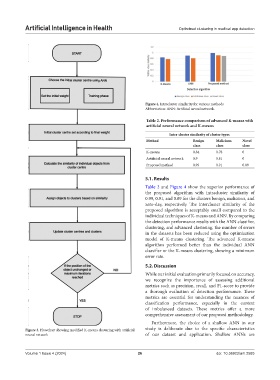
                                                               Figure 4. Intracluster similarity for various methods
                                                               Abbreviation: ANN: Artificial neural network.

                                                               Table 2. Performance comparison of advanced K‑means with
                                                               artificial neural network and K‑means
                                                                         Intra‑cluster similarity of cluster types
                                                               Method              Benign    Malicious   Novel
                                                                                   class     class      class
                                                               K-means             0.84      0.78       0
                                                               Artificial neural network  0.9  0.81     0
                                                               Proposed method     0.99      0.91       0.89


                                                               5.1. Results
                                                               Table 2 and  Figure  4 show the superior performance of
                                                               the proposed algorithm with intracluster similarity of
                                                               0.99, 0.91, and 0.89 for the clusters benign, malicious, and
                                                               zero-day, respectively. The intercluster similarity of the
                                                               proposed algorithm is acceptably small compared to the
                                                               individual techniques of K-means and ANN. By comparing
                                                               the detection performance results with the ANN classifier,
                                                               clustering, and advanced clustering, the number of errors
                                                               in the datasets has been reduced using the optimization
                                                               model of K-means clustering. The advanced K-means
                                                               algorithm performed better than the individual ANN
                                                               classifier or the K-means clustering, showing a minimum
                                                               error rate.

                                                               5.2. Discussion
                                                               While our initial evaluation primarily focused on accuracy,
                                                               we recognize the importance of assessing additional
                                                               metrics such as precision, recall, and F1-score to provide
                                                               a thorough evaluation of detection performance. These
                                                               metrics are essential for understanding the nuances of
                                                               classification  performance,  especially  in  the  context
                                                               of imbalanced datasets. These metrics offer a more
                                                               comprehensive assessment of our proposed methodology.
                                                                 Furthermore, the choice of a shallow ANN in our
            Figure 3. Flowchart showing modified K-means clustering with artificial   study is deliberate due to the specific characteristics
            neural network                                     of our dataset and application. Shallow ANNs are


            Volume 1 Issue 4 (2024)                         26                               doi: 10.36922/aih.2585

