


Page 122 - AIH-2-1
P. 122
Artificial Intelligence in Health                       Does improving diagnostic accuracy increase AI adoption?


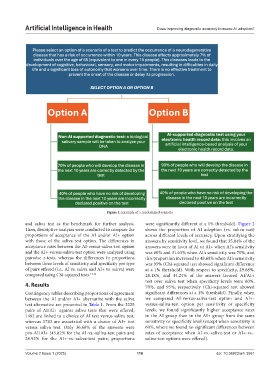
                                              Figure 1. Example of a randomized scenario

            and  saliva  test  as the benchmark  for further  analysis.   were significantly different at a 1% threshold). Figure 2
            Then, descriptive analyses were conducted to compare the   shows the proportion of AI adoption (vs. saliva test)
            proportions of acceptance  of  the AI  and/or  AI+  option   across different levels of accuracy. Upon stratifying the
            with those of the saliva test option. The differences in   answers by sensitivity level, we found that 35.04% of the
            acceptance rates between the AI-versus-saliva-test option   answers were in favor of AI or AI+ when AI’s sensitivity
            and the AI+-versus-saliva-test option were analyzed using   was 60% and 31.63% when AI’s sensitivity was 70%, and
            pairwise z-tests, whereas the differences in proportions   this proportion increased to 48.68% when AI’s sensitivity
            between three levels of sensitivity and specificity per type   was 95% (Chi-squared test showed significant difference
            of pairs offered (i.e., AI vs. saliva and AI+ vs. saliva) were   at a 1% threshold). With respect to specificity, 29.68%,
            compared using Chi-squared tests. 13,14            28.18%, and 44.24% of the answers favored AI/AI+
                                                               test over saliva test when specificity levels were 60%,
            4. Results                                         70%, and 95%, respectively (Chi-squared test showed
            Contingency tables describing proportions of agreement   significant differences at a 1% threshold). Finally, when
            between the AI and/or AI+ alternative with the saliva   we  compared  AI-versus-saliva-test  option  and  AI+-
            test alternative are presented in Table 1. From the 3225   versus-saliva-test option per sensitivity or specificity
            pairs of AI/AI+ against saliva tests that were offered,   levels, we found significantly higher acceptance rates
            1482 are linked to a choice of AI test versus saliva test,   in the AI group than in the AI+ group from the same
            whereas 1743 are associated with a choice of AI+ test   sensitivity or specificity level (except when sensitivity is
            versus saliva test. Only 36.68% of the answers were   60%, where we found no significant differences between
            pro-AI/AI+ (45.82% for the AI-vs.-saliva-test pairs and   rates of acceptance when AI-vs.-saliva-test or AI+-vs.-
            28.92%  for  the  AI+-vs.-saliva-test  pairs;  proportions   saliva-test options were offered).


            Volume 2 Issue 1 (2025)                        116                               doi: 10.36922/aih.3561

