


Page 10 - AN-2-2
P. 10
Advanced Neurology                                                  Venous stenting, intracranial hypertension


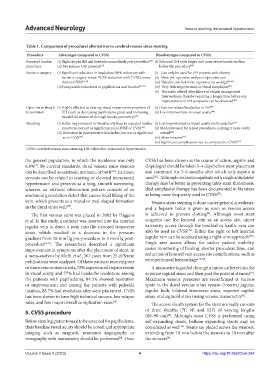
            Table 1. Comparison of procedural alternatives to cerebral venous sinus stenting
             Procedure    Advantages (compared to CVSS)            Disadvantages (compared to CVSS)
            Repeated lumbar   (i) Slight drop in IIH and headache immediately post-procedure [45]  (i)  Rebound IIH with longer and more severe headache than
            punctures    (ii) Normalizes CSF pressure [19]           before the procedure [45]
            Bariatric surgery  (i)  Significant reduction in headaches (90% reduction with   (i)   Can only be used for IIH patients with obesity
                           bariatric surgery versus 70.2% reduction with CVSS), more  (ii)  More pre-operative and post-operative care
                           than in CVSS [21,22]                    (iii) Variable cost but more expensive on average [42,43]
                         (ii)Comparable reductions in papilledema and tinnitus [21,41]  (iv)  Very little improvement in visual complaints [41]
                                                                   (v)    Normally offered after failure of weight management
                                                                      interventions, thereby requiring a longer time before any
                                                                      improvement of IIH symptoms can be observed [43]
            Optic nerve sheath  (i)  Highly effective at treating visual impairment symptoms of   (i) Does not reduce headaches in IIH [47]
            fenestration   IIH (such as decreasing papilledema grade and increasing   (ii) Less improvement in visual acuity [44]
                           visual field measured through kinetic perimetry) [47]
            Shunting     (i)  Better improvement in visual acuity than in repeated lumbar    (i) Less improvement in visual acuity and headaches [21]
                           punctures, but not as significant as in ONSF or CVSS [44]  (ii)  Moderate need for repeat procedures, making it more costly
                         (ii)  Reduction in postoperative headaches, but not as significant   overall [21]
                            as in CVSS [44]                        (iii) More invasive [21]
                                                                   (iv) Significant complication rate as compared to CVSS [21]
            CVSS: Cerebral venous sinus stenting; IIH: Idiopathic intracranial hypertension.

            the general population, in which the incidence was only   CVSS has been chosen as the course of action, aspirin and
            6.8% . By current standards, dural venous sinus stenosis   clopidogrel should be taken 3–4 days before stent placement
                [4]
            can be described as extrinsic, intrinsic, or both . Extrinsic   and continued for 3–6 months after which only aspirin is
                                                [26]
                                                                  [21]
            stenosis can be related to scarring or elevated intracranial   used . Although oral anticoagulants with single antiplatelet
            hypertension and presents as a long, smooth narrowing,   therapy may be better in preventing intra-stent thrombosis,
            whereas an intrinsic obstruction pattern consists of an   dual antiplatelet therapy has been documented in literature
                                                                                             [27]
            arachnoid granulation defect that causes focal filling of the   as being more frequently used in CVSS .
            vein, which presents as a round or oval-shaped formation   Venous sinus stenting is done under general anesthesia,
            in the dural sinus wall .                          and a heparin bolus is given as soon as venous access
                             [25]
                                                                                         [4]
              The first venous stent was placed in 2002 by Higgens   is achieved to prevent clotting . Although most stent
            et al. In the study, a catheter was inserted into the internal   surgeries use the femoral vein as an access site, upper
            jugular vein to direct a stent into the stenosed transverse   extremity access through the brachial or basilic vein can
                                                                                 [28]
            sinus,  which  resulted in  a decrease  in the  pressure   also be used in CVSS . Either the right or left internal
                                                                                                           [28]
            gradient from 18 mmHg pre-procedure to 3 mmHg post-  jugular vein can be accessed using a right-arm approach .
            procedure [8,24] . The researchers described a significant   Single arm access allows for earlier patient mobility,
            improvement in symptoms after the placement of stent. In   easier monitoring of healing, shorter procedure time, and
            a meta-analysis by Mufti et al., 367 cases from 25 different   reduction of femoral vein access site complications, such as
            publications were analyzed. Of these patients receiving one   retroperitoneal hemorrhage [26,28] .
            or more venous sinus stents, 78% experienced improvement   A microwire is guided through a micro catheter into the
            in visual acuity and 77% had headache resolution; among   superior sagittal sinus and then past the point of stenosis .
                                                                                                           [4]
            the patients with papilledema, 84.5% showed resolution   Maximum venous pressures are reconfirmed at various
            or improvement; and among the patients with pulsatile   spots in the dural venous sinus system (internal jugular,
            tinnitus, 88.7% had resolution after stent placement. CVSS   jugular bulb, bilateral transverse sinus, superior sagittal
            has been shown to have high technical success, low relapse   sinus, and sigmoid sinus) using venous manometry .
                                                                                                        [4]
            rates, and low major overall complication rates .    The access sheath system for the stent normally consists
                                                 [26]
            5. CVSS procedure                                  of three sheaths (7F, 9F, and 12F) of varying lengths
                                                               (80–90  cm) . Although most CVSS is performed using
                                                                        [4]
            Before stenting, patients need to be screened for papilledema,   self-expanding stents, balloon-expanding stents may be
            their baseline visual acuity should be noted, and appropriate   considered as well . Stents are placed across the stenosis,
                                                                             [26]
            imaging such as magnetic resonance angiography or   extending from 10 mm before the stenosis to 10 mm after
            venography with manometry should be performed . Once   the stenosis .
                                                    [4]
                                                                        [4]
            Volume 2 Issue 2 (2023)                         4                          https://doi.org/10.36922/an.284

