


Page 64 - AN-2-2
P. 64
Advanced Neurology                                                    Role of immunosuppressants in autism


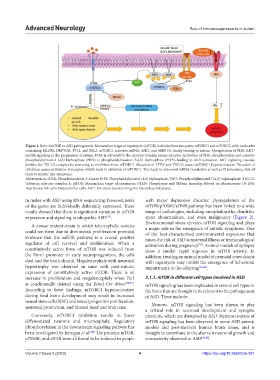
            Figure 1. Role of mTOR in ASD pathogenesis. Mammalian target of rapamycin (mTOR) is divided into two parts, mTORC1 and mTORC2, with molecules
            containing MLST8, DEPTOR, TTI1, and TEL2. mTORC1 activates mRNA, S6K1, and 4EBP1/2, finally leading to autism. Upregulation of PI3K-AKT/
            mTOR signaling in the progression of autism. PI3K is activated by the receptor tyrosine kinase receptor. Activation of PI3K phosphorylates and converts
            phosphatidylinositol (4,5)-biphosphate (PIP2) to phosphatidylinositol (3,4,5)-triphosphate (PIP3), leading to AKT activation. AKT signaling cascade
            inhibits the TSC1/2 complex by removing its inhibition from mTORC1. Mutation in PTEN and TSC1/2 causes mTORC1 hyperactivation. Elevation of
            cytokines causes activation of receptor, which leads to elevation of mTORC1. This leads to abnormal mRNA translation as well as EI imbalance; this all
            leads to autistic-like symptoms.
            Abbreviations: PI3K: Phosphoinositide-3-kinase; PIP2: Phosphatidylinositol (4,5) biphosphate; PIP3: Phosphatidylinositol (3,4,5) triphosphate; TSC1/2:
            Tuberous sclerosis complex 1; mTOR: Mammalian target of rapamycin; PTEN: Phosphatase and TENsin homolog deleted on chromosome 10; IFN:
            Interferons; NK cells: Natural killer cells; AKT: AK strain transforming; EI: Electrolyte imbalance.

            in males with ASD using RNA sequencing; however, none   with major depressive disorder. Dysregulation of the
            of the genes are individually differently expressed. These   mTOR/p70S6K/eIF4B pathway has been linked to a wide
            results showed that there is significant variation in mTOR   range of pathologies, including encephalopathy, dendritic
            expression and signaling in idiopathic ASD .       spine abnormalities, and even malignancy (Figure  2).
                                              [37]
                                                               Environmental stress elevates mTOR signaling and plays
              A mouse mutant strain in which telencephalic vesicles
            could not form due to diminished proliferation provided   a major role in the emergence of autistic symptoms. One
                                                               of the best-characterized environmental exposures that
            evidence that the mTOR pathway is a crucial positive   raises the risk of ASD is maternal illness or immunological
            regulator of cell survival and proliferation. When a   activation during pregnancy . Animal models of epilepsy
                                                                                     [33]
            constitutively active form of mTOR was induced from   show  a similar  rapid  response  in  mTOR  activity.  In
            the Emx1 promoter in early neuroprogenitors, the cells   addition, treating an animal model of neonatal convulsions
            died and the brain shrank. Megalencephaly with neuronal   with rapamycin may inhibit the emergence of behavioral
            hypertrophy was observed in mice with post-mitotic   impairments in the offspring [41,42] .
            expression of constitutively active mTOR. There is an
            increase in proliferation and megalencephaly when  Tsc1   2.1.1. mTOR in different cell types involved in ASD
            is conditionally deleted using  the  Emx1-Cre driver [38,39] .   mTOR signaling has been implicated in several cell types in
            According to these findings, mTORC1 hyperactivation   the brain that are thought to be relevant to the pathogenesis
            during  fetal  brain  development  may  result  in  increased   of ASD. These include:
            neural stem cells (NSC) and neural progenitor proliferation,
            neuronal production, and bloated head and brain size.  Neurons. mTOR signaling has been shown to play
                                                               a critical role in neuronal development and synaptic
              Conversely, mTORC1 inhibition results in fewer   plasticity, which are disrupted in ASD. Hyperactivation of
            differentiated neurons and microcephaly. Regulatory   mTOR signaling has been observed in some ASD animal
            phosphorylation in the downstream signaling pathway has   models and post-mortem human brain tissue, and is
                                       [40]
            been investigated by Jernigan et al.  The proteins mTOR,   thought to contribute to the aberrant neuronal growth and
            p70S6K, and eIF4B were all found to be reduced in people   connectivity observed in ASD [30,43] .

            Volume 2 Issue 2 (2023)                         4                          https://doi.org/10.36922/an.391

