


Page 65 - AN-2-2
P. 65
Advanced Neurology                                                    Role of immunosuppressants in autism


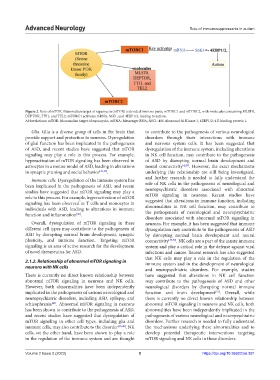
            Figure 2. Role of mTOR. Mammalian target of rapamycin (mTOR) is divided into two parts, mTORC1 and mTORC2, with molecules containing MLST8,
            DEPTOR, TTI1, and TEL2. mTORC1 activates mRNA, S6K1, and 4EBP1/2, leading to autism.
            Abbreviations: mTOR: Mammalian target of rapamycin; mRNA: Messenger RNA; S6K1: 40S ribosomal S6 Kinase 1; 4EBP1/2: 4 E binding protein 1.

              Glia. Glia is a diverse group of cells in the brain that   to contribute to the pathogenesis of various neurological
            provide support and protection to neurons. Dysregulation   disorders  through  their  interactions  with  immune
            of glial function has been implicated in the pathogenesis   and nervous system cells. It has been suggested that
            of ASD, and recent studies have suggested that mTOR   dysregulation of the immune system, including alterations
            signaling may play a role in this process. For example,   in NK cell function, may contribute to the pathogenesis
            hyperactivation of mTOR signaling has been observed in   of ASD by disrupting normal brain  development and
            astrocytes in a mouse model of ASD, leading to alterations   neural connectivity [4,29] . However, the exact mechanisms
            in synaptic pruning and social behavior [44,45] .  underlying this relationship are still being investigated,
              Immune cells. Dysregulation of the immune system has   and further research is needed to fully understand the
            been implicated in the pathogenesis of ASD, and recent   role of NK cells in the pathogenesis of neurological and
                                                               neuropsychiatric disorders associated with abnormal
            studies have suggested that mTOR signaling may play a
            role in this process. For example, hyperactivation of mTOR   mTOR signaling in neurons. Recent studies have
            signaling has been observed in T cells and monocytes in   suggested that alterations in immune function, including
            individuals with ASD, leading to alterations in immune   abnormalities in NK cell function, may contribute to
                                                               the  pathogenesis  of  neurological  and  neuropsychiatric
            function and inflammation .
                                 [46]
                                                               disorders associated with abnormal mTOR signaling in
              Overall, dysregulation of mTOR signaling in these   neurons. For example, it has been suggested that immune
            different cell types may contribute to the pathogenesis of   dysregulation may contribute to the pathogenesis of ASD
            ASD by disrupting normal brain development, synaptic   by disrupting normal brain development and neural
            plasticity, and immune function. Targeting mTOR    connectivity [49,50] . NK cells are a part of the innate immune
            signaling is an area of active research for the development   system and play a critical role in the defense against viral
            of novel therapeutics for ASD.                     infections and cancer. Recent research has also suggested
                                                               that NK cells may play a role in the regulation of the
            2.1.2. Relationship of abnormal mTOR signaling in   immune system and in the development of neurological
            neurons with NK cells                              and neuropsychiatric disorders. For example, studies
            There is currently no direct known relationship between   have suggested that alterations in NK cell function
            abnormal mTOR signaling in neurons and NK cells.   may contribute to the pathogenesis of ASD and other
            However, both abnormalities have been independently   neurological disorders by disrupting normal immune
            implicated in the pathogenesis of various neurological and   function and brain development . Overall, while
                                                                                             [51]
            neuropsychiatric disorders, including ASD, epilepsy, and   there is currently no direct known relationship between
            schizophrenia . Abnormal mTOR signaling in neurons   abnormal mTOR signaling in neurons and NK cells, both
                       [47]
            has been shown to contribute to the pathogenesis of ASD,   abnormalities have been independently implicated in the
            and recent studies have suggested that dysregulation of   pathogenesis of various neurological and neuropsychiatric
            mTOR  signaling in  other  cell  types,  including  glia  and   disorders. Further research is needed to fully understand
            immune cells, may also contribute to the disorder [15,48] . NK   the mechanisms underlying these abnormalities and to
            cells, on the other hand, have been shown to play a role   develop potential therapeutic interventions targeting
            in the regulation of the immune system and are thought   mTOR signaling and NK cells in these disorders.


            Volume 2 Issue 2 (2023)                         5                          https://doi.org/10.36922/an.391

