


Page 29 - ARNM-3-1
P. 29
Advances in Radiotherapy
            & Nuclear Medicine                                                     Chinese Expert Consensus for LACC


            whereas the control group included 144 participants.  The   3.2. Integration of ICIs with CCRT in LACC treatment
                                                      13
            ORRs in the two groups were 86.3% and 76.3%, respectively,   The integration of ICIs with CCRT in LACC treatment
            exhibiting a significant difference (P = 0.028). Notably, no   represents significant progress over the last decade. ICIs
            significant variance (P > 0.05) was noted in the incidence   have revolutionized the management of malignant tumors
            of grade ≥3 adverse events between the two groups.  and reshaped the tumor therapy landscape. The potential of
              In this prospective multicenter single-arm Phase   ICIs in cervical cancer treatment has remarkably attracted
                  14
            II trial, 122 older patients with cervical cancer who   the attention of clinicians. By inhibiting T-cell activation
            were ineligible for chemotherapy received nituzumab   and cytokine production, ICIs reactivate T-cell-mediated
            combined with radiotherapy. The partial response rate   cytotoxicity and enhance antitumor immune responses by
            (PRR),  ORR,  DCR,  and  CRR  were  45.0%  (55/122),   impeding immunological checkpoints and ligand binding.
            87.7% (107/122), 92.6% (113/122), and 42.6% (52/122),   To ensure precise medication dosing, programmed death
                                                               ligand-1 (PD-L1) and tumor mutation burden testing are
            respectively, with Grade 1 – 2 adverse events being the   recommended before initiating ICIs along with CCRT
            most common. A  meta-analysis involving 393  patients   (Table 3).
            indicated that the nimotuzumab plus CCRT group
            displayed  significantly  improved  CRR  (RR  =  1.34,  95%   Nivolumab, a human monoclonal antibody targeting the
            CI 1.08 – 1.65,  P = 0.007), ORR (RR = 1.30, 95% CI   PD-1 receptor, is the pioneering ICI to receive approval. It
            1.16 – 1.44,  P < 0.05), and 3-year OS rate (RR = 1.27,   has demonstrated efficacy in conditions, such as advanced
            95%  CI  1.06  –  1.51,  P  = 0.008) compared  with  the   gastric cancer, recurrent or metastatic squamous head and
            radiotherapy group.  Notably, the incidence of adverse   neck cancer, and locally advanced or metastatic NSCLC.
                            15
            events, such as leukopenia, gastrointestinal reactions,   During the 2022 ASCO congress, a Phase I clinical trial
                                                               investigating nivolumab in combination with CCRT
            radiation cystitis, and radiation proctitis, did not exhibit   to treat LACC (n = 16) unveiled its findings.  The trial
                                                                                                    16
            significant differences between the two groups (P > 0.05).   reported an impressive ORR of 93.8% (15/16), CRR of
            The evidence supports the safety and clinical benefits of   50% (8/16), and PRR of 43.75% (7/16). The 2-year PFS
            nimotuzumab in combination with CCRT, exhibiting   rate was 75% (95% CI 56.5 – 99.5%). Among 15 patients
            positive short-term efficacy outcomes, such as ORR and   evaluable for DLT, three experienced DLT, consisting of
            favorable long-term survival (e.g., 3-year OS rate). The   two cases of Grade 3 hypotension and one case of Grade 3
            recommended nimotuzumab dosage is 200 – 400  mg    acute renal injury. No fatalities occurred during the DLT
            once weekly for 6 weeks.                           evaluation. Given that the outcomes of a Phase I trial
            •   Level of evidence: Medium (nimotuzumab)        with a small sample size have yet to be substantiated by
            •   Grade of recommendation: Strong (nimotuzumab).  comprehensive data from a large randomized controlled

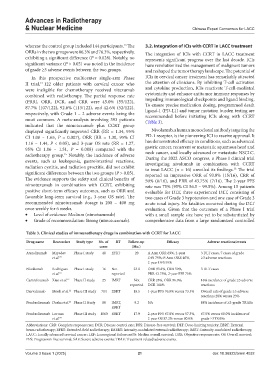
            Table 3. Clinical studies of immunotherapy drugs in combination with CCRT for LACC

            Drug name   Researcher  Study type  No. of   RT  Follow‑up   Efficacy        Adverse reactions/events
                                           cases         (Mo.)
            Atezolizumab  Mayadev   Phase I study  40  EFRT  20  A Arm ORR 69%, 2-year   3 DLT cases, 7 cases of grade
                       et al. 29                                DFS 79%; B Arm ORR 40%,   ≥3 adverse reactions
                                                                2-year DFS 59%
            Nivolumab  Rodrigues   Phase I study  16  Not   23.8  ORR 93.8%, CRR 50%,   3 DLT cases
                       et al. 16                reported        PRR 43.75%, 2-year PFS 75%
            Camrelizumab Xiao et al. 17  Phase II study  25  IMRT  Not   CRR 28%, ORR 96.0%,   16% incidence of grade ≥3 adverse
                                                        reported  DCR 100%            reactions
            Durvalumab  Monk et al. 22  Phase III study  714  EBRT  18.5  1-year PFS 76.0% versus 73.3%  Overall rate of grade ≥3 adverse
                                                                                      reactions 28% versus 23%
            Pembrolizumab Duska et al. 23  Phase II Study  88  IMRT,   9.2  NA        88% incidence of ≥2-grade TRAEs
                                                EBRT
            Pembrolizumab Lorusso   Phase III study  1060  EBRT  17.9  2-year PFS 67.8% versus 57.3%,   67.0% versus 60.0% incidence of
                       et al. 24                                2-year OS 87.2% versus 80.8%  grade ≥3TRAEs
            Abbreviations: CRR: Complete response rate; DCR: Disease control rate; DFS: Disease-free survival; DLT: Dose-limiting toxicity; EBRT: External
            beam radiotherapy; EFRT: Extended-field radiotherapy; IMERT: Intensity-modulated external radiotherapy; IMRT: Intensity-modulated radiotherapy;
            LACC: Locally advanced cervical cancer; LRF: Locoregional failure; mOS: Median overall survival; ORR: Objective response rate; OS: Overall survival;
            PFS: Progression-free survival; SAE: Severe adverse events; TRAE: Treatment-related adverse events.

            Volume 3 Issue 1 (2025)                         21                             doi: 10.36922/arnm.4032

