


Page 32 - ARNM-3-1
P. 32
Advances in Radiotherapy
            & Nuclear Medicine                                                     Chinese Expert Consensus for LACC


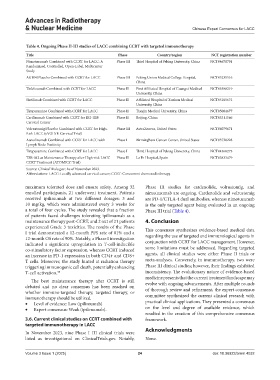
            Table 4. Ongoing Phase II‑III studies of LACC combining CCRT with targeted immunotherapy
            Title                                  Phase            Country/region         NCT registration number
            Nimotuzumab Combined with CCRT for LACC: A   Phase III  Third Hospital of Peking University, China  NCT04678791
            Randomized, Controlled, Open-Label, Multicenter
            Study
            AK104/Placebo Combined with CCRT for LACC  Phase III  Peking Union Medical College Hospital,   NCT05235516
                                                           China
            Tislelizumab Combined with CCRT for LACC  Phase II  First Affiliated Hospital of Guangxi Medical   NCT05588219
                                                           University, China
            Sintilimab Combined with CCRT for LACC  Phase II  Affiliated Hospital of Xuzhou Medical   NCT05105672
                                                           University, China
            Tirapazamine Combined with CCRT for LACC  Phase II  Tianjin Medical University, China  NCT05084677
            Carilizumab Combined with CCRT for IB2-IIIB   Phase II  Beijing, China         NCT05311566
            Cervical Cancer
            Volrustomig/Placebo Combined with CCRT for High-  Phase III  AstraZeneca, United States  NCT06079671
            Risk LACC (eVOLVE-Cervical Trial)
            Atezolizumab Combined with CCRT for LACC with   Phase I  Birmingham Cancer Center, United States  NCT03738228
            Lymph Node Positivity
            Tirapazamine Combined with CCRT for LACC  Phase I  Third Hospital of Peking University, China  NCT04368273
            TSR-042 as Maintenance Therapy after High-risk LACC   Phase II  La Fe Hospital, Spain  NCT03833479
            CCRT Treatment (ATOMICC Trial)
            Source: ClinicalTrials.gov; As of November 2023.
            Abbreviations: LACC: Locally advanced cervical cancer; CCRT: Concurrent chemoradiotherapy.

            maximum tolerated dose and ensure safety. Among 32   Phase III studies for cardenolide, volrustomig, and
            enrolled participants, 21 underwent treatment. Patients   nimotuzumab are ongoing. Cardenolide and volrustomig
            received ipilimumab at two different dosages: 3 and   are PD-1/CTLA-4 dual antibodies, whereas nimotuzumab
            10  mg/kg, which were administered every 3  weeks for   is the only targeted agent being evaluated in an ongoing
            a total of four cycles. The study revealed that a fraction   Phase III trial (Table 4).
            of patients faced challenges tolerating ipilimumab as a
            maintenance therapy post-CCRT, and 2 out of 21 patients   4. Conclusion
            experienced Grade 3 toxicities. The results of the Phase   This  consensus  synthesizes  evidence-based  medical  data
            I trial demonstrated a 12-month PFS rate of 81% and a
            12-month OS rate of 90%. Notably, a Phase I investigation   regarding the use of targeted and immunological agents in
            indicated a significant upregulation in T-cell-inducible   conjunction with CCRT for LACC management. However,
            co-stimulatory factor expression, whereas CCRT induced   some limitations must be addressed. Regarding targeted
            an increase in PD-1 expression in both CD4+ and CD8+   agents, all clinical studies were either Phase II trials or
            T cells. Moreover, the study hinted at radiation therapy   meta-analyses. Conversely, in immunotherapy, two were
            triggering immunogenic cell death, potentially enhancing   Phase III clinical studies; however, their findings exhibited
            T-cell activation. 33                              inconsistency. The evolutionary nature of evidence-based
                                                               medicine presents that the current treatment landscape may
              The  best  maintenance  therapy  after  CCRT  is  still
            debated and no clear consensus has been reached on   evolve with ongoing advancements. After multiple rounds
            whether immune-targeted therapy, targeted therapy, or   of thorough review and refinement, the expert consensus
            immunotherapy should be utilized.                  committee synthesized the current clinical research with
            •   Level of evidence: Low (ipilimumab)            practical clinical applications. They presented a consensus
            •   Expert consensus: Weak (ipilimumab).           on the level and degree of available evidence, which
                                                               resulted in the creation of this comprehensive consensus
            3.6. Current clinical studies on CCRT combined with   framework.
            targeted immunotherapy in LACC
                                                               Acknowledgments
            In November 2023, nine Phase I–III clinical trials were
            listed as investigational on ClinicalTrials.gov. Notably,   None.


            Volume 3 Issue 1 (2025)                         24                             doi: 10.36922/arnm.4032

