


Page 119 - DP-2-1
P. 119
Design+                                                    Feasibility of shell fusion technology in jewelry design


            Table 1. Production rate of different processes for different materials
            Material                                          Production rate (unit[s]/h)
                                  Manual    CAD/CAM casting  Lost wax   SLA casting  SLA slurry  SLM     SFT
            Ceramic                <0.5           -             1           -          <0.1       -      1 – 10
            High-noble metal alloy  <0.5         1 – 2        1 – 50      0.5 – 10      -         -      1 – 10
            Noble metal alloy      <0.5          1 – 2        1 – 50      0.5 – 10      -         -      1 – 10
            Predominately base-metal  <0.5       1 – 2        1 – 50      0.5 – 10      -         1      1 – 10
            Note: Data were obtained from references. 6-9
            Abbreviations: CAD: Computer-aided design; CAM: Computer-aided manufacturing; SLA: Stereolithography; SLM: Selective laser metal; SFT: Shell
            fusion technology.

            material. Therefore, it is possible to identify either the low   A        B
            productivity or lack of capability of the manufacturing
            processes with regard to jewelry making.
            2. Material and methods

            Using the appropriate software, jewelry designs are first
            created,  sketched,  and  then  converted  to  CAD  format.
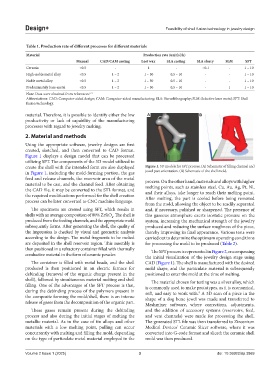
            Figure  1  displays  a  design  model  that  can  be  processed
            utilizing SFT. The components of the 3D model utilized to
            create the shell with the intended form are also displayed   Figure 1. 3D models for SFT process. (A) Schematic of filling channel and
            in Figure 1, including the mold-forming portion, the gas   jewel part orientation. (B) Schematic of the shell mold.
            feed and release channels, the reservoir area of the metal   process. On the other hand, materials and alloys with higher
            material to be cast, and the channel feed. After obtaining   melting points, such as stainless steel, Cu, Au, Ag, Pt, Ni,
            the CAD file, it may be converted to the STL format, and   and their alloys, take longer to reach their melting point.
            the required modifications performed for the shell creation   After  melting, the  part  is  cooled  before  being  removed
            process can be later converted to CNC machine language.
                                                               from the mold, allowing the object to be readily separated
              The specimens are created using SFT, which results in   and, if necessary, polished or sharpened. The presence of
            shells with an average composition of 80% ZrSiO . The shell is   this gaseous atmosphere exerts isostatic pressure on the
                                                 4
            produced from the feeding channels, and the appropriate mold   system, increasing the mechanical strength of the jewelry
            subsequently forms. After generating the shell, the quality of   produced and reducing the surface roughness of the piece,
            the impression is checked by visual and geometric analysis   thereby improving its final appearance. Various tests were
            according to the design. The metal fragments to be melted   carried out to determine the optimum operating conditions
            are deposited in the shell reservoir region. This assembly is   for processing the mold to be produced (Table 2).
            then positioned in a refractory container filled with thermally   The SFT process is represented in Figure 2, encompassing
            conductive material in the form of ceramic powder.
                                                               the initial visualization of the jewelry design stage using
              The container is filled with metal beads, and the shell   CAD (Figure 1). The shell is manufactured with the desired
            produced is then positioned in an electric furnace for   mold shape, and the particulate material is subsequently
            debinding (removal of  the  organic charge  present  in the   positioned to enter the mold at the time of melting.
            shell), followed by simultaneous material melting and shell   The material chosen for testing was a silver alloy, which
            filling. One of the advantages of the SFT process is that,   is commonly used to make prototypes, as it is economical,
            during the debinding process of the polymers present in   soft, and easy to work with.  A 3D scan of a piece in the
                                                                                      9
            the composite forming the mold/shell, there is an intense   shape of a dog bone jewel was made and transferred to
            release of gases from the decomposition of the organic part.  Meshmixer software, where corrections, adjustments,
              These gases remain present during the debinding   and the addition of accessory systems (reservoirs, feed,
            process and also during the initial stages of melting the   and vent channels) were made for processing the shell.
            metallic material. As in the case of tin alloys and other   The generated STL file was then transferred to Zirconium
            materials with a low melting point, pulling can occur   Medical  Devices’  Ceramic  Slicer  software,  where  it  was
            concurrently with melting and filling the mold, depending   converted into G-code format and sliced; the ceramic shell
            on the type of particulate metal material employed in the   mold was then produced.


            Volume 2 Issue 1 (2025)                         3                                doi: 10.36922/dp.3869

