


Page 17 - DP-2-2
P. 17
Design+                                                                   Promoting sustainable UX design


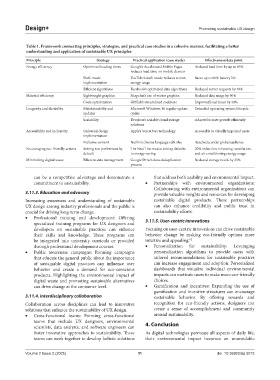
            Table 1. Framework connecting principles, strategies, and practical case studies in a cohesive manner, facilitating a better
            understanding and application of sustainable UX principles
            Principle                     Strategy        Practical application (case study)  Effectiveness/data point
            Energy efficiency       Optimized loading times  Google’s Accelerated Mobile Pages   Reduced load time by up to 85%
                                                         reduces load time on mobile devices
                                    Dark mode            YouTube’s dark mode reduces screen   Saves up to 60% battery life
                                    implementation       energy usage
                                    Efficient algorithms  Facebook’s optimized data algorithms  Reduced server requests by 30%
            Material efficiency     Lightweight graphics  Snapchat’s use of vector graphics  Reduced data usage by 50%
                                    Code optimization    GitHub’s streamlined codebase  Improved load times by 40%
            Longevity and durability  Maintainability and   Microsoft Windows 10 regular update   Extended operating system lifecycle
                                    updates              cycles
                                    Scalability          Dropbox’s scalable cloud storage   Adapted to user growth efficiently
                                                         solutions
            Accessibility and inclusivity  Universal design   Apple’s VoiceOver technology  Accessible to visually impaired users
                                    implementation
                                    Inclusive content    Netflix’s diverse language subtitles  Reached a wider global audience
            Encouraging eco-friendly actions  Setting eco-preferences by   The Nest Thermostat setting defaults   20% reduction in heating, ventilation,
                                    default              to energy-saving           and air conditioning energy usage
            Minimizing digital waste  Efficient data management  Google Drive’s data deduplication   Reduced storage needs by 25%
                                                         process

               can be a competitive advantage and demonstrate a   that address both usability and environmental impact.
               commitment to sustainability.                   •   Partnerships with environmental organizations:
                                                                  Collaborating with environmental organizations can
            3.11.3. Education and advocacy                        provide valuable insights and resources for developing
            Increasing awareness and understanding of sustainable   sustainable digital products. These partnerships
            UX design among industry professionals and the public is   can also enhance credibility and public trust in
            crucial for driving long-term change.                 sustainability efforts.
            •   Professional  training  and development:  Offering
               specialized training programs for UX designers and   3.11.5. User-centric innovations
               developers on sustainable practices can enhance   Focusing on user-centric innovations can drive sustainable
               their skills and knowledge. These programs can   behavior  change  by making  eco-friendly  options  more
               be integrated into university curricula or provided   intuitive and appealing. 62
               through professional development courses.       •   Personalization  for  sustainability:  Leveraging
            •   Public awareness campaigns: Running campaigns     personalization  algorithms  to  provide  users  with
               that educate the general public about the importance   tailored recommendations for sustainable practices
               of sustainable digital practices can influence user   can increase engagement and adoption. Personalized
               behavior and create a demand for eco-conscious     dashboards that visualize individual environmental
               products. Highlighting the environmental impact of   impacts can motivate users to make more eco-friendly
               digital waste and promoting sustainable alternatives   choices.
               can drive change at the consumer level.         •   Gamification and incentives: Expanding the use of
                                                                  gamification and incentive structures can encourage
            3.11.4. Interdisciplinary collaboration               sustainable behavior. By offering rewards and
            Collaboration across disciplines can lead to innovative   recognition for eco-friendly actions, designers can
            solutions that enhance the sustainability of UX design.  create a sense of accomplishment and community
            •   Cross-functional teams: Forming cross-functional   around sustainability.
               teams that include UX designers, environmental
               scientists, data analysts, and software engineers can   4. Conclusion
               foster  innovative  approaches  to  sustainability.  These   As digital technologies permeate all aspects of daily life,
               teams can work together to develop holistic solutions   their  environmental  impact  becomes  an  unavoidable


            Volume 2 Issue 2 (2025)                         11                               doi: 10.36922/dp.5015

