


Page 34 - EER-2-3
P. 34
Explora: Environment
            and Resource                                                            Air pollution mitigation technologies


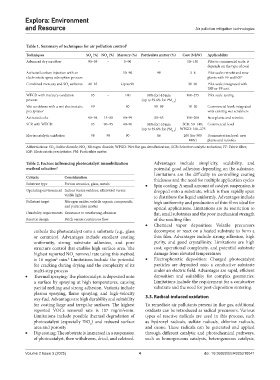
            Table 1. Summary of techniques for air pollution control 5
            Techniques                SO  (%) NO  (%) Mercury (%)  Particulate matter (%)  Cost ($/kW)  Applicability
                                        2      2
            Advanced dry scrubber      90–95   –      0–90          –            50–150  Pilot to commercial scale; it
                                                                                         depends on the type of coal
            Activated carbon injection with an   –  –  50–90        99            3–8    Pilot scale; retrofit and new
            electrostatic spray adsorption process                                       plants with FF and ESP
            Combined mercury and SO  sorbents  40–85  –  Up to 90   –            30–60   Pilot scale; integrated with
                              2
                                                                                         ESP or FF unit
            WFGD with mercury oxidation   95   –      >80       90% for>10 µm   160–275  Pilot scale testing
            process                                          (up to 39.6% for PM )
                                                                          2.5
            Wet scrubbers with a wet electrostatic   99  –  80     90–99         10–20   Commercial level; integrated
            precipitator                                                                 with existing wet scrubbers
            Activated coke             90–98  15–80  90–99         80–85        150–200  New plants and retrofits
            SCR with WFGD               95   90–95   40–90      90% for>10 µm   SCR: 50–140;   Commercial level
                                                             (up to 39.6% for PM )  WFGD: 160–275
                                                                          2.5
            Electrocatalytic oxidation  98    90       90           86         200 (for 500   Demonstration level: new
                                                                                 MW)     plants and retrofits
            Abbreviations: SO : Sulfur dioxide; NO : Nitrogen dioxide; WFGD: Wet flue gas desulfurization; SCR: Selective catalytic reduction; FF: Fabric filter;
                        2
                                     2
            ESP: Electrostatic precipitator; PM: Particulate matter.
            Table 2. Factors influencing photocatalyst immobilization   Advantages include simplicity, scalability, and
            method selection 6                                    potential good adhesion depending on the substrate.
                                                                  Limitations are the difficulty in controlling coating
            Criteria         Consideration                        thickness and the need for multiple application cycles
            Substrate type   Porous ceramics, glass, metals    •   Spin coating: A small amount of catalyst suspension is
            Operating environment Indoor versus outdoor, ultraviolet versus   dropped onto a substrate, which is then rapidly spun
                             visible light                        to distribute the liquid uniformly. Advantages include
            Pollutant target  Nitrogen oxides, volatile organic compounds,   high uniformity and production of thin films ideal for
                             and particulate matter               optical applications. Limitations are its restriction to
            Durability requirements Resistance to weathering, abrasion  flat, small substrates and the poor mechanical strength
            Reactor design   Batch versus continuous flow         of the resulting film
                                                               •   Chemical vapor deposition:  Volatile precursors
               embeds the photocatalyst onto a substrate (e.g., glass   decompose or react on a heated substrate to form a
               or ceramics). Advantages include excellent coating   thin film. Advantages include strong adhesion, high
               uniformity, strong substrate adhesion, and pore    purity, and good crystallinity. Limitations are high
               structure control that enables high surface area. The   cost, operational complexity, and potential substrate
               highest reported NO  removal rate using this method   damage from elevated temperatures
                                x
               is 16 mg/m  min.  Limitations include the potential   •   Electrophoretic deposition:  Charged photocatalyst
                              6
                         2
               for cracking during drying and the complexity of its   particles are deposited onto a conductive substrate
               multi-step process                                 under an electric field. Advantages are rapid, efficient
            •   Thermal spraying: The photocatalyst is deposited onto   deposition and suitability for complex geometries.
               a surface by spraying at high temperatures, causing   Limitations include the requirement for a conductive
               partial melting and strong adhesion. Variants include   substrate and the need for post-deposition sintering.
               plasma spraying, flame spraying, and high-velocity
               oxy-fuel. Advantages are high durability and suitability   3.3. Radical-induced oxidation
               for coating large and irregular surfaces. The highest   To remediate air pollutants present in flue gas, additional
               reported VOCs  removal  rate is 107  mg/m •min.   oxidants can be introduced as radical precursors. Various
                                                     2
               Limitations  include  possible  thermal  degradation  of   types of reactive radicals are used in this process, such
               photocatalyst (especially TiO ) and reduced surface   as hydroxyl radicals, sulfate radicals, chlorine radicals,
                                       2
               area and porosity                               and ozone. These radicals can be generated and applied
            •   Dip coating: The substrate is immersed in a suspension   through different catalytic and photochemical pathways,
               of photocatalyst, then withdrawn, dried, and calcined.   such as homogeneous catalysis, heterogeneous catalysis,


            Volume 2 Issue 3 (2025)                         4                           doi: 10.36922/EER025210041

