


Page 87 - EER-2-3
P. 87
Explora: Environment
            and Resource                                            The development of the river chief in Nantong and Huzhou


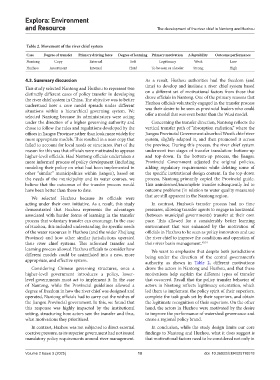
            Table 2. Movement of the river chief system
            Case    Degree of transfer  Primary driving force  Degree of learning  Primary motivation  Adaptability  Outcome performance
            Nantong     Copy           External         Soft         Legitimacy     Weak           Low
            Huzhou    Assortment       Internal         Hard     To be seen as a leader  Strong    High

            4.3. Summary discussion                            As a result, Huzhou authorities had the freedom (and

            This study selected Nantong and Huzhou to represent two   time) to develop and institute a river chief system based
            distinctly different cases of policy transfer in developing   on a different set of motivational factors from those that
            the river chief system in China. The objective was to better   drove officials in Nantong. One of the primary reasons that
            understand how a core model spreads under different   Huzhou officials voluntarily engaged in the transfer process
            situations within a hierarchical governing system. We   was their desire to be seen as provincial leaders who could
            selected Nantong because its administrators were acting   offer a model that was even better than the Wuxi model.
            under the direction of a higher governing authority and   Concerning the transfer direction, Nantong reflects the
            chose to follow the rules and regulations developed by the   vertical transfer path of “absorption radiation,” where the
            offices in Jiangsu Province rather than look more widely for   Jiangsu Provincial Government absorbed Wuxi’s chief river
            more appropriate models. This resulted in a near copy that   system, slightly adapted it, and then promoted it across
            failed to account for local needs or structures. Part of the   the province. During this process, the river chief system
            reason for this was that officials were motivated to appease   underwent two stages of transfer translation: bottom-up
            higher-level officials. Had Nantong officials undertaken a   and  top-down.  In  the  bottom-up  process,  the  Jiangsu
            more informed process of policy development (including   Provincial Government adjusted the original policies,
            modeling their policy on what had been implemented in   adding regulatory requirements while deleting some of
            other “similar” municipalities within Jiangsu), based on   the specific institutional design content. In the top-down
            the needs of the municipality and its water courses, we   process, Nantong primarily copied the Provincial guide.
            believe that the outcomes of the transfer process would   This uninformed/incomplete transfer subsequently led to
            have been better than those to date.               outcome problems (in relation to water quality measures)
                                                               that are still apparent in the Nantong region.
              We selected Huzhou because its officials were
            acting under their own initiative. As a result, this study   In contrast, Huzhou’s transfer process had no time
            demonstrated that Huzhou represents the advantages   pressures, allowing transfer agents to engage in horizontal
            associated with harder forms of learning in the transfer   (between municipal governments) transfer at their own
            process that voluntary transfer can encourage. In the case   pace. This allowed for a considerably better learning
            of Huzhou, this included understanding the specific needs   environment that was enhanced by the motivation of
            of the water resources in Huzhou (and the wider Zhejiang   officials in Huzhou to be seen as policy innovators and use
            Province) and how other similar jurisdictions operated   the river chief to improve the conditions and operation of
            their river chief systems. This informed transfer and   their river basin management. 49,51
            learning process allowed Huzhou officials to consider how   We want to emphasize that despite both jurisdictions
            different models could be assimilated into a new, more   being under the direction of the central government’s
            appropriate, and effective system.                 authority, as shown in  Table  2, different motivations
              Considering Chinese governing structures, once a   drove the actors in Nantong and Huzhou, and that these
            higher-level government introduces a policy, lower-  motivations help explain the different types of transfer
            level governments must act to implement it. In the case   that occurred. Recall that the policy transfer behavior of
            of Nantong, while the Provincial guidelines allowed a   actors in Nantong reflects legitimacy orientation, which
            degree of freedom in how the river chief was designed and   led them to implement the policy spirit of their superiors,
            operated, Nantong officials had to carry out the wishes of   complete the task goals set by their superiors, and obtain
            the Jiangsu Provincial government. In this, we found that   the legitimate recognition of their superiors. On the other
            this response was highly impacted by the institutional   hand, the actors in Huzhou were motivated by the desire
            setting, structuring how actors saw the transfer and thus,   to improve the performance of watershed governance and
            what motivations they prioritized.                 create a regional policy brand.
              In contrast, Huzhou was not subjected to direct external   In conclusion, while the study design limits our core
            coercive pressure, as its superior government had not issued   findings to Nantong and Huzhou, what it does suggest is
            mandatory policy requirements around river management.   that motivational factors need to be considered not only in


            Volume 2 Issue 3 (2025)                         10                          doi: 10.36922/EER025110018

