


Page 226 - EJMO-9-2
P. 226
Eurasian Journal of
            Medicine and Oncology                                                RCT of rTMS combined with HT for PSD


            4. Discussion                                        Reduced levels of peripheral and central brain-derived
                                                               neurotrophic factor (BDNF) have been consistently
            This study demonstrated significant improvements in   observed in individuals with depression, including those
            anxiety and depression  among  all enrolled participants.   with PSD. 19-23  BDNF plays a critical role in neuroplasticity,
            Post-intervention analysis revealed that Groups B, C, and   neuronal survival, and synaptic connectivity – all of which
            D achieved significantly better outcomes than Group A,   are  compromised in  depressive  disorders. rTMS  has
            with  Group  D  (combined  HT  and  rTMS)  showing  the   been shown to upregulate BDNF expression, potentially
            most pronounced improvements. Analysis of HAMA     helping reverse these neurobiological deficits. In addition,
            scores indicated that Group B (rTMS alone) outperformed
            Group C (HT alone). However, no statistically significant   glutamate has emerged as another key biomarker for
            difference in HAMD scores was found between these   treatment response, with increased radiolabeled activity
            two  groups.  These  findings  are  detailed  in  Table  3.  The   observed in the dorsolateral prefrontal cortex following
                                                                              24
            most effective treatment outcome was achieved with   rTMS stimulation.  This suggests that rTMS plays a role in
            the combination of antidepressants, rTMS, and HT   modulating excitatory neurotransmission, which is often
            (Group  D), followed by the antidepressant and rTMS   disrupted in depression.
            group (Group B), and the antidepressant and HT group   Furthermore, rTMS has been associated with increased
            (Group C), respectively.                           dopamine concentrations 25-27  and enhanced functional
                                                               activity in neural networks involved in mood regulation,
            Table 3. Post‑intervention comparison between all groups  as  demonstrated  by  functional  imaging  studies.   These
                                                                                                       28
            Outcome         Group 1     Group 2   AD   p       changes may contribute to the alleviation of depressive
            HAMD score     A (19.78±2.49)  B (16.44±1.46)  3.333 <0.01  symptoms  by restoring balance  within disrupted neural
            (post-intervention)  A (19.78±2.49)  C (17.11±3.12)  2.667 <0.01  circuits. However, the precise mechanisms by which
                                                               rTMS exerts its therapeutic effects remain an area of active
                           A (19.78±2.49)  D (14.44±2.04)  5.333 <0.01  investigation. A deeper understanding of these pathways
                           B (16.44±1.46)  C (17.11±3.12) −0.667 0.399  could provide insights into the pathophysiology of PSD
                           B (16.44±1.46)  D (14.44±2.04)  2  0.013  and aid in identifying novel therapeutic targets.
                           C (17.11±3.12)  D (14.44±2.04)  2.667 <0.01  Accelerated rTMS protocols have been successfully
            HAMA score     A (23.33±2.00)  B (19.33±2.35)  4  <0.01  employed in other populations, such as individuals with
            (post-intervention)  A (23.33±2.00)  C (21.00±1.75)  2.333 <0.01  treatment-resistant depression and alcohol withdrawal

                           A (23.33±2.00)  D (17.39±2.66)  5.944 <0.01  cravings. 29-32  In addition, studies have explored the use
                           B (19.33±2.35)  C (21.00±1.75) −1.667 0.027  of rTMS in acute stroke care for managing complications
                           B (19.33±2.35)  D (17.39±2.66)  1.944 0.011  unrelated to depression. 33-36  Despite these advances,
                                                               similar paradigms have not been widely applied in PSD
                           C (21.00±1.75)  D (17.39±2.66)  3.611 <0.01
            Notes: Data are expressed as AVG±SD. Significance was set at p<0.05   populations. In this study, patients in Groups  B and D
                                                               received rTMS treatment at a frequency of 10  Hz for
            compared to each group.
            Abbreviations: AVG: Average; AD: Standard deviation;   15  min/session, administered 5  days/week for 4  weeks.
            HAMA: Hamilton Anxiety Scale; HAMD: Hamilton Depression Scale.  This protocol demonstrated significant efficacy in reducing

            A                                    B                               C


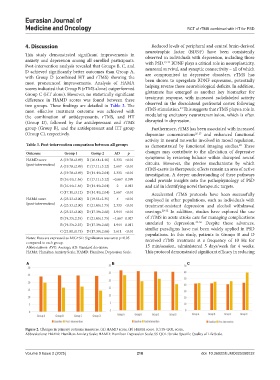
            Figure 2. Changes in primary outcome measures. (A) HAMD score. (B) HAMA score. (C) SS-QOL score.
            Abbreviations: HAMA: Hamilton Anxiety Scale; HAMD: Hamilton Depression Scale; SS-QOL: Stroke-Specific Quality of Life Scale.


            Volume 9 Issue 2 (2025)                        218                         doi: 10.36922/EJMO025080032

