


Page 45 - EJMO-9-3
P. 45
Eurasian Journal of
            Medicine and Oncology                                                  NOTCH3 in CSVD and breast cancer


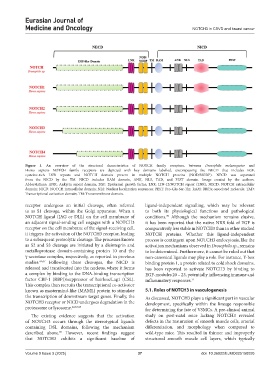
            Figure  1. An overview of the structural characteristics of NOTCH family receptors, between  Drosophila  melanogaster and
            Homo sapiens NOTCH family receptors are depicted with key domains labelled, encompassing the NECD that includes EGF,
            cysteine-rich  LNR  repeats  and  NOTCH  domain  present  in  multiple  NOTCH  proteins  (NOD/NODP).  NECD  was  separated
            from the NICD by the TM. NICD includes RAM domain, ANK, NLS, TAD, and PEST domain. Image created by the authors.
            Abbreviations: ANK: Ankyrin repeat domain; EGF: Epidermal growth factor; LNR: LIN-12/NOTCH repeat (LNR); NECD: NOTCH extracellular
            domain; NICD: NOTCH intracellular domain; NLS: Nuclear localization sequences; PEST: Pro-Glu-Ser-Thr; RAM: RBPJκ-associated molecule; TAD:
            Transcriptional activation domain; TM: Transmembrane domain.

            receptor undergoes an initial cleavage, often referred   ligand-independent signalling, which may be relevant
            to as S1  cleavage, within the Golgi apparatus.  When a   to both its  physiological functions and  pathological
            NOTCH ligand (JAG or DLL) on the cell membrane of   conditions.   Although  the  mechanism  remains elusive,
                                                                        70
            an adjacent signal-sending cell engages with a NOTCH3   it has been reported that the native NRR fold of EGF is
            receptor on the cell membrane of the signal-receiving cell,   comparatively less stable in NOTCH3 than in other studied
            it triggers the activation of the NOTCH3 receptor, leading   NOTCH proteins. Whether this ligand-independent
            to a subsequent proteolytic cleavage. The processes known   process is contingent upon NOTCH3 endocytosis, like the
            as S2 and S3 cleavage are initiated by a disintegrin and   activation mechanisms observed in Drosophila sp., remains
            metalloprotease  domain-containing  protein  10  and  the   to be determined. Furthermore, it cannot be ruled out that
            γ-secretase complex, respectively, as reported in previous   non-canonical ligands may play a role. For instance, Y-box
            studies. 62,67  Following these cleavages, the NICD is   binding protein 1, a protein related to cold shock domains,
            released and translocated into the nucleus, where it forms   has been reported to activate NOTCH3 by binding to
            a complex by binding to the DNA-binding transcription   EGF-modules 20 – 23, potentially influencing immune and
            factor CBF-1 (RBPJ)/suppressor of hairless/Lag1 (CSL).   inflammatory responses. 71
            This complex then recruits the transcriptional co-activator
            known as mastermind-like (MAML) protein to stimulate   5.1. Roles of NOTCH3 in vasculogenesis
            the transcription of downstream target genes. Finally, the   As discussed, NOTCH3 plays a significant part in vascular
            NOTCH3 receptor or NICD undergoes degradation in the   development, specifically within the lineage responsible
            proteasome or lysosome. 62,67,68                   for determining the fate of VSMCs. A pre-clinical animal
              The existing evidence suggests that the activation   study on post-natal mice lacking NOTCH3 revealed
            of NOTCH3 occurs through the stereotypical ligands   defects in the maturation of smooth muscle cells, arterial
            containing DSL domains, following the mechanism    differentiation, and morphology when compared to
            described  above.   However,  recent  findings  suggest   wild-type mice. This resulted in thinner and improperly
                          69
            that NOTCH3 exhibits a significant baseline of     structured smooth muscle cell layers, which typically

            Volume 9 Issue 3 (2025)                         37                         doi: 10.36922/EJMO025150095

