


Page 47 - EJMO-9-3
P. 47
Eurasian Journal of
            Medicine and Oncology                                                  NOTCH3 in CSVD and breast cancer


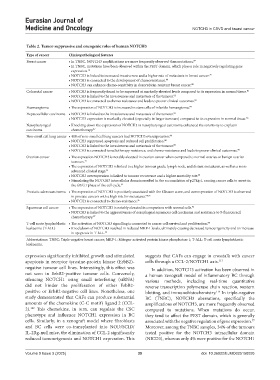
            Table 2. Tumor-suppressive and oncogenic roles of human NOTCH3
            Type of cancer    Clinicopathological features
            Breast cancer     • In TNBC, NOTCH3 amplifications are more frequently observed than mutations. 77
                              •  In TNBC, mutations have been observed within the PEST domain, which plays a role in negatively regulating gene
                               expression. 78
                              • NOTCH3 is linked to increased invasiveness and a higher rate of metastasis in breast cancer. 79
                              • NOTCH3 is connected to the development of chemoresistance. 80
                              • NOTCH3 can enhance chemo-sensitivity in doxorubicin-resistant breast cancer. 80
            Colorectal cancer  • NOTCH3 is frequently found to be expressed at markedly elevated levels compared to its expression in normal tissue. 81
                              • NOTCH3 is linked to the invasiveness and metastasis of the tumour. 82
                              • NOTCH3 is connected to chemo-resistance and leads to poorer clinical outcomes. 83
            Haemangioma       • The expression of NOTCH3 is increased in stem cells of infantile hemangioma. 84
            Hepatocellular carcinoma • NOTCH3 is linked to the invasiveness and metastasis of the tumour. 85
                              • NOTCH3 expression is markedly elevated (especially in larger tumours) compared to its expression in normal tissue. 86
            Nasopharyngeal    •  Knocking down the expression of NOTCH3 in nasopharyngeal carcinoma enhanced the sensitivity to cisplatin
            carcinoma          chemotherapy. 87
            Non-small cell lung cancer • 40% of non-small cell lung cancers had NOTCH3 overexpression. 88
                              • NOTCH3 suppressed apoptosis and reduced cell proliferation. 88
                              • NOTCH3 is linked to the invasiveness and metastasis of the tumour. 89
                              • NOTCH3 is connected to radiotherapy resistance, and chemo-resistance and leads to poorer clinical outcomes. 90
            Ovarian cancer    •  The expression NOTCH3 is notably elevated in ovarian cancer when compared to normal ovaries or benign ovarian
                               tumours. 91
                              •  The expression of NOTCH3 is linked to a higher tumour grade, lymph node, and distant metastasis, as well as a more
                               advanced clinical stage. 91
                              •  NOTCH3 overexpression is linked to tumour recurrence and a higher mortality rate. 92
                              •  Stimulating the NOTCH3 intracellular domain resulted in the accumulation of p27kip1, causing cancer cells to arrest in
                               the G0/G1 phase of the cell cycle. 93
            Prostatic adenocarcinoma •  The expression of NOTCH3 is positively associated with the Gleason score, and overexpression of NOTCH3 is observed
                               in prostate cancers with a high risk for metastasis. 94,95
                              •  NOTCH3 is connected to chemo-resistance. 95
            Squamous cell cancer  •  The expression of NOTCH3 is notably elevated in comparison with normal cells. 96
                              •  NOTCH3 is linked to the aggressiveness of oesophageal squamous cell carcinoma and resistance to 5-fluorouracil
                               chemotherapy. 97
            T-cell acute lymphoblastic  •  The activation of NOTCH3 signalling is connected to cancer cell survival and proliferation. 98
            leukaemia (T-ALL)  •  Knockdown of NOTCH3 resulted in reduced MKP-1 levels, ultimately causing decreased tumourigenicity and an increase
                               in apoptosis in T-ALL. 99
            Abbreviations: TNBC: Triple-negative breast cancer; MKP-1: Mitogen-activated protein kinase phosphatase 1; T-ALL: T-cell acute lymphoblastic
            leukaemia.

            expression significantly inhibited growth and stimulated   suggests that CAFs can engage in crosstalk with cancer
            apoptosis in receptor tyrosine-protein kinase (ErbB2)-  cells through a CCL-2/NOTCH1 axis. 113
            negative tumour cell lines. Interestingly, this effect was   In addition, NOTCH3 activation has been observed in
            not seen in ErbB2-positive tumour cells. Conversely,   a human xenograft model of inflammatory BC through
            silencing NOTCH1 using small interfering (siRNA)   various methods, including real-time quantitative
            did not hinder the proliferation of either ErbB2-  reverse transcription polymerase chain reaction, western
            positive or ErbB2-negative cell lines. Nonetheless, one   blotting, and immunohistochemistry.  In triple-negative
                                                                                             114
            study demonstrated that CAFs can produce substantial   BC (TNBC), NOTCH3 aberrations, specifically the
            amounts of the chemokine (C-C motif) ligand 2 (CCL-  amplifications of NOTCH3, are more frequently observed
            2).  This chemokine, in turn, can regulate the CSC   compared to  mutations.  When mutations  do occur,
              109
            phenotype and influence NOTCH1 expression in BC    they tend to affect the PEST domain, which is generally
            cells. Similarly, in a xenograft model where fibroblasts   associated with the negative regulation of gene expression.
                                                                                                            77
            and BC cells were co-transplanted into NOD/SCID/   Moreover, among the TNBC samples, 34% of the tumours
            IL-2Rg-null mice, the elimination of CCL-2 significantly   tested positive for the NOTCH3 intracellular domain
            reduced tumourigenesis and NOTCH1 expression. This   (NICD3), whereas only 4% were positive for the NOTCH1


            Volume 9 Issue 3 (2025)                         39                         doi: 10.36922/EJMO025150095

