


Page 64 - EJMO-9-3
P. 64
Eurasian Journal of
            Medicine and Oncology                                                               An update on SLE


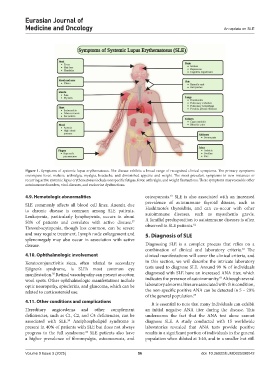
            Figure 1. Symptoms of systemic lupus erythematosus. The disease exhibits a broad range of recognized clinical symptoms. The primary symptoms
            encompass fever, malaise, arthralgia, myalgia, headache, and diminished appetite and weight. The most prevalent symptoms in new instances or
            recurring active systemic lupus erythematosus include nonspecific fatigue, fever, arthralgia, and weight fluctuations. These symptoms may resemble other
            autoimmune disorders, viral diseases, and endocrine dysfunctions.


                                                                         61
            4.9. Hematologic abnormalities                     osteoporosis.  SLE is also associated with an increased
            SLE commonly affects all blood cell lines. Anemia due   prevalence of autoimmune thyroid disease, such as
            to chronic disease is common among SLE patients.   Hashimoto’s thyroiditis, and can co-occur with other
            Leukopenia, particularly lymphopenia, occurs in about   autoimmune diseases, such as myasthenia gravis.
            50% of patients and correlates with active disease.    A familial predisposition to autoimmune diseases is often
                                                         57
                                                               observed in SLE patients.
                                                                                   62
            Thrombocytopenia, though less common, can be severe
            and may require treatment. Lymph node enlargement and   5. Diagnosis of SLE
            splenomegaly may also occur in association with active
            disease.                                           Diagnosing SLE is a complex process that relies on a
                                                               combination of clinical and laboratory criteria.  The
                                                                                                        63
            4.10. Ophthalmologic involvement                   clinical manifestations will cover the clinical criteria, and
            Keratoconjunctivitis sicca, often related to secondary   in this section, we will describe the intricate laboratory
            Sjögren’s syndrome, is SLE’s most common eye       tests used to diagnose SLE. Around 99 % of individuals
            manifestation.  Retinal vasculopathy can present as cotton   diagnosed with SLE have an increased ANA titer, which
                       58
                                                                                              64
            wool spots. Other ophthalmologic manifestations include   indicates the presence of autoimmunity.  Although several
            optic neuropathy, episcleritis, and glaucoma, which can be   laboratory abnormalities are associated with this condition,
            related to corticosteroid use.                     the non-specific positive ANA can be detected in 5 – 20%
                                                               of the general population. 65
            4.11. Other conditions and complications             It is essential to note that many individuals can exhibit
            Hereditary  angioedema  and  other  complement     an initial negative ANA titer during the disease. This
            deficiencies, such as C1, C2, and C4 deficiencies, can be   underscores the fact that the ANA test alone cannot
            associated with SLE.  Antiphospholipid syndrome is   diagnose SLE. A  study conducted with 15 worldwide
                              59
            present in 40% of patients with SLE but does not always   laboratories revealed that ANA tests provide positive
            progress to the full syndrome.  SLE patients also have   results in a significant portion of individuals in the general
                                     60
            a higher prevalence of fibromyalgia, osteonecrosis, and   population when diluted at 1:40, and in a smaller but still

            Volume 9 Issue 3 (2025)                         56                         doi: 10.36922/EJMO025090042

