


Page 24 - GHES-2-2
P. 24
Global Health Econ Sustain                                        Treatment and costs of skin lipohypertrophy


            Table 2. Frequency of severe hypoglycemic events as well as related health and social costs in the control group and the intensive
            education group
            Event type  Cost per          Control group (n=318)                 Intervention group (n=395)
                      event (€)   T‑6/T0       T0/T+6      T+6/T+12       T‑6/T0       T0/T+6      T+6/T+12

                              Events   €    Events   €   Events   €    Events   €   Events   €   Events   €
                              (n=89)        (n=72)       (n=80)        (n=91)       (n=38)       (n=12)
            PHV           25.8      28  722.4       25  712.5     27  696.6      20  516  12  309.6       6  1548
            ER          241.0      85  20485       83  20002     84  20.244      91  21931  40  9640       3  723
            EMS         128.5      16  2056       15  1926.5     16  2.056      17  2184.5  14  1799       7  899.5
            FM/CG WD      78.6  356  27981.6   333  25173.8    348  27.352,8  370  29082  116  9117.6  80  6120
            DHC           750      24  18000       23  17.250     24  18.000      25  18750  14  10500       5  3750
            Total cost (€)           69245        66064.8       68349.4      77107.5       20866.2      13045.5
            ∆%                                    −4.6          −1.3                       −72.9        −83.1
            Note: The subjects in the control group have only been educated once in the beginning of insulin treatment. Source: Modified from Gentile et al. 2018a.
            Abbreviations: PGV: Physician home visit; ER: Emergency room visit and treatment; EMS: Emergency medical services utilization/h; FM/CG WD:
            Working days of a family member or caregiver (mean); DHC: Average daily hospitalization cost.


                                                               size of fatty cells. Buttocks, hips, abdomen, and limbs can
                                                               host LH nodules, thus requiring extensive intervention. In
                                                               this case, the attending surgeon needs to take the ability
                                                               of the skin to adapt to the new outlines of the body into
                                                               consideration, and such extensive intervention should only
                                                               be implemented on individuals with toned and elastic skin
                                                               to avoid poor aesthetic results and to remove the need for
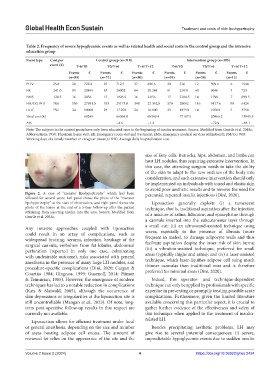
            Figure  2. A case of “monster lipohypertrophy” which had been   perennial, repeated insulin injections (Dini, 2020).
            followed for several years. Left panel shows the photo of the “monster
            lipohypertrophy” at the start of observation, and right panel shows the   Liposuction generally exploits (i) a tumescent
            photo of the lesion at the end of a 5-year follow-up after the patient   technique, that is, traditional aspiration after the injection
            refraining from injecting insulin into the area. Source: Modified from   of a mixture of saline, lidocaine, and epinephrine through
            Gentile et al. 2023a.
                                                               a cannula inserted into the subcutaneous layer through
                                                               a small cut; (ii) an ultrasound-assisted technique using
            Any invasive approaches coupled with liposuction
            could result in an array of complications, such as   waves, especially in the presence of fibrosis (more
                                                               frequent in males), to damage adipocyte walls and thus
            widespread bruising, seroma, infection, breakage of the   facilitate aspiration despite the inner risk of skin burns;
            surgical cannula, embolism from fat lobules, abdominal   (iii) a vibration-assisted technique, preferred for small
            perforation (reported  in only  one case,  culminating
            with undesirable outcome), risks associated with general   areas (typically thighs and arms); and (iv) a laser-assisted
            anesthesia in the presence of many large LH nodules, and   technique, which laser-liquifies  adipose  cell using much
            procedure-specific complications (Dini, 2020; Gargan &   thinner cannulas than traditional ones and is therefore
            Courtiss  1984;  Gingrass, 1999; Gusenoff, 2014;  Pitman   preferred for minimal areas (Dini, 2020).
            & Teimurian, 1985). However, the emergence of modern   Indeed, this operator-  and technique-dependent
            techniques has led to a notable reduction in complications   technique can only be applied by professionals with specific
            (Katz & Maiwald, 2005), although the occurrence of   expertise in preventing or promptly treating possible acute
            skin depressions or irregularities at the liposuction site is   complications. Furthermore, given the limited literature
            still uncontrollable (Mangan et al., 2023). Of note, long-  available concerning this particular aspect, it is crucial to
            term post-operative follow-up results in this respect are   gather further evidence of the effectiveness and safety of
            currently not available.                           this technique when applied to the treatment of insulin-

              Liposuction allows for efficient treatment under local   related LH.
            or general anesthesia, depending on the size and number   Besides precipitating aesthetic problems, LH may
            of  areas hosting adipose  cell  excess.  The  amount of   give rise to several potential consequences: (i) severe,
            removed fat relies on the appearance of the site and the   unpredictable hypoglycemic events due to sudden insulin


            Volume 2 Issue 2 (2024)                         4                        https://doi.org/10.36922/ghes.2424

