


Page 23 - GHES-2-2
P. 23
Global Health Econ Sustain                                        Treatment and costs of skin lipohypertrophy


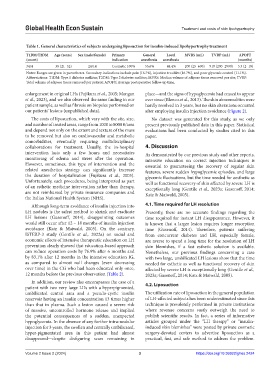
            Table 1. General characteristics of subjects undergoing liposuction for insulin‑induced lipohypertrophy treatment
            T1DM/T2DM   Age (years)  Sex (male/female)  Primary   General   Local   MVRS (mL)  TVRP (mL)  APOFT
            (count)                              indication  anesthesia  anesthesia                   (months)
            34/4         38 (21–52)    24/14     Cosmetic 100%  55.6%   44.4%   200 (25–600)  910 (200–2900)  5.3 (2–10)
            Notes: Ranges are given in parentheses. Secondary indications include pain (16.7%), injection troubles (16.7%), and poor glycemic control (11.1%).
            Abbreviations: T1DM: Type 1 diabetes mellitus; T2DM: Type 2 diabetes mellitus; MVRS: Median volume of adipose tissue removed per site; TVRP:
            Total volume of adipose tissue removed per patient; APOFT: Average postoperative follow-up time.

            enlargement in original LHs (Fujikura et al., 2005; Mangan   place—and the signs of hypoglycemia had ceased to appear
            et al., 2023), and we also observed the same finding in our   ever since (Blanco et al., 2013). The skin abnormalities were
            patient sample, as well as fibrosis on biopsies performed on   hardly resolved in 3 years, but no skin alterations occurred
            our patients’ lesions (unpublished data).          after employing insulin injection avoidance (Figure 2).
              The costs of liposuction, which vary with the site, size,   No dataset was generated for  this study, as  we only
            and number of treated areas, range from 1000 to 8000 €/area   present previously published data in this paper. Statistical
            and depend not only on the extent and texture of the mass   evaluations had been conducted by studies cited in this
            to be removed but also on cardiovascular and metabolic   paper.
            comorbidities,  eventually  requiring  multidisciplinary
            collaborations for treatment. Usually, the in-hospital   4. Discussion
            intervention lasts only a few hours and necessitates   As demonstrated by our previous study and other reports,
            monitoring  of  edema  and  stress  after  the  operation.   intensive education on correct injection techniques is
            However, sometimes, this type of intervention and the   essential to guaranteeing the recovery of regular skin
            related anesthetics strategy can significantly increase   features, severe sudden hypoglycemic episodes, and large
            the duration of hospitalization (Fujikura  et al., 2005).   glycemic fluctuations, but the time needed for aesthetic as
            Unfortunately, such procedures, being interpreted as part   well as functional recovery of skin affected by severe LH is
            of an esthetic medicine intervention rather than therapy,   exceptionally long (Gentile et al., 2023a; Gusenoff, 2014;
            are not reimbursed by private insurance companies and   Katz & Maiwald, 2005).
            the Italian National Health System (NHS).
              Although long-term avoidance of insulin injection into   4.1. Time required for LH resolution
            LH nodules is the safest method to shrink and eradicate   Presently, there are no accurate findings regarding the
            LH lesions (Gusenoff, 2014), disappointing outcomes   time required for instant LH disappearance. However, it
            would still occur after 12 – 18 months of insulin injection   is known that a larger lesion requires longer resorption
            avoidance (Katz & Maiwald, 2005). On the contrary,   time (Gusenoff, 2014). Therefore, patients suffering
            ISTERP-3 study (Gentile  et al., 2022a) on social and   from concurrent diabetes and LH, especially female,
            economic effects of intensive therapeutic education on LH   are averse to spend a long time for the resolution of LH
            prevention clearly showed that education-based approach   skin blemishes, if a fast esthetic solution is available.
            can reduce operation costs by 76.9% after 6 months and   Nonetheless,  our  previous  findings  concerning a  case
            by 83.1% after 12 months in the intensive education IG,   with two large, umbilicated LH lesions show that the time
            as compared to almost null changes (even decreasing   needed for esthetic as well as functional recovery of skin
            over time) in the CG who had been educated only once,   affected by severe LH is exceptionally long (Gentile et al.,
            12 months before the previous observation (Table 2).  2023a; Gusenoff, 2014; Katz & Maiwald, 2005).
              In addition, our review also encompasses the case of a   4.2. Liposuction
            patient with two very large LHs with a hyperpigmented,
            umbilicated central area and a pseudo-cystic insulin   The utilization rate of liposuction in the general population
            reservoir having an insulin concentration 13 times higher   of LH-affected subjects has been underestimated since this
            than that in plasma. Such a lesion caused a severe risk   technique is prevalently performed in private institutions
            of massive, uncontrolled hormone release and implied   where revenue concerns vastly outweigh the need to
            the  potential  consequences of  a sudden,  unexpected   publish scientific results. In fact, a series of informative
            hypoglycemia. In the absence of any further intra-nodular   articles grouped under the “LH therapy” or “insulin-
            injection for 3 years, the swollen and centrally umbilicated,   induced skin blemishes” were posted by private cosmetic
            hyper-pigmentated area in this patient had almost   surgery-devoted centers to advertise liposuction as a
            disappeared—despite disfiguring scars remaining in   practical, fast, and safe method to address the problem.


            Volume 2 Issue 2 (2024)                         3                        https://doi.org/10.36922/ghes.2424

