


Page 96 - GPD-2-2
P. 96
Gene & Protein in Disease                                            Immunoblotting large and small proteins


                         A                               B


                         C               D


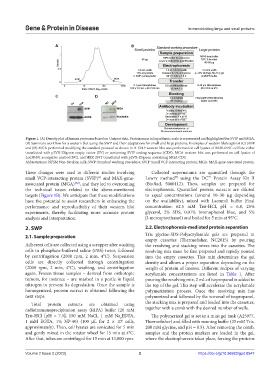
            Figure 1. (A) Density plot of human proteome based on Uniprot data. Protein mass in logarithmic scale is represented and highlighted for SVIP and MGA.
            (B) Summary workflow for a western blot using the SWP and their adaptations for small and large proteins. Examples of western blots against (C) SVIP
            and (D) MGA performed modifying the standard protocol as shown in B. SVIP western blot was performed on cell lysates of BB30-HNC cell line either
            transfected with pLVX-ZSgreen empty vector (EV) or containing SVIP coding sequence (CDS). MGA western blot was performed on cell lysates of
            LouNH91 as negative control (NC), and HEK 293T transfected with pLVX-ZSgreen containing MGA CDS.
            Abbreviations: NFSM Non-fat skim milk; SWP: Standard working procedure; SVIP: Small VCP-interacting protein; MGA: MAX-gene-associated protein.

            These changes were used in different studies involving   Collected supernatants are quantified through the
                                                                                          ™
            small VCP-interacting protein (SVIP)  and MAX-gene-  Lowry method  using the DC  Protein Assay Kit II
                                           [4]
                                                                           [7]
            associated protein (MGA) [5,6] , and they led to overcoming   (BioRad,  5000112).  Then,  samples  are  prepared  for
            the technical issues related to the above-mentioned   electrophoresis. Quantified protein extracts are diluted
            targets (Figure 1B). We anticipate that these modifications   to equal concentrations (around 10–30  µg depending
            have the potential to assist researchers in enhancing the   on the availability), mixed with Laemmli buffer (final
            performance and reproducibility of their western blot   concentration: 62.5 mM Tris-HCl, pH = 6.8, 25%
            experiments,  thereby  facilitating  more  accurate  protein   glycerol,  2% SDS, 0.01% bromophenol  blue, and 5%
            analysis and interpretation.                       β-mercaptoethanol) and boiled for 5 min at 95°C.

            2. SWP                                             2.2. Electrophoresis-mediated protein separation
            2.1. Sample preparation                            Tris glycine-SDS-Polyacrylamide gels are prepared in
                                                               empty cassettes (Thermofisher, NC2015) by pouring
            Adherent cells are collected using a scrapper after washing   the resolving and stacking mixes into the cassettes. The
            cells in phosphate-buffered saline (PBS) twice, followed   resolving mix must be first prepared and rapidly poured
            by centrifugation (2000  rpm, 2  min, 4°C). Suspension   into  the  empty cassettes.  This mix  determines  the  gel
            cells  are  directly  collected  through  centrifugation   density and allows a proper separation depending on the
            (2000  rpm, 2  min, 4°C), washing, and centrifugation   weight of protein of interest. Different recipes of varying
            again. Frozen tissue samples – derived from orthotopic   acrylamide concentrations are listed in  Table 1. After
            tumors, for instance – are mashed in a pestle in liquid   pouring the resolving mix, 2 mL of isopropanol is added to
            nitrogen to prevent its degradation. Once the sample is   the top of the gel. This step will accelerate the acrylamide
            homogenized, protein extract is obtained following the   polymerization process. Once the resolving mix has
            next steps.                                        polymerized and followed by the removal of isopropanol,
              Total  protein  extracts  are  obtained  using   the stacking mix is prepared and loaded into the cassettes,
            radioimmunoprecipitation assay (RIPA) buffer (20 mM   together with a comb with the desired number of wells.
            Tris-HCl [pH = 7.5], 150 mM NaCl, 1 mM Na EDTA,      The polymerized gel is set in a mini gel tank (A25977,
                                                    2
            1 mM EGTA, 1% NP-40) (100  µL for 2 × 10   cells,   Thermofisher) and filled with running buffer (25 mM Tris,
                                                     6
            approximately). Then, cell lysates are sonicated for 5 min   200 mM glycine, and pH = 8.5). After removing the comb,
            and gently mixed in the rotator wheel for 15 min at 4°C.   samples and the protein markers are loaded in the gel,
            After that, tubes are centrifuged for 15 min at 13,000 rpm.  where the electrophoresis takes place, forcing the proteins


            Volume 2 Issue 2 (2023)                         2                        https://doi.org/10.36922/gpd.0547

