


Page 97 - GPD-2-2
P. 97
Gene & Protein in Disease                                            Immunoblotting large and small proteins


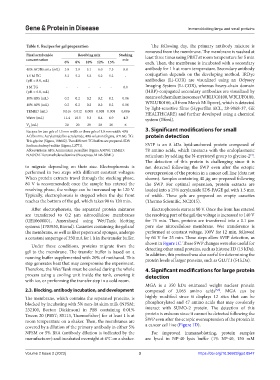
            Table 1. Recipes for gel preparation                 The following day, the primary antibody mixture is
                                                               removed from the membrane. The membrane is washed at
            Final acrylamide      Resolving mix     Stacking   least three times using PBST at room temperature for 5 min
            concentration                            mix
                            6%   8%  10%  12%  15%             each. Then, the membrane is incubated with a secondary
            40% AC/Bis mix (mL)  3.0  3.9  5.1  6.0  7.5  0.8  antibody for 1 h at room temperature. Secondary antibody
            1.5 M TG         5.2  5.2  5.2  5.2  5.2  -        conjugation depends on the developing method. IRDye
            (pH = 8.8, mL)                                     antibodies (Li-COR) are visualized using an Odyssey
            1 M TG           -    -    -   -    -    0.8       Imaging System (Li-COR), whereas heavy-chain domain
            (pH = 6.8, mL)                                     (HRP)-conjugated secondary antibodies are visualized by
            10% SDS (mL)     0.2  0.2  0.2  0.2  0.2   0.06    means of chemiluminescence (WBLUC0100, WBLUF0100,
            10% APS (mL)     0.2  0.2  0.2  0.2  0.2  0.06     WBLUR0100, all from Merck Millipore), which is detected
                                                               by light-sensitive films (Hyperfilm ECL, 28-9068-37, GE
            TEMED (mL)      0.016 0.012 0.008 0.008 0.008  0.006  HEALTHCARE) and further developed using a chemical
            Water (mL)      11.4  10.5  9.3  8.4   6.9  4.3    system (Ilford).
            V (mL)           20  20   20   20   20    6
             F
            Recipes for two gels of 1.5 mm width or three gels of 1.0 mm width. 40%   3. Significant modifications for small
            AC/Bis mix: Acrylamide/Bis-acrylamide, 40% solution (Sigma, A7168). TG:   protein detection
            Tris-glycine (Sigma, 108602). Two different TG buffers are prepared. SDS:
            Sodium dodecyl-sulfate (Sigma, L3771).             SVIP  is  an 8  kDa  lipid-anchored protein  composed of
            Abbreviations: APS: Ammonium persulfate (Sigma A3678); TEMED:   78 amino acids, which interacts with the endoplasmatic
            N,N,N’,N’-Tetramethylenediamine (Bioexpress, M146-50ML).  reticulum by adding the N-myristoyl group to glycine-2 .
                                                                                                           [4]
                                                               The detection of this protein is challenging since it is
            to migrate depending on their size. Electrophoresis is   not detected following the SWP even after the ectopic
            performed in two steps with different constant voltages:   overexpression of the protein in a cancer cell line (data not
            When protein extracts travel through the stacking phase,   shown). Samples containing 40 µg are prepared following
            80 V is recommended; once the sample has entered the   the  SWP.  For  optimal  separation,  protein  extracts  are
            resolving phase, the voltage can be increased up to 120 V.   loaded into a 15% acrylamide SDS-PAGE gel with 1.5 mm
            Typically, electrophoresis is stopped when the dye front   of  width.  These  gels  are  prepared  on empty cassettes
            reaches the bottom of the gel, which takes 90 to 120 min.  (Thermo Scientific, NC2015).
              After electrophoresis, the separated protein mixtures   Electrophoresis starts at 80 V. Once the front has entered
            are transferred to 0.2  µm nitrocellulose membranes   the resolving part of the gel, the voltage is increased to 140 V
            (GE10600001, Amersham) using Wet/Tank blotting     for 75  min. Then, proteins are transferred into a 0.1  µm
            systems (1703930, Biorad). Cassettes containing the gel and   pore size nitrocellulose membrane. Wet transference is
            the membrane, as well as filter papers and sponges, undergo   performed at constant voltage, 100V for 12 min, followed
            a constant amperage of 350 mA for 1 h in the transfer buffer.  by 60 V for 25 min. These steps allow SVIP detection, as
                                                               shown in Figure 1C. These SWP changes were also useful for
              Under these conditions, proteins migrate from the
            gel to the membrane. The transfer buffer is based on a   detecting other small proteins, such as histone H3 (15 kDa).
                                                               In addition, this protocol was also useful for determining the
            running buffer supplemented with 20% of methanol. This   protein levels of larger proteins, such as GLUT1 (54 kDa).
            step generates heat that may compromise the experiment.
            Therefore, the Wet/Tank must be cooled during the whole   4. Significant modifications for large protein
            process using a cooling unit inside the tank, covering it   detection
            with ice, or performing the transfer step in a cold room.
                                                               MGA is a 350  kDa estimated weight nuclear protein
            2.3. Blocking, antibody incubation, and development  composed of 3,065 amino acids [5,6] . MGA can be
            The membrane, which contains the separated proteins, is   highly modified since it displays 12 sites that can be
            blocked by incubating with 5% non-fat skim milk (NFSM;   phosphorylated and 47 amino acids that may covalently
            232100, Becton Dickinson) in PBS containing 0.01%   interact with SUMO-2 protein. The detection of this
            Tween 20 (PBST; 85113, Thermofisher) for at least 1 h at   protein is arduous since it cannot be detected following the
            room temperature on a shaker. Then, the membranes are   SWP even after the ectopic overexpression of the protein in
            covered by a dilution of the primary antibody in either 5%   a cancer cell line (Figure 1D).
            NFSM or 5% BSA (antibody dilution is indicated by the   For improved immunoblotting, protein samples
            manufacturer) and incubated overnight at 4°C on a shaker.  are lysed in NP-40 lysis buffer (1% NP-40, 150 mM


            Volume 2 Issue 2 (2023)                         3                        https://doi.org/10.36922/gpd.0547

