


Page 28 - GPD-3-3
P. 28
Gene & Protein in Disease                                     Modulating immune response in liver by curcumin


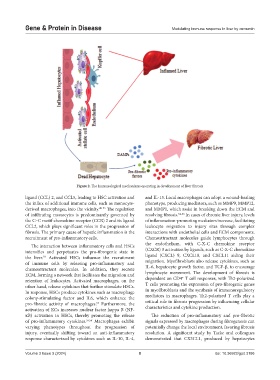
                                  Figure 2. The Immunological mechanisms operating in development of liver fibrosis

            ligand (CCL) 2, and CCL5, leading to HSC activation and   and IL-13. Local macrophages can adopt a wound-healing
            the influx of additional immune cells, such as monocyte-  phenotype, producing mediators, such as MMP9, MMP12,
            derived macrophages, into the vicinity. 49-53  The regulation   and MMP1, which assist in breaking down the ECM and
            of infiltrating monocytes is predominantly governed by   resolving fibrosis. 54-56  In cases of chronic liver injury, levels
            the C–C motif chemokine receptor (CCR) 2 and its ligand   of inflammation-promoting mediators increase, facilitating
            CCL2, which plays significant roles in the progression of   leukocyte migration  to injury sites  through  complex
            fibrosis. The primary cause of hepatic inflammation is the   interactions with endothelial cells and ECM components.
            recruitment of pro-inflammatory cells.             Chemoattractant molecules guide lymphocytes through
              The interaction between inflammatory cells and HSCs   the  endothelium,  with  C-X-C  chemokine  receptor
            intensifies and perpetuates the pro-fibrogenic state in   (CXCR) 3 activation by ligands, such as C-X-C chemokine
            the liver.  Activated HSCs influence the recruitment   ligand (CXCL) 9, CXCL10, and CXCL11 aiding their
                   54
            of immune cells by releasing pro-inflammatory and   migration. Myofibroblasts also release cytokines, such as
            chemoattractant  molecules.  In  addition,  they  secrete   IL-6, hepatocyte growth factor, and TGF-β, to encourage
            ECM, forming a network that facilitates the migration and   lymphocyte movement. The development of fibrosis is
                                                                              +
            retention of leukocytes. Activated macrophages, on the   dependent on CD4  T cell responses, with Th2-polarized
            other hand, release cytokines that further stimulate HSCs.   T cells promoting the expression of pro-fibrogenic genes
            In response, HSCs produce cytokines such as macrophage   in myofibroblasts and the synthesis of immunoregulatory
            colony-stimulating factor and IL6, which enhance the   mediators in macrophages. Th2-polarized T cells play a
            pro-fibrotic activity of macrophages.  Furthermore, the   critical role in fibrosis progression by influencing cellular
                                          54
            activation of KCs increases nuclear factor kappa B (NF-  characteristics and cytokine production.
            κB) activation in HSCs, thereby promoting the release   The reduction of pro-inflammatory and pro-fibrotic
            of pro-inflammatory cytokines. 55,56  Macrophages exhibit   signals expressed by macrophages during fibrogenesis can
            varying phenotypes throughout the progression of   potentially change the local environment, favoring fibrosis
            injury, eventually shifting toward an anti-inflammatory   resolution.  A  significant  study  by  Tacke  and  colleagues
            response characterized by cytokines such as IL-10, IL-4,   demonstrated that CX3CL1, produced by hepatocytes


            Volume 3 Issue 3 (2024)                         8                               doi: 10.36922/gpd.3186

