


Page 23 - GPD-3-3
P. 23
Gene & Protein in Disease                                     Modulating immune response in liver by curcumin


            originating from the arterial plexus and splanchnic organs   into lymphatic vessels that travel along the portal tract.
                                                                                                            3,4
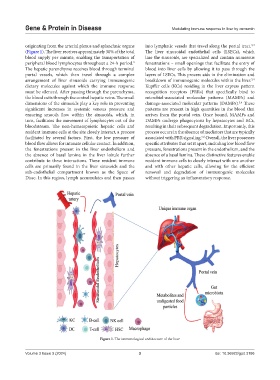
            (Figure 1). The liver receives approximately 30% of the total   The  liver sinusoidal  endothelial  cells  (LSECs),  which
            blood supply per minute, enabling the transportation of   line the sinusoids, are specialized and contain numerous
            peripheral blood lymphocytes throughout a 24-h period.    fenestrations – small openings that facilitate the entry of
                                                          3
            The hepatic parenchyma receives blood through terminal   blood into liver cells by allowing it to pass through the
            portal vessels, which then travel through a complex   layers of LSECs. This process aids in the elimination and
            arrangement of liver sinusoids carrying immunogenic   breakdown of immunogenic molecules within the liver.
                                                                                                            3,4
            dietary molecules against which the immune response   Kupffer cells (KCs) residing in the liver express pattern
            must be silenced. After passing through the parenchyma,   recognition receptors (PRRs) that specifically bind to
            the blood exits through the central hepatic veins. The small   microbial-associated molecular patterns (MAMPs) and
            dimensions of the sinusoids play a key role in preventing   damage-associated molecular patterns (DAMPs).  These
                                                                                                       5,6
            significant increases in systemic venous pressure and   patterns are present in high quantities in the blood that
            ensuring  smooth flow within the sinusoids, which, in   arrives  from  the  portal vein.  Once  bound,  MAMPs  and
            turn, facilitates the movement of lymphocytes out of the   DAMPs  undergo  phagocytosis by  hepatocytes  and KCs,
            bloodstream. The non-hematopoietic hepatic cells and   resulting in their subsequent degradation. Importantly, this
            resident immune cells at the site closely interact, a process   process occurs in the absence of mediators that are typically
            facilitated by several factors. First, the low pressure of   associated with PRR signaling.  Overall, the liver possesses
                                                                                       5,6
            blood flow allows for intimate cellular contact. In addition,   specific attributes that set it apart, including low blood flow
            the fenestrations present in the liver endothelium and   pressure, fenestrations present in the endothelium, and the
            the absence of basal lamina in the liver lobule further   absence of a basal lamina. These distinctive features enable
            contribute to these interactions. These resident immune   resident immune cells to closely interact with one another
            cells are primarily found in the liver sinusoids and the   and with other hepatic cells, allowing for the efficient
            sub-endothelial compartment known as the Space of   removal  and  degradation  of  immunogenic  molecules
            Disse. In this region, lymph accumulates and then passes   without triggering an inflammatory response.


                                            Figure 1. The immunological architecture of the liver


            Volume 3 Issue 3 (2024)                         3                               doi: 10.36922/gpd.3186

