


Page 72 - GPD-3-3
P. 72
Gene & Protein in Disease                                                  Gene therapy progress for DEB


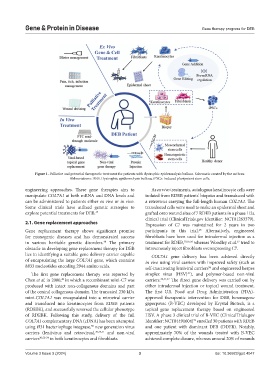
                Figure 1. Palliative and potential therapeutic treatment for patients with dystrophic epidermolysis bullosa. Schematic created by the authors.
                               Abbreviations: DEB: Dystrophic epidermolysis bullosa; iPSCs: Induced pluripotent stem cells.

            engineering approaches. These gene therapies aim to   As ex vivo treatments, autologous keratinocyte cells were
            manipulate COL7A1 at both mRNA and DNA levels and   isolated from RDEB patients’ biopsies and transduced with
            can be administered to patients either ex vivo or in vivo.   a retrovirus carrying the full-length human COL7A1. The
            Some clinical trials have utilized genetic strategies to   transduced cells were used to make an epidermal sheet and
            explore potential treatments for DEB. 47           grafted onto wound sites of 7 RDEB patients in a phase 1/2a
                                                               clinical trial (ClinicalTrials.gov Identifier: NCT01263379).
            2.1. Gene replacement approaches                   Expression of C7 was maintained for 2  years in two
            Gene replacement therapy shows significant promise   participants in this trial.  Alternatively, engineered
                                                                                      28
            for monogenic diseases and has demonstrated success   fibroblasts have been used for intradermal injection as a
                                                                                                      57
            in various heritable genetic disorders.  The primary   treatment for RDEB, 29,55,56  whereas Woodley et al.  tried to
                                             48
            obstacle in developing gene replacement therapy for DEB   intravenously inject fibroblasts overexpressing C7.
            lies in identifying a suitable gene delivery carrier capable   COL7A1  gene delivery has been achieved directly
            of encapsulating the large COL7A1 gene, which contains   in vivo using viral carriers with improved safety (such as
            8833 nucleotides encoding 2944 amino acids.        self-inactivating lentiviral carriers  and engineered herpes
                                                                                          58
              The first gene replacement therapy was reported by   simplex virus [HSV] ), and polymer-based non-viral
                                                                                 51
            Chen et al. in 2000,  in which a recombinant mini-C7 was   carriers. 30,31,52  The direct gene delivery was carried out by
                           49
            produced  with intact non-collagenous  domains and  part   either intradermal injection or topical wound treatment.
            of the central collagenous domain. The truncated 230 kDa   The first U.S. Food and Drug Administration (FDA)-
            mini-COL7A1 was encapsulated into a retroviral carrier   approved  therapeutic  intervention  for  DEB,  beremagene
            and transduced into keratinocytes from RDEB patients   geperpavec  (B-VEC)  developed  by  Krystal  Biotech,  is  a
            (RDEBK), and successfully reversed the cellular phenotype   topical gene replacement therapy based on engineered
            of RDEBK. Following this study, delivery of the full   HSV. A phase 3 clinical trial of B-VEC (ClinicalTrials.gov
            COL7A1 complementary DNA (cDNA) has been attempted   Identifier: NCT04491604)  enrolled 30 patients with RDEB
                                                                                   59
            using Ø31 bacteriophage integrase,  new generation virus   and one patient with dominant DEB (DDEB). Notably,
                                        50
            carriers (lentivirus and retrovirus), 28,29,51  and non-viral   approximately 70% of the wounds treated with B-VEC
            carriers 30,52-54  in both keratinocytes and fibroblasts.  achieved complete closure, whereas around 20% of wounds


            Volume 3 Issue 3 (2024)                         3                               doi: 10.36922/gpd.4047

