


Page 76 - GPD-3-3
P. 76
Gene & Protein in Disease                                                  Gene therapy progress for DEB


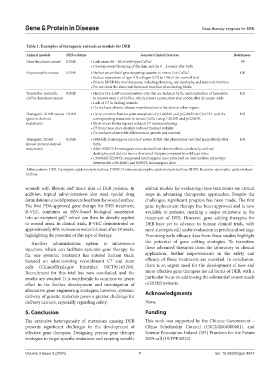
            Table 1. Examples of transgenic animals as models for DEB
            Animal models    DEB subtype                     Genetic/clinical features              References
            Gene-knockout mouse  RDEB   • Lack exons 46 – 69 of wild-type Col7a1                       99
                                        • Develop severe blistering of the skin and die 1 – 2 weeks after birth.
            Hypomorphic mouse  RDEB     • Harbor an artificial gene-targeting cassette in intron 3 of Col7a1  100
                                        • Reduce expression of type VII collagen (C7) to 10% of the normal level
                                        • Present RDEB-like manifestations, including blistering, nail dystrophy, and mitten deformities
                                        • Do not show the abnormal form and function of anchoring fibrils.
            Tamoxifen-inducible   RDEB  •  Harbor Cre-LoxP recombination sites that are induced by the administration of tamoxifen   102
            Col7a1-knockout mouse        to remove exon 2 of Col7a1, which creates a premature stop codon after 42 amino acids
                                        • Lack of C7 in healing wounds
                                        • Do not have chronic disease manifestations in the skin or other organs.
            Transgenic DDEB mouse DDEB  •  Carry common human point mutations of p.G2034R and p.G2043R in COL7A1, and the   103
            (patient-derived             corresponding mutations in mouse Col7a1 are p.G2028R and p.G2037R
            mutations)                  • Show micro-blistering and reduced C7 immunostaining
                                        • C7 from these mice displays reduced thermal stability
                                        • Do not have observable differences in growth and survival.
            Transgenic RDEB   RDEB      •  5818delC homozygous mice had severe RDEB-like phenotypes and died immediately after   104
            mouse (patient-derived       birth.
            mutations)                  •  Adult E2857X homozygous mice showed hair abnormalities, syndactyly, and nail
                                         dystrophy, and did not have a shortened lifespan compared to wild-type mice.
                                        •  c.5818delC/E2857X compound heterozygous mice presented an intermediate phenotype
                                         between the c.5818delC and E2857X homozygous mice.
            Abbreviations: DEB: Dystrophic epidermolysis bullosa; DDEB: Dominant dystrophic epidermolysis bullosa; RDEB: Recessive dystrophic epidermolysis
            bullosa.

            wounds with fibrosis and intact skin of DEB patients. In   animal models for evaluating these treatments are critical
            addition, topical  administrations also  need  special drug   steps in advancing therapeutic approaches. Despite the
            formulations to avoid premature loss from the wound surface.   challenges, significant progress has been made. The first
            The first FDA-approved gene therapy for DEB treatment,   gene replacement therapy has been approved and is now
            B-VEC, combines an HSV-based biological suspension   available to patients, marking a major milestone in the
            into an excipient gel,  which can then be directly applied   treatment of DEB. However, gene editing therapies for
                             59
            to wound areas. In clinical trials, B-VEC demonstrated an   DEB  have  yet  to  advance  to  human  clinical  trials,  with
            approximately 40% increase in wound closure after 24 weeks,   most strategies still under evaluation in preclinical settings.
            highlighting the potential of this type of therapy.  Promising early efficacy data from these studies highlight
              Another administration option is intravenous     the potential of gene editing strategies. To transition
            injection, which can facilitate systemic gene therapy. So   these advanced therapies from the laboratory to clinical
            far,  one  systemic  treatment  has  entered  human  trials,   application, further improvements in the safety and
            focused on administering recombinant C7 and stem   efficacy of these treatments are essential. In conclusion,
            cells  (ClinicalTrials.gov  Identifier:  NCT05143190).  there is an urgent need for the development of new and
            Recruitment for this trial has now concluded, and the   more effective gene therapies for all forms of DEB, with a
            results are awaited. It is worthwhile to continue to invest   particular focus on addressing the substantial unmet needs
            effort in the further development and investigation of   of RDEB patients.
            alternative gene engineering strategies; however, systemic   Acknowledgments
            delivery of genetic materials poses a greater challenge for
            delivery carriers, especially regarding safety.    None.
            5. Conclusion                                      Funding
            The  extensive  heterogeneity of  mutations  causing  DEB   This work was supported by the Chinese Government –
            presents significant challenges in the development of   China Scholarship Council (CSC202008300001), and
            effective gene therapies. Designing precise gene therapy   Science Foundation Ireland (SFI) Frontiers for the Future
            strategies to target specific mutations and creating suitable   2019 call (19/FFP/6522).


            Volume 3 Issue 3 (2024)                         7                               doi: 10.36922/gpd.4047

