


Page 68 - GTM-2-2
P. 68
Global Translational Medicine                                              Modified cardiac catheterization


            Table 3. Mean values of hemodynamics and oxygen saturation pre‑ and post‑vasodilator administration
            Parameters              Mean±SD (pre‑oxygen)       Mean±SD (post‑oxygen)     t‑value       P‑value
            mPAP (mmHg)                  36.8±14.9                  41.5±14.7             0.778         0.445
            Aorta (%)                    93.2±4.5                   98.7±2.3              3.770         0.001
            SVC (%)                      73.2±14.1                  78.3±15.2             0.852         0.403
            IVC (%)                      68.7±16.4                  77.3±26.3             0.961         0.347
            Pulmonary artery (%)         82.8±14.7                  93.0±3.0              2.355         0.029
            Pulmonary vein (%)           96.3±2.8                   99.0±1.7              2.855         0.009
                                   Median (IQR) (Pre‑oxygen)  Median (IQR) (Post‑oxygen)  U‑value      P‑value
            PVR (woods unit)           0.92 (0.3–1.2)             1.35 (0.68–4.25)        8.000         0.569
            Q /Q  ratio                3.27 (1.1–9.0)             2.75 (2.46–3.37)        11.500        0.919
             P  S
            IQR: Interquartile range; IVC: Inferior vena cava; mPAP: Mean pulmonary artery pressure; PVR: Pulmonary vascular resistance; Q /Q  ratio: The ratio
                                                                                                  S
                                                                                                P
            of total pulmonary blood flow to total systemic blood flow; SVC: Superior vena cava


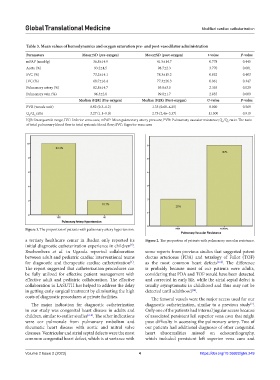
            Figure 1. The proportion of patients with pulmonary artery hypertension.

            a tertiary healthcare center in Ibadan only reported its   Figure 2. The proportion of patients with pulmonary vascular resistance.
            initial diagnostic catheterization experience in children .
                                                        [3]
            Rwebembera  et al. in Uganda reported collaboration   some reports from previous studies that suggested patent
            between adult and pediatric cardiac interventional teams   ductus  arteriosus  (PDA)  and  tetralogy  of  Fallot  (TOF)
            for  diagnostic  and  therapeutic  cardiac  catheterization .   as the most common heart defects [2-4] . The difference
                                                        [1]
            The report suggested that catheterization procedures can   is probably because most of our patients were adults,
            be fully utilized for effective patient management with   considering that PDA and TOF would have been detected
            effective adult and pediatric collaboration. The effective   and corrected in early life, while the atrial septal defect is
            collaboration in LASUTH has helped to address the delay   usually asymptomatic in childhood and thus may not be
            in getting early surgical treatment by eliminating the high   detected until adulthood .
                                                                                   [14]
            costs of diagnostic procedures at private facilities.  The femoral vessels were the major access used for our
              The major indication for diagnostic catheterization   diagnostic  catheterization, similar  to a  previous study .
                                                                                                           [2]
            in our  study was congenital heart disease  in adults  and   Only one of the patients had internal jugular access because
            children, similar to earlier studies [2-4] . The other indications   of associated persistent left superior vena cava that might
            were cor pulmonale from pulmonary embolism and     pose difficulty in accessing the pulmonary artery. Two of
            rheumatic heart disease with aortic and mitral valve   our patients had additional diagnoses of other congenital
            diseases. Ventricular and atrial septal defects were the most   heart abnormalities missed on echocardiography,
            common congenital heart defect, which is at variance with   which included persistent left superior vena cava and


            Volume 2 Issue 2 (2023)                         4                         https://doi.org/10.36922/gtm.249

