


Page 72 - GTM-4-2
P. 72
Global Translational Medicine                                           Glucosidase and metabolic profiles


               50                                                  9
                                           p<0.05                        *
                                                                   8
               40
                                                                   7 6
             Depot (g)  30  trend  p<0.05  trend  trend          Lipid (mmol/L)  5 4  *
               20
               10                                                  3                         *         *
                                                                   2
               0                                                   1
                 Epididymal Retroperitoneal  Dorsal  Total WAT  WAT/BW, (%)  0
                                                                     Triglycerides  Total chol  LDL chol  HDL chol
                               Control  Miglitol
                                                                                Control  Miglitol
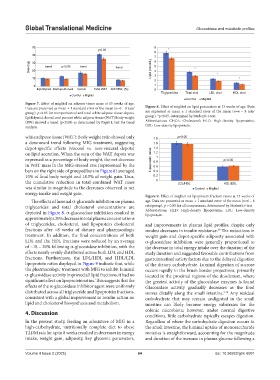
            Figure 7. Effect of miglitol on adipose tissue mass at 15 weeks of age.
            Data are presented as mean ± 1 standard error of the mean (n=6 – 8 rats/  Figure 8. Effect of miglitol on lipid parameters at 15 weeks of age. Data
            group). p<0.05 for retroperitoneal and total white adipose tissue depots.   are expressed as mean ± 1 standard error of the mean (n=6 – 8 rats/
            Epididymal, dorsal, and percent white adipose tissue (WAT)/body weight   group). *p<0.05, determined by Student’s t-test.
            (BW) showed a trend (p<0.05) as determined by Page’s L test for trend   Abbreviations:  CHOL:  Cholesterol;  HLD:  High-density  lipoproteins;
            analysis.                                          LDL: Low-density lipoprotein.

            white adipose tissue (WAT): Body weight ratio showed only   1.8  p>0.05
            a downward trend following MIG treatment, suggesting   1.6
            depot-specific effects (visceral vs. non-visceral depots)   1.4
            on lipid accretion. When the sum of the WAT depots was   1.2
            expressed as a percentage of body weight, the net decrease   Lipoprotein ratios  0.8 1  p>0.05
            in WAT mass in the MIG-treated rats (represented by the   0.6
            bars on the right side of grouped bars in Figure 8) averaged   0.4
            10% of final body weight and 18.5% of weight gain. Thus,   0.2
            the cumulative reduction in total combined WAT mass    0         LDL/HDL            HDL/LDL
            was similar in magnitude to the decreases observed in net               Control  Miglitol
            energy intake and weight gain.
                                                               Figure 9. Effect of miglitol on lipoprotein fraction ratios at 15 weeks of
              The effects of luminal α-glucoside inhibition on plasma   age. Data are presented as mean ± 1 standard error of the mean (n=6 – 8
            triglycerides and total cholesterol concentrations are   rats/group). p > 0.05 for all comparisons, determined by Student’s t-test.
            depicted in Figure 8. α-glucosidase inhibition resulted in   Abbreviations: HLD: High-density lipoproteins; LDL: Low-density
                                                               lipoprotein.
            approximately a 20% decrease in total plasma concentrations
            of triglycerides, cholesterol, and lipoprotein cholesterol   and  improvements  in  plasma  lipid  profiles,  despite  only
            fractions after <8  weeks of dietary and pharmacologic   modest decreases in insulin resistance.  The reductions in
                                                                                              30
            treatment. In addition, the final concentrations of both   weight gain and depot-specific adiposity associated with
            LDL and the HDL fractions were reduced by an average   α-glucosidase inhibition were generally proportional to
            of ~18 – 20% following α-glucosidase inhibition, with the   the decrease in total energy intake over the duration of the
            effects nearly evenly distributed across both LDL and HDL   study duration and suggested favorable contributions from
            fractions. Furthermore, the LDL/HDL and HDL/LDL    gastrointestinal satiety factors due to the delayed digestion
            lipoprotein ratios displayed in Figure 9 indicate that, while   of the dietary carbohydrate. Luminal digestion of sucrose
            the pharmacologic treatment with MIG to inhibit luminal   occurs rapidly in the brush border projections, primarily
            α-glucosidase activity improved all lipid fractions, it had no   located in the proximal regions of the duodenum, where
            significant effect on lipoprotein ratios. This suggests that the   the greatest activity of the glucosidase enzymes is found
            effects of the α-glucosidase inhibitor agent were uniformly   Glucosidase activity gradually decreases as the food
            distributed across all triglyceride and lipoprotein fractions,   moves  distally  along the  small  intestine.  Any  residual
                                                                                                9,10
            consistent with a global improvement in insulin action on   carbohydrate that may remain undigested in the small
            lipid and cholesterol biosynthesis and metabolism.  intestine can likely become energy substrates for the
            4. Discussion                                      colonic microbiota; however, under normal digestive
                                                               conditions, little carbohydrate typically escapes digestion.
            In the present study, feeding an admixture of MIG in a   Regardless of where the carbohydrate digestion occurs in
            high-carbohydrate, nutritionally complete diet to obese   the small intestine, the luminal uptake of monosaccharide
            T2DM rats for up to 8 weeks resulted in decreases in energy   moieties is straightforward, accounting for the magnitude
            intake, weight gain, adiposity, key glycemic parameters,   and duration of the increase in plasma glucose following a


            Volume 4 Issue 2 (2025)                         64                              doi: 10.36922/gtm.6501

