


Page 11 - IJAMD-1-2
P. 11
International Journal of AI for
            Materials and Design
                                                                                    Sustainable electronics using AI/ML


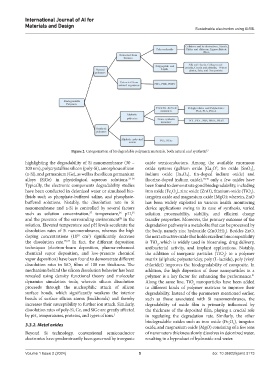
                               Figure 2. Categorization of biodegradable polymeric materials, both natural and synthetic 13
            highlighting the degradability of Si nanomembrane (30 –   oxide semiconductors. Among the available enormous
            300 nm), polycrystalline silicon (poly-Si), amorphous silicon   oxide systems (gallium oxide [Ga O , tin oxide [SnO₂],
                                                                                             3
                                                                                           2
            (a-Si), and germanium (Ge), as well as the silicon germanium   indium oxide [In₂O₃],  tin-doped  indium oxide)  and
            alloys (SiGe) in physiological aqueous solutions. 23-26    fluorine-doped indium oxide), 29,30  only a few oxides  have
            Typically, the electronic components degradability studies   been found to demonstrate good biodegradability, including
            have been conducted in deionized water or simulated bio-  iron oxide (Fe O ), zinc oxide (ZnO), titanium oxide (TiO ),
                                                                                                            2
                                                                          2
                                                                            3
            fluids such as  phosphate-buffered saline,  and  phosphate-  tungsten oxide and magnesium oxide (MgO); wherein, ZnO
            buffered solutions. Notably, the dissolution rate in Si   has been widely exploited in various health monitoring
            nanomembrane and a-Si is controlled by several factors   device applications owing to its ease of synthesis, varied
            such as solution concentration,  temperature,  pH,    solution processability, stability, and efficient charge
                                                    26
                                                         25
                                       27
            and the presence of the surrounding environment  in the   transfer properties. Moreover, the primary outcome of the
                                                    28
            solution. Elevated temperature and pH levels accelerate the   degradation pathway is a metabolite that can be processed by
            dissolution rates of Si nanomembranes, whereas the high   the body, namely zinc hydroxide (Zn(OH) ). Besides ZnO,
                                                                                                 2
            doping concentrations (10  cm ) significantly decrease   the next attractive oxide that holds excellent biocompatibility
                                       3
                                  20
            the dissolution rate. 25,27  In fact, the different deposition   is TiO , which is widely used in biosensing, drug delivery,
                                                                    2
            techniques  (electron-beam  deposition,  plasma-enhanced   antibacterial activity, and implant applications. Notably,
            chemical vapor deposition, and low-pressure chemical   the addition of inorganic particles (TiO ) to a polymer
                                                                                                2
            vapor deposition) have been found to demonstrate different   matrix (aliphatic polyester/clay, poly (L-lactide), poly (vinyl
            dissolution rates in SiO  films of 100  nm thickness. The   chloride)) improves the biodegradability of composite. In
                               2
            mechanism behind the silicon dissolution behavior has been   addition, the high dispersion of these nanoparticles in a
            revealed using density functional theory and molecular   polymer is a key factor for enhancing the performance.
                                                                                                            31
            dynamics simulation tools; wherein silicon dissolution   Along the same line, TiO  nanoparticles have been added
                                                                                   2
            proceeds through the nucleophilic attack of silicon   to different kinds of polymer matrices to improve their
            surface bonds, which significantly weakens the interior   degradability. Instead of the parameters mentioned earlier,
            bonds of surface silicon atoms (backbonds) and thereby   such as those associated with Si nanomembranes, the
            increases their susceptibility to further ion attack. Similarly,   degradability of oxide film is primarily influenced by
            dissolution rates of poly-Si, Ge, and SiGe are greatly affected   the thickness of the deposited film, playing a crucial role
            by pH, temperatures, proteins, and types of ions. 3  in  regulating  the  degradation  rate.  Similarly,  the  other
                                                               biodegradable oxides such as iron oxide (Fe O ), tungsten
                                                                                                  2
                                                                                                    3
            3.3.2. Metal oxides                                oxide, and magnesium oxide (MgO) consisting of a few tens
            Beyond Si technology, conventional semiconductor   of nanometers thickness slowly dissolves in deionized water,
            electronics have predominantly been governed by inorganic   resulting in a byproduct of hydroxide and water.
            Volume 1 Issue 2 (2024)                         5                              doi: 10.36922/ijamd.3173

