


Page 9 - IJAMD-1-2
P. 9
International Journal of AI for
            Materials and Design
                                                                                    Sustainable electronics using AI/ML


                          A


                          B                                    C


                          E                                    D


                          F                                    G


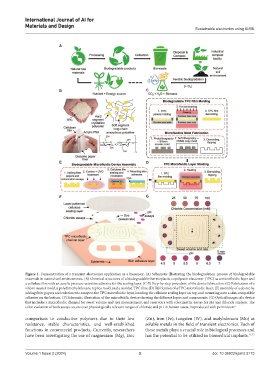
            Figure 1. Demonstration of a transient electronics application as a biosensor. (A) Schematic illustrating the biodegradation process of biodegradable
            materials in natural soil environments. (B) Chemical structures of a biodegradable thermoplastic copolyester elastomer (TPC) as a microfluidic layer and
            a cellulose film with an acrylic pressure-sensitive adhesive for the sealing layer. (C-E) Step-by-step procedure of the device fabrication: (C) Fabrication of a
            silicon master mold, a polydimethylsiloxane replica mold, and a molded TPC film; (D) Fabrication of a TPC microfluidic layer; (E) assembly of a device by
            adding filter papers and colorimetric assays to the TPC microfluidic layer, bonding the cellulose sealing layer on top, and mounting onto a skin-compatible
            adhesive on the bottom. (F) Schematic illustration of the microfluidic device showing the different layers and components. (G) Optical images of a device
            that includes a microfluidic channel for sweat volume and rate measurement, and reservoirs with colorimetric assays for pH and chloride analysis. The
            color evolution of both assays occurs over physiologically relevant ranges of chloride and pH in human sweat. Reproduced with permission. 6

            comparison to conductive polymers due to their low   (Zn), iron (Fe), tungsten (W), and molybdenum (Mo) as
            resistance, stable characteristics, and well-established   soluble metals in the field of transient electronics. Each of
            functions in commercial products. Currently, researchers   these metals plays a crucial role in biological processes and
            have been investigating the use of magnesium (Mg), zinc   has the potential to be utilized in biomedical implants. 11,12


            Volume 1 Issue 2 (2024)                         3                              doi: 10.36922/ijamd.3173

