


Page 53 - IJAMD-2-3
P. 53
International Journal of AI for
            Materials and Design                                                Intelligent interactive textile in healthcare


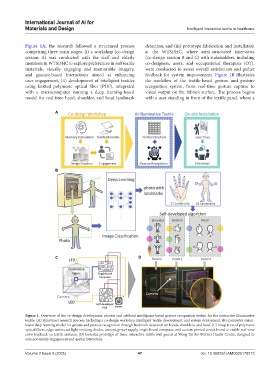
            Figure  1A,  the  research  followed  a  structured  process   detection, and (iii) prototype fabrication and installation
            comprising three main stages: (i) a workshop (co-design   at the WTSDHC, where semi-structured interviews
            session A) was conducted with the staff and elderly   (co-design session B and C) with stakeholders, including
            members in WTSDHC to explore preferences in soft textile   co-designers, users, and occupational therapists (OT),
            materials, visually engaging and memorable imagery,   were conducted to assess overall satisfaction and gather
            and gesture-based interactions aimed at enhancing   feedback for system improvement.  Figure  1B illustrates
            user engagement, (ii) development of intelligent textiles   the workflow of the textile-based gesture and posture
            using knitted polymeric optical fiber (POF), integrated   recognition system, from real-time gesture capture to
            with a microcomputer running a deep learning-based   visual  output  on the  fabric’s surface. The  process begins
            model  for  real-time  hand,  shoulder,  and  head  landmark   with a user standing in front of the textile panel, where a


                         A


                         B


                         C                                  D


            Figure 1. Overview of the co-design development process and artificial intelligence-based gesture recognition system for the interactive illuminative
            textile. (A) Structured research process, including a co-design workshop, intelligent textile development, and system deployment. (B) Computer vision-
            based deep learning model for gesture and posture recognition through landmark detection on hands, shoulders, and head. (C) Integration of polymeric
            optical fibers, edge-connected light-emitting diodes, camera, power supply, single-board computer, and custom printed circuit board to enable real-time
            color feedback on textile surfaces. (D) Installed prototype of three interactive textile wall panels at Wong Tai Sin District Health Centre, designed to
            enhance elderly engagement and spatial interaction.


            Volume 2 Issue 3 (2025)                         47                        doi: 10.36922/IJAMD025170013

