


Page 12 - IJB-9-6
P. 12
International Journal of Bioprinting                                              Electrospinning PETG


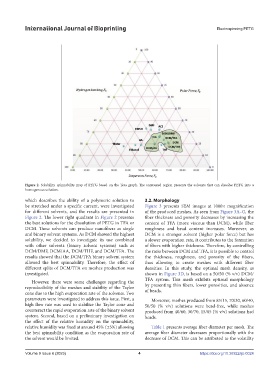
            Figure 2. Solubility–spinnability map of PETG based on the Teas graph. The contoured region presents the solvents that can dissolve PETG into a
            homogenous solution.
            which describes the ability of a polymeric solution to   3.2. Morphology
            be stretched under a specific current, were investigated   Figure 3  presents SEM images at 1000× magnification
            for different solvents, and the results are presented in   of the produced meshes. As seen from Figure 3A–G, the
            Figure 2. The lower right quadrant in Figure 2 presents   fiber thickness and porosity decreases by increasing the
            the best solutions for the dissolution of PETG in TFA or   content of TFA (more viscous than DCM), while fiber
            DCM. These solvents can produce nanofibers as single   roughness and bead content increases. Moreover, as
            and binary solvent systems. As DCM showed the highest   DCM is a stronger solvent (higher polar force) but has
            solubility, we decided to investigate its use combined   a slower evaporation rate, it contributes to the formation
            with other solvents (binary solvent systems) such as   of fibers with higher thickness. Therefore, by controlling
            DCM/DMF, DCM/AA, DCM/THF, and DCM/TFA. The         the ratio between DCM and TFA, it is possible to control
            results showed that the DCM/TFA binary solvent system   the thickness, roughness, and porosity of the fibers,
            allowed the best spinnability. Therefore, the effect of   thus allowing to create meshes with different fiber
            different splits of DCM/TFA on meshes production was   densities. In this study, the optimal mesh density, as
            investigated.                                      shown in Figure 3D, is based on a 50/50 (% v/v) DCM/
                                                               TFA system. This mesh exhibits optimal morphology
               However,  there  were  some  challenges  regarding  the
            reproducibility of the meshes and stability of the Taylor   by presenting thin fibers, lower porosities, and absence
            cone due to the high evaporation rate of the solvents. Two   of beads.
            parameters were investigated to address this issue. First, a   Moreover, meshes produced from 85/15, 70/30, 60/40,
            high flow rate was used to stabilize the Taylor cone and   50/50 (% v/v) solutions were bead-free, while meshes
            counteract the rapid evaporation rate of the binary solvent   produced from 40/60, 30/70, 15/85 (% v/v) solutions had
            system. Second, based on a preliminary investigation on   beads.
            the effect of the relative humidity on the spinnability,
            relative humidity was fixed at around 45% (±5%) allowing   Table 1 presents average fiber diameter per mesh. The
            the best spinnability condition as the evaporation rate of   average fiber diameter decreases proportionally with the
            the solvent would be limited.                      decrease of DCM. This can be attributed to the volatility


            Volume 9 Issue 6 (2023)                         4                          https://doi.org/10.36922/ijb.0024

