


Page 131 - ITPS-7-3
P. 131
INNOSC Theranostics and
            Pharmacological Sciences                         Prognostic values of peripheral blood CD4T transcriptomic signature


                                                               Table 2. Stratification of application population by the
                                                               gene‑signature clusters
                                                                                    Cluster 1  Cluster 2  P‑value
                                                               n (%)                16 (66.7)    8 (33.3)   -
                                                               Age (mean±SD)        34.25±9.59    41.88±10.09  0.10
                                                               Race (%)                                 0.35
                                                               Caucasian            10 (62.5)    7 (87.5)
                                                               Other                6 (37.5)    1 (12.5)
                                                               CD4% change (mean±SD)  122.66±94.21    32.67±34.31  0.003**
                                                               SAR (%)                                  0.027*
                                                                Yes                 11 (68.8)    1 (12.5)
                                                                No                  5 (31.2)    7 (87.5)
                                                               Notes: P values were determined by two-sided Fisher’s exact and
                                                               Welch’s t-test for discrete and continuous variables, respectively.
                                                               *P<0.05, **P<0.01.
                                                               Abbreviation: SAR: Strong anti-viral response.

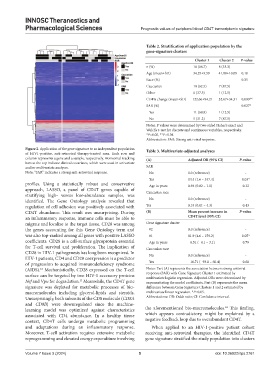
            Figure 2. Application of the gene signature to an independent population   Table 3. Multivariate‑adjusted analyses
            of HIV1-positive, anti-retroviral therapy-treated men. Each row and
            column represents a gene and a sample, respectively. Horizontal tracking   (A)  Adjusted OR (95% CI)  P‑value
            bars at the top indicate clinical covariates, which were used in univariate
            and/or multivariate analyses.                      SAR
            Note: “SAR” indicates a strong anti-retroviral response.  No         1.0 (reference)         -
                                                                Yes              14.4 (1.6 – 337.4)     0.03*
            profiles. Using a statistically robust and conservative   Age in years  0.94 (0.82 – 1.1)   0.32
            approach, LASSO, a panel of CD4T genes capable of   Caucasian race
            stratifying  high-  versus  low-abundance  samples,  was
            identified. The Gene Ontology analysis revealed that   No            1.0 (reference)         -
            regulation of cell adhesion was positively associated with   Yes     0.33 (0.01 – 4.3)      0.43
            CD4T abundance. This result was unsurprising. During   (B)           Mean percent increase in   P‑value
            an inflammatory response, immune cells must be able to               CD4T level (95% CI)
            migrate and localize to the target tissue. CD28 was among   Gene signature cluster
            the genes accounting for this Gene Ontology term and   #2            0.0 (reference)         -
            was also top-ranked among all genes with positive LASSO   #1         81.9 (4.6 – 159.2)     0.05*
            coefficients. CD28 is a cell-surface glycoprotein essential   Age in years  −0.51 (−4.1 – 3.1)  0.79
            for T-cell survival and proliferation. The implication of   Caucasian race
            CD28 in HIV-1 pathogenesis has long been recognized. In   No         0.0 (reference)         -
            HIV-1 patients, CD4 and CD28 coexpression is a predictor
            of progression to acquired immunodeficiency syndrome   Yes           −16.71 (−93.8 – 60.4)  0.68
            (AIDS).  Mechanistically, CD28 expressed on the T-cell   Notes: Part (A) represents the association between strong antiviral
                  12
            surface can be targeted by two HIV-1 accessory proteins   response (SAR) with Gene Signature Cluster 1 estimated by
                                                               multivariate logistic regression. Adjusted ORs were determined by
            Nef and Vpu for degradation.  Meanwhile, the CD4T gene   exponentiating the model coefficients. Part (B) represents the mean
                                   13
            signature was depleted for metabolic processes of bio-  difference between Gene Signature Clusters 1 and 2 estimated by
            macromolecules including glycerol-lipids and steroids.   multivariate linear regression. *P<0.05.
            Unsurprisingly, both subunits of the CD8 molecule (CD8A   Abbreviations: OR: Odds ratio; CI: Confidence interval.
            and  CD8B) were downregulated since the machine-                                     14
            learning model was optimized against characteristics   the aforementioned bio-macromolecules.  This finding,
            associated with CD4 abundance. In a healthy tissue   which appears contradictory, might be explained by a
            context, CD4T cells undergo metabolic programming   negative feedback loop due to overabundant CD4T.
            and adaptations during an inflammatory response.     When applied to an HIV-1-positive patient cohort
            Moreover, T-cell activation requires extensive metabolic   receiving anti-retroviral therapies, the identified CD4T
            reprogramming and elevated energy expenditure involving   gene signature stratified the study population into clusters


            Volume 7 Issue 3 (2024)                         5                                doi: 10.36922/itps.2761

