


Page 32 - ITPS-7-4
P. 32
INNOSC Theranostics and
            Pharmacological Sciences                                                  Pediatric drug regulations in India


                                                               under PREA requirements, it is essential to obtain an
                                                               FDA-approved WR before submitting pediatric studies.
                                                               The  FDA will not  grant  exclusivity  until  after  receiving
                                                               an approved WR submission, which can occur without
                                                               requiring sponsor proposals.
                                                                 Research projects covered by the BPCA or PREA need
                                                               to have  a pediatric-specific  security  review  done  by the
                                                               Pediatric Advisory Committee within 18  months of the
                                                               FDA approving a label update.   Table  3 represents the
                                                                                         41
                                                               conventional “standards” for pediatric medication registry. 70
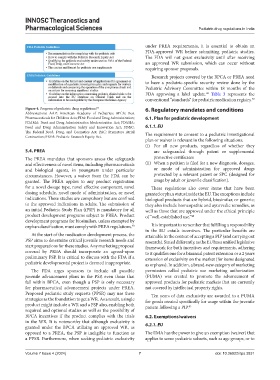
            Figure 4. Progress of pediatric drug regulations 64  6. Regulatory mandates and conditions
            Abbreviations: AAP: American Academy of Pediatrics; BPCA: Best
            Pharmaceuticals for Children Acts; FDA: Food and Drug Administration;   6.1. Plan for pediatric development
            FDAMA: Food and Drug Administration Modernization Act; FDASIA:
            Food and Drug Administration Safety and Innovation Act; FD&C:   6.1.1. EU
            The Federal Food, Drug, and Cosmetics Act; PAC: Premature Atrial   The requirement to consent to a pediatric investigational
            Contraction; PREA: Pediatric Research Equity Act.
                                                               plan or waiver is relevant in the following situations:
                                                               (i)  For all new products, regardless of whether they
            5.4. PREA                                             are safeguarded through patent or supplemental
            The PREA mandates that sponsors assess the safeguards   protective certificates
            and effectiveness of novel items, including pharmaceuticals   (ii)  When a petition is filed for a new diagnosis, dosages,
            and biological agents, in youngsters under particular   or  mode  of  administration for  approved  drugs
            circumstances. However, a waiver from the FDA can be   protected by a relevant patent or SPC (designed for
            granted. The PREA applies to any product registration   usage by adult or juvenile classification).
            for a novel dosage type, novel effective component, novel   These regulations also cover items that have been
            dosing schedule, novel mode of administration, or novel   granted orphan status inside the EU. The exceptions include
            indications. These studies are compulsory but are confined   biological products that are hybrid, biosimilar, or generic;
            to the approved indications in adults. The submission of   they also include homeopathic and ayurvedic remedies, as
            an initial Pediatric Study Plan (iPSP) is mandatory for all   well as those that are approved under the ethical principle
            product development programs subject to PREA. Product   of “well-established use.” 42
            development programs for biosimilars, unless exempted by
            orphan classification, must comply with PREA regulations. 40  It is important to remember that fulfilling a responsibility
                                                               in the EU entails incentives. The particular benefits are
              At the start of the medication development process, the   attainable in the context of accepting a PIP (and carrying out
            PSP aims to determine critical juvenile research needs and   research). Stated differently, as the EU has a unified legislative
            start preparations for these studies. Any marketing proposal   framework for both incentives and requirements, adhering
            covered  by  PREA  should  incorporate  an agreed-upon   to it qualifies one for a biannual patent extension or a 2 years
            preliminary PSP. It is critical to discuss with the FDA if a   extension of exclusivity on the market (for items designated
            pediatric developmental project is deemed inappropriate.  as orphans). In addition, a brand-new category of marketing
              The FDA urges sponsors to include all possible   permission called pediatric use marketing authorization
            juvenile advancement plans in the PSP, even those that   (PUMA) was created to promote the advancement of
            fall within BPCA, even though a PSP is only necessary   approved products for pediatric markets that are currently
            for pharmaceutical advancement projects under PREA.   not covered by intellectual property rights.
            Proposed pediatric study requests (PPSR) may use these   Ten years of data exclusivity are awarded to a PUMA
            strategies as the foundation to get a WR. As a result, a single   for goods created specifically for usage within the juvenile
            product might include a WR and a PSP also, enabling both   patient following a PIP. 43
            required and optional studies as well as the possibility of
            BPCA incentives if the product complies with the trials   6.2. Exemptions/waivers
            in the WR. It is noteworthy that although exclusivity is   6.2.1. EU
            granted under the BPCA utilizing an approved WR, as
            opposed to a PREA, the PSP is ineligible to function as   The EMA has the power to give an exemption (waiver) that
            a PPSR. Furthermore, when seeking pediatric exclusivity   applies to some pediatric subsets, such as age groups, or to


            Volume 7 Issue 4 (2024)                         7                                doi: 10.36922/itps.3831

