


Page 49 - JCAU-6-1
P. 49
Journal of Chinese
            Architecture and Urbanism                                         A study on the spatial characteristics of gara


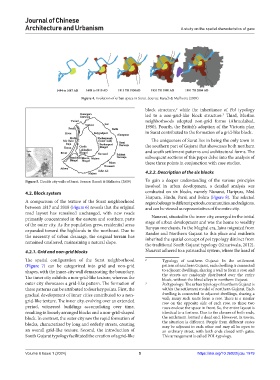
                                    Figure 4. Evolution of urban space in Surat. Source: Baradi & Malhotra (2009)

                                                               block structure,  while the inheritance of  Pol typology
                                                                            2
                                                               led to a non-grid-like block structure.  Third, Muslim
                                                                                                3
                                                               neighborhoods adopted  non-grid  forms (Ahmedabad,
                                                               1990). Fourth, the British’s adoption of the Victoria plan
                                                               in Surat contributed to the formation of a grid-like block.
                                                                 The uniqueness of Surat lies in being the only town in
                                                               the southern part of Gujarat that showcases both northern
                                                               and south settlement patterns and architectural forms. The
                                                               subsequent sections of this paper delve into the analysis of
                                                               these three points in conjunction with case studies.

                                                               4.2.2. Description of the six blocks

            Figure 5. Double city walls of Surat. Source: Baradi & Malhotra (2009)  To gain a deeper understanding of the various principles
                                                               involved in urban development, a detailed analysis was
            4.2. Block system                                  conducted on six blocks, namely Nanavat, Haripura, Med
                                                               Harpura, Hindu, Parsi, and Bohra (Figure  8). The selected
            A comparison of the texture of the Surat neighborhood   region belongs to different periods, communities, and religions,
            between 1817 and 2018 (Figure 6) reveals that the original   and can be viewed as representatives of the entire city.
            road layout has remained unchanged, with new roads
            primarily concentrated in the eastern and southern parts   Nanavat, situated in the inner city, emerged in the initial
            of the outer city. As the population grew, residential areas   stage of urban development and was the home to wealthy
                                                               Banyan merchants. In the Mughal era, Jains migrated from
            expanded toward the highlands in the northeast. Due to   Rander and Northern Gujarat to this place and residents
            the necessity of urban drainage, the original terrain has   inherited the spatial concept of pol typology distinct from
            remained unaltered, maintaining a natural slope.
                                                               the traditional South Gujarat typology (Kinariwala, 2012).
            4.2.1. Grid and non-grid blocks                    Nanavat adhered to a patriarchal system, where the head of
            The spatial configuration of the Surat neighborhood   2     Typology of southern Gujarat: In the settlement
            (Figure  7) can be categorized into grid and non-grid     pattern of southern Gujarat, each dwelling is connected
            shapes, with the inner-city wall demarcating the boundary.   to adjacent dwellings, sharing a wall to form a row, and
                                                                      the streets are randomly distributed over the entire
            The inner city exhibits a non-grid-like texture, whereas the   block, without the blind alleys in northern Gujarat.
            outer city showcases a grid-like pattern. The formation of   3  Pol typology: The urban typology of northern Gujarat is
            these patterns can be attributed to four key points. First, the   within the settlement model of northern Gujarat. Each
            gradual development of inner cities contributed to a non-  dwelling is connected to adjacent dwellings, sharing a
            grid-like texture. The inner city, evolving over an extended   wall; many such units form a row. There is a similar
                                                                      row on the opposite side of each row, so these two
            period,  witnessed  buildings  accumulating  over  time,   rows enclose the space in front. So, the entire layout is
            resulting in loosely arranged blocks and a non-grid-shaped   identical to a fortress. Due to the closure of both ends,
            block. In contrast, the outer city saw the rapid formation of   the settlement formed a dead end. However, in towns,
            blocks, characterized by long and orderly streets, creating   the situation is different. People from different castes
                                                                      may be adjacent to each other and may all be open to
            an overall grid-like texture. Second, the introduction of   an ordinary street, with both ends closed with gates.
            South Gujarat typology facilitated the creation of a grid-like   This arrangement is called POL typology.


            Volume 6 Issue 1 (2024)                         5                        https://doi.org/10.36922/jcau.1979

