


Page 60 - JCAU-7-3
P. 60
Journal of Chinese
            Architecture and Urbanism                                                 Rural–urban village regeneration


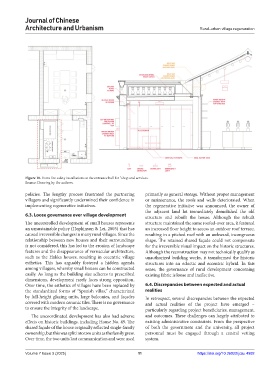
            Figure 10. Extra fire safety installations at the entrance hall for “shop and services.
            Source: Drawing by the authors.

            policies.  The  lengthy process frustrated  the partnering   primarily as general storage. Without proper management
            villagers and significantly undermined their confidence in   or maintenance, the roofs and walls deteriorated. When
            implementing regenerative initiatives.             the regenerative initiative was announced, the owner of
                                                               the  adjacent  land  lot  immediately  demolished  the  old
            6.3. Loose governance over village development     structure and rebuilt the house. Although the rebuilt
            The uncontrolled development of small houses represents   structure maintained the same roofed-over area, it featured
            an unsustainable policy (Hopkinson & Lei, 2003) that has   an increased floor height to access an outdoor roof terrace,
            caused irreversible changes in many rural villages. Since the   resulting in a pitched roof with an awkward, incongruous
            relationship between new houses and their surroundings   shape. The retained shared façade could not compensate
            is not considered, this has led to the erosion of landscape   for the irreversible visual impact on the historic structures.
            features and the disappearance of vernacular architecture,   Although the reconstruction may not technically qualify as
            such  as the  Hakka  houses,  resulting  in  eccentric village   unauthorized building works, it transformed the historic
            esthetics. This has arguably fostered a hidden agenda   structures into an eclectic and eccentric hybrid. In this
            among villagers, whereby small houses can be constructed   sense, the governance of rural development concerning
            easily. As long as the building size adheres to prescribed   existing fabric is loose and ineffective.
            dimensions, development rarely faces strong opposition.
            Over time, the esthetics of villages have been replaced by   6.4. Discrepancies between expected and actual
            the standardized forms of “Spanish villas,” characterized   realities
            by full-height glazing units, large balconies, and façades   In retrospect, several discrepancies between the expected
            covered with modern ceramic tiles. There is no governance   and actual realities of the project have emerged –
            to ensure the integrity of the landscape.          particularly regarding project beneficiaries, management,
              The uncoordinated development has also had adverse   and outcomes. These challenges can largely attributed to
            effects on historic buildings, including House No. 49. The   existing administrative constraints. From the perspective
            shared façade of the house originally reflected single-family   of both the government and the university, all project
            ownership, but this was split into two units as the family grew.   personnel must be engaged through a central vetting
            Over time, the two units lost communication and were used   system.


            Volume 7 Issue 3 (2025)                         11                       https://doi.org/10.36922/jcau.4992

