


Page 52 - JCBP-1-2
P. 52
Journal of Clinical and
            Basic Psychosomatics                                                     Wisdom in mentally ill and healthy


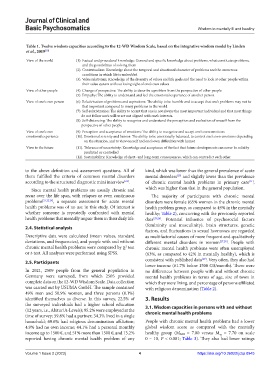
            Table 1. Twelve wisdom capacities according to the 12-WD Wisdom Scale, based on the integrative wisdom model by Linden
            et al., 2019 [10]
            View of the world    (1).  Factual and procedural knowledge: General and specific knowledge about problems, what constitutes problems,
                                    and the possibilities of solving them
                                 (2).  Contextualism: Knowledge about the temporal and situational character of problems and the numerous
                                    conditions in which life is embedded
                                 (3).  Value relativism: Knowledge of the diversity of values and life goals and the need to look at other people within
                                    their value system without losing sight of one’s own values
            View of other people  (4). Change of perspective: The ability to describe a problem from the perspective of other people
                                 (5). Empathy: The ability to understand and feel the emotional experience of another person.
            View of one’s own person  (6).  Relativization of problems and aspirations: The ability to be humble and to accept that one’s problems may not be
                                    that important compared to many problems in the world
                                 (7).  Self-relativization: The ability to accept that one is not always the most important individual and that most things
                                    do not follow one’s will or are not aligned with one’s interests.
                                 (8).  Self-distancing: The ability to recognize and understand the perception and evaluation of oneself from the
                                    perspective of other people
            View of one’s own    (9). Perception and acceptance of emotions: The ability to recognize and accept one’s own emotions
            emotional experience  (10).  Emotional serenity and humor: The ability to be emotionally balanced, to control one’s own emotions depending
                                     on the situation, and to view oneself and one’s own difficulties with humor
            View to the future   (11).  Tolerance of uncertainty: Knowledge and acceptance of the fact that future developments can never be reliably
                                     predicted or controlled
                                 (12). Sustainability: Knowledge of short- and long-term consequences, which can contradict each other

            to the above definition and assessment questions. All of   kind, which was lower than the general prevalence of acute
            them fulfilled the criteria of common mental disorders   mental disorders  and slightly lower than the prevalence
                                                                            [25]
            according to the structured diagnostic mini interview .  of chronic mental health problems in primary care ,
                                                                                                           [21]
                                                      [21]
              Since mental health problems are usually chronic and   which was higher than that in the general population.
            recur over the life span, with relapses or even continuous   The  majority  of participants  with  chronic  mental
            problems [21,22,24] , a separate assessment for acute mental   disorders were female (65% women in the chronic mental
            health problems was of no use in this study. Of interest is   health problem group, as compared to 49% in the mentally
            whether someone is repeatedly confronted with mental   healthy; Table 2), concurring with the previously reported
            health problems that mentally impair them in their daily life.  data [25,26] . Potential influence of psychosocial factors
                                                               (femininity  and  masculinity),  brain  structures,  genetic
            2.4. Statistical analysis
                                                               factors, and fluctuations in sexual hormones are regarded
            Descriptive data were calculated (mean values, standard   as multifactorial causes of more frequent and qualitatively
            deviations, and frequencies), and people with and without   different  mental  disorders  in  women [27,28] .  People  with
            chronic mental health problems were compared by χ  test   chronic mental health problems were often unemployed
                                                      2
            or t-test. All analyses were performed using SPSS.  (63%, as compared to 42% in mentally healthy), which is
                                                               consistent with published data . Very often, they also had
                                                                                       [29]
            2.5. Participants
                                                               lower income (61.7% below 1500 €/$/month). There were
            In 2021, 2509 people from the general population in   no differences between people with and without chronic
            Germany were surveyed, from which 2505 provided    mental health problems in terms of age, size of town in
            complete data on the 12-WD Wisdom Scale. Data collection   which they were living, and percentage of persons affiliated
            was carried out by USUMA GmbH. The sample contained   with religious denomination (Table 2).
            49% men and 50.9% women, and three persons (0.1%)
            identified themselves as diverse. In this survey, 22.5% of   3. Results
            the surveyed individuals had a higher school education   3.1. Wisdom capacities in persons with and without
            (12 years, i.e., Abitur/A-Levels); 95.2% were employed at the
            time of survey; 59.8% had a partner; 34.3% lived in a single   chronic mental health problems
            household;  69.6%  had  religious  denomination  affiliation;   People with chronic mental health problems had a lower
            4.9% had no own income; 44.1% had a personal monthly   global wisdom score as compared with the mentally
            income up to 1500 €, and 51% more than 1500 €; and 13.2%   healthy group (M MH = 7.00 versus M  = 7.70 on scale
                                                                                              H
            reported having chronic mental health problem of any   0 – 10, P < 0.001; Table 3). They also had lower ratings

            Volume 1 Issue 2 (2023)                         4                        https://doi.org/10.36922/jcbp.0945

