


Page 76 - JCBP-2-3
P. 76
Journal of Clinical and
            Basic Psychosomatics                                                          HD-tDCS on pain in SSD-P


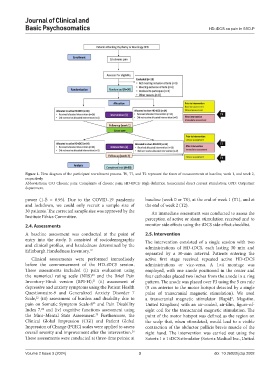
            Figure 1. Flow diagram of the participant recruitment process. T0, T1, and T2 represent the times of measurements at baseline, week 1, and week 2,
            respectively
            Abbreviations: C/O Chronic pain: Complaints of chronic pain; HD-tDCS: High-definition transcranial direct current stimulation; OPD: Outpatient
            department.

            power (1-β = 0.95). Due to the COVID-19 pandemic   baseline (week 0 or T0), at the end of week 1 (T1), and at
            and lockdown, we could only recruit a sample size of   the end of week 2 (T2).
            30 patients. The corrected sample size was approved by the   An immediate assessment was conducted to assess the
            Institute Ethics Committee.                        perception of active or sham stimulation received and to
            2.4. Assessments                                   monitor side effects using the tDCS side effect checklist.
            A  baseline  assessment was  conducted  at  the  point  of   2.5. Intervention
            entry into the study. It consisted of sociodemographic   The  intervention consisted of  a  single  session  with  two
            and clinical profiles, and handedness determined by the   administrations of HD-tDCS, each lasting 30  min and
            Edinburgh Handedness Inventory. 19                 separated by a 30-min interval. Patients entering the
              Clinical assessments were performed immediately   active  first  stage received repeated  active HD-tDCS
            before the commencement of the HD-tDCS session.    administrations or vice-versa. A  1×4 montage was
            These assessments included (i) pain evaluation using   employed, with one anode positioned in the center and
            the numerical rating scale (NRS)  and the Brief Pain   four cathodes placed two inches from the anode in a ring
                                        20
            Inventory-Hindi  version  (BPI-H),   (ii)  assessment  of   pattern. The anode was placed over F3 using the 5 cm rule
                                        21
            depressive and anxiety symptoms using the Patient Health   (5 cm anterior to the motor hotspot detected by a single
            Questionnaire-9 and Generalized Anxiety Disorder 7   pulse of transcranial magnetic stimulation). We used
            Scale,  (iii) assessment of burden and disability due to   a transcranial magnetic stimulator (Rapid , Magstim,
                22
                                                                                                   2
            pain  on  Somatic  Symptom  Scale-8   and  Pain  Disability   United Kingdom) with an air-cooled, air-film, figure-of-
                                        23
            Index 7,  and (iv) cognitive functions assessment using   eight coil for the transcranial magnetic stimulation. The
                   24
            the Mini–Mental State Assessment.  Furthermore, the   point of the motor hotspot was defined as the region on
                                          25
            Clinical Global Impression (CGI) and Patient Global   the scalp that, when stimulated, would lead to a visible
            Impression of Change (PGIC) scales were applied to assess   contraction of the abductor pollicis brevis muscle of the
            overall severity and improvement after the intervention.    right hand.  The intervention  was  carried  out  using  the
                                                         26
            These assessments were conducted at three-time points: at   Soterix 1 × 1 tDCS stimulator (Soterix Medical Inc., United
            Volume 2 Issue 3 (2024)                         3                               doi: 10.36922/jcbp.2002

